Coulomb meter: Everything you need to know

Precise calculations instead of estimates: Principles, implementation, and battery life prediction in IoT
Behind the term "Coulomb meter" lies a practical method for converting current flow over time into precise energy consumption data. This enables realistic prediction of battery end-of-life and service planning that is timely, targeted, and without unnecessary call-outs.
Key takeaways
- A Coulomb meter, also known as a coulomb counter, measures battery current and integrates it over time to track the charge drawn, typically expressed in coulombs or mAh. This provides a measurement-based record of consumption rather than relying on battery voltage alone.
- Battery voltage alone is an unreliable indicator of remaining capacity in many IoT metering applications. It is affected by temperature, internal resistance, battery ageing and changes in load, particularly during high-current transmission peaks.
- In very low-consumption applications, battery passivation can cause substantial voltage drops under sudden loads even when usable capacity remains. A supercapacitor can help supply short current peaks, while a Coulomb counter tracks charge consumption; neither eliminates the underlying effects of passivation.
- Battery end-of-life prediction combines measured charge consumption with a battery model that accounts for factors such as cell chemistry, temperature, load profile and ageing. The result is an estimate that can be expressed as a replacement time window rather than a single battery percentage.
- Accurate Coulomb counting requires a measurement system capable of capturing both very low standby currents and short transmission peaks. Calibration, low measurement overhead and appropriate self-checks help maintain accuracy over the device’s lifetime.
- Charge consumption data can support energy-aware telemetry strategies, such as adjusting reporting intervals when projected battery life falls below a target. It can also improve maintenance planning across a fleet of devices, provided the necessary control logic and data integration are implemented.
- Coulomb counting is not necessary in every IoT device. Simple voltage monitoring may be sufficient for shorter-life or easily serviced applications, while long-life battery-powered devices with pulsed loads can benefit substantially from combining charge measurement with an appropriate battery model.
Why Coulomb meter matters in metering and IoT
Devices operate in cycles of deep sleep and brief pulsed peaks, the environment changes with temperature, and network signal conditions for technologies such as LoRaWAN or NB-IoT can fluctuate depending on location and building density. This makes a tool that doesn't estimate but actually calculates the charge drawn from the battery extremely valuable, enabling consumption monitoring and operational planning.
In practice, it's a "silent" pillar of reliability: not conspicuous, but when absent, it manifests as oversized reserves, unnecessary interventions, and higher total cost of ownership (TCO). A Coulomb meter enables working with data that reflects the behaviour of a specific device over time and at its installation location, allowing better fleet management and proactive battery replacement planning.
What a Coulomb meter measures and how it works
A Coulomb meter (also called a "coulomb counter") monitors instantaneous current flowing between the battery and circuit and integrates it over time. The result is total charge drawn, expressed in coulombs (C) or the more user-friendly mAh. Practically, it comprises a low-value sense resistor (shunt), precision amplifier, and A/D converter, above which runs a charge accumulator that is periodically read by a microcontroller.
Measurement stability across temperatures, amplifier offset drift, and noise suppression are critical. Integration is therefore typically performed over an appropriate time window to ensure brief peaks (e.g., radio transmission) are captured without distortion. (Specific solutions, such as the LTC3337 from Analog Devices, employ other measurement methods enabling extremely low so-called quiescent current; however, the approximation described suffices for understanding the principle.)
By measuring current integral rather than just cell voltage, we obtain a reading that is invariant to short-term voltage drops under load, even in cases where the transmission module routinely draws tens of milliamps for hundreds of milliseconds. For long-term record-keeping, the charge drawn is converted to "utilised capacity" and stored locally or in the cloud; the device thus knows its energy history and can use it for warnings and predictions.
Why voltage alone isn't sufficient (and when it makes sense)
Voltage measurement is simple and inexpensive, but in real operation it depends on many factors: temperature, internal cell resistance, age, and instantaneous load. With pulsed loads typical of communications technologies, voltage drops briefly during transmission and recovers upon return to sleep mode. Without knowledge of the current profile, it's difficult to distinguish a "normal pulse" from genuine capacity exhaustion.
In water or heat distribution networks, where M-Bus / wM-Bus / RS-485 or radio networks operate with very low average consumption but high peaks, the voltage method often leads to strict safety margins. Whilst these protect against outage risk, they increase replacement costs and reduce cell utilisation.
A Coulomb meter, conversely, creates a continuous energy balance. It knows that a brief 60 ms peak of 40–60 mA represents only a small contribution to the total, whilst a persistently elevated quiescent current (e.g., due to incorrect sensor configuration) is a warning signal. This reduces uncertainty and subsequently the need to "overshoot" capacity or replacement intervals.
Battery passivation and the role of supercapacitors
In applications with exceptionally low consumption, so-called battery passivation often occurs: prolonged low current creates a passivation layer on the electrodes, increasing internal resistance. When the device then requires a brief higher-current pulse (e.g., for data transmission), voltage collapses and transmission fails, despite sufficient energy remaining in the battery.
The combination of a Coulomb counter and supercapacitor solves this problem: the Coulomb counter precisely accounts for charge drawn, whilst the supercapacitor covers current peaks. Paradoxically, a "fully charged" but passivated battery can appear worse than a nearly depleted one that isn't passivated. Passivation doesn't matter if you account for it in the design (supercapacitor), but you cannot recover energy from a truly depleted battery. This is precisely why lifetime estimates based solely on voltage are fundamentally misleading.
From measurement to prediction: Calculating battery end-of-life
End-of-life (EoL) prediction rests on two pillars: integrated charge drawn and the specific battery profile. The device continuously accumulates mAh and compares this with the cell's reference capacity. This isn't merely a datasheet figure, but input to a model that accounts for temperature, discharge currents, and potentially ageing.
In practice, a simple rule is used: remaining capacity = nominal – utilised, supplemented by corrections according to cell chemistry (e.g., Li-SOCl₂ vs. Li-MnO₂) and operating temperature window. Once the model knows the consumption trend (e.g., daily integral) and residual capacity, it can calculate remaining time to EoL and assess whether faster transmission during winter months shortens lifetime below the service threshold.
Working with uncertainty is also crucial: the device can send interval estimates (optimistic / realistic / pessimistic scenarios) and update them with each significant behaviour change. This means the maintenance planner receives not just a crude "battery 20%", but a specific replacement time window with reliability corresponding to real operation, which can be linked to logistics, SLA, and engineer routing.
Practical implementation: Hardware, calibration, data
The foundation is a properly designed measurement chain: low shunt with minimal efficiency impact, precision amplification, ADC with sufficient resolution for quiescent currents in units to tens of microamps, yet with rapid response to transmission peaks.
Calibration
Occurs during manufacture, against known currents and temperatures, and must handle both offset and gain. Best practice is to store calibration constants in the device and periodically perform self-checks during deep sleep (measured current ≈ 0).
Energy overhead of the meter itself
the Coulomb meter's average consumption should be sufficiently low relative to the rest of the device's quiescent consumption so as not to affect the overall budget. For 2/3 AA batteries, the impact is significant; for C-size (8400 mAh) or D-size (19,000 mAh) cells, the impact is negligible.
Data architecture
It pays to separate local decision-making (e.g., warning "< 6 months remaining") from portfolio analytics in the cloud, where trends can be monitored across the fleet and anomalies detected by installation type, signal strength, or temperature zone. In environments with diverse meter mixes, a configurable transmission policy helps: send critical milestones immediately, routine energy telemetry in sparser batches or as part of regular readings.
What Coulomb meters bring to operations: Field scenarios
Consider a water meter in a small apartment block with 12-hourly readings and two diagnostic messages monthly. Over the year, the Coulomb meter accumulates a profile showing that winter brings slightly longer network connection times and higher transmission demands.
It also records a slight increase in quiescent consumption due to more frequent flow sensor evaluation following introduction of a new software rule. From this data, the model deduces that EoL has moved 8–10 months closer, and the device sends a timely warning with a recommended replacement window.
In another case, it detects that the planned reserve is unnecessarily large, for instance, due to low radio module utilisation and good signal strength. The operator can then defer replacements by one service cycle. Decision-making is thus underpinned by specific energy balance rather than generic estimates.
Integrating Coulomb meters into existing metering architecture
Coulomb meters apply both to retrofit conversions of classic meters and to new devices. If you're integrating traditional meters via converters onto NB-IoT or LoRaWAN networks, it's advisable to link consumption measurement directly to telemetry logic.
For example, when deploying M-Bus to NB-IoT converters or M-Bus to LoRaWAN, coulombic measurement can enable automatic adjustment of reporting intervals: once the model assesses that faster reporting threatens planned lifetime, the device switches to a more conservative profile, or conversely adds diagnostic messages during critical periods (e.g., freezing conditions).
In systems with wM-Bus and pulse inputs, the approach is similar. The key is ensuring data schemas and APIs are prepared to carry energy metrics alongside routine readings, only then will portfolio-level analytics truly rest on numbers rather than estimates.
Design considerations
Dimension the shunt and analogue section to reliably capture microamp quiescent currents and millisecond transmission peaks without saturation, or use an integrated solution that handles this efficiently (LTC3337).
Calibrate against known currents and temperatures, store coefficients in the device, and incorporate periodic self-checks in deep sleep mode.
Separate local thresholds and warnings (EoL window, anomalies) from portfolio analytics; consider batch transmission of energy metrics.

Glossary of terms used
- ADC (analogue-to-digital converter): a circuit that converts an analogue signal, such as the voltage across a shunt resistor, into a digital value
- Battery passivation: the formation of a protective layer on the lithium anode, particularly in Li-SOCl₂ batteries, which can increase internal resistance and cause temporary voltage drops under sudden loads
- Coulomb counter (Coulomb meter): a circuit that measures the electric charge drawn from a battery, providing data that can be used to estimate its remaining capacity
- Deep sleep: a low-power operating mode in which a device switches off most of its functions between measurements or transmissions
- End-of-life (EoL): the point at which a battery can no longer meet the device’s operating requirements, such as maintaining sufficient voltage under load
- Li-SOCl₂ and Li-MnO₂: lithium primary battery chemistries commonly used in metering devices, lithium thionyl chloride and lithium manganese dioxide
- mAh (milliampere-hour): a unit of electric charge equal to 3.6 coulombs, commonly used to express battery capacity
- Quiescent current: the current a device or circuit draws when idle, for example in sleep mode
- Shunt resistor: a low-value resistor placed in the current path, across which a small voltage drop is measured to determine the current
- SLA (Service Level Agreement): a contractual agreement defining expected service levels, such as availability, response times or maintenance commitments
- Supercapacitor: an energy storage component that can supply short bursts of high current, supporting a battery during transmission peaks
- TCO (Total Cost of Ownership): the full cost of a solution over its lifetime, including purchase, installation, operation and maintenance
FAQs
Not always. Where service is frequent, lifetime is short, and SLA requirements are low, voltage monitoring suffices. For long-life meters with pulsed loads, however, coulombic measurement is the most reliable path to realistic prediction and TCO optimisation.
With good design and calibration, accuracy typically runs to single-digit percentages. However, precision depends on cell chemistry, temperature profile, consumption stability, and manufacturing variance of the battery itself. For example, the LTC3337 cites worst-case measurement error of 5%.
Modern implementations have very low overhead and, when properly integrated, don't materially affect the overall balance. For applications with 2/3 AA batteries, the impact is significant; for C/D-size cells (8400 mAh and 19,000 mAh respectively), the impact is negligible.
Want to implement coulombic measurement and link it to EoL prediction in your IoT deployment? Whether you're designing new metering devices or retrofitting existing infrastructure with LoRaWAN or NB-IoT connectivity, precise battery management can significantly reduce your TCO and improve service planning. Get in touch with us and we'll review your hardware architecture, battery chemistry, operational profiles, and data model together. We'll help you determine the optimal measurement strategy for your specific scenario and integration requirements.

Blog

ILI: what the EU leakage threshold measures

Pulsed water meter: All you need to know

LoRaWAN airtime: why radio conditions matter
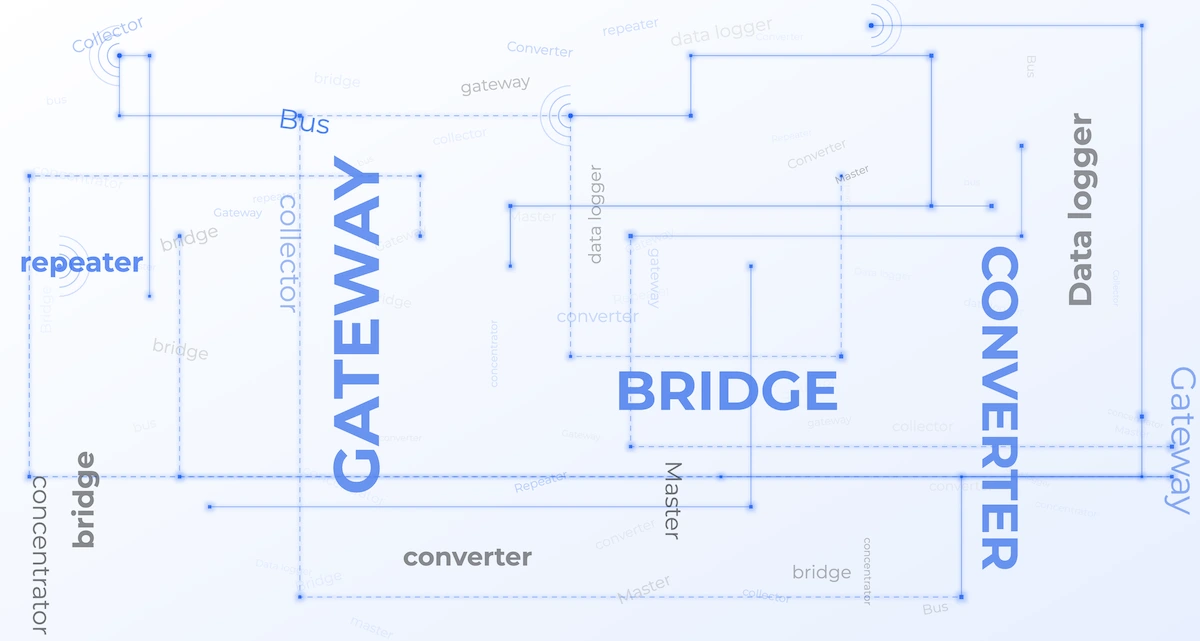
Converter, bus, bridge, gateway: what's the difference?

What actually drains an IoT device battery
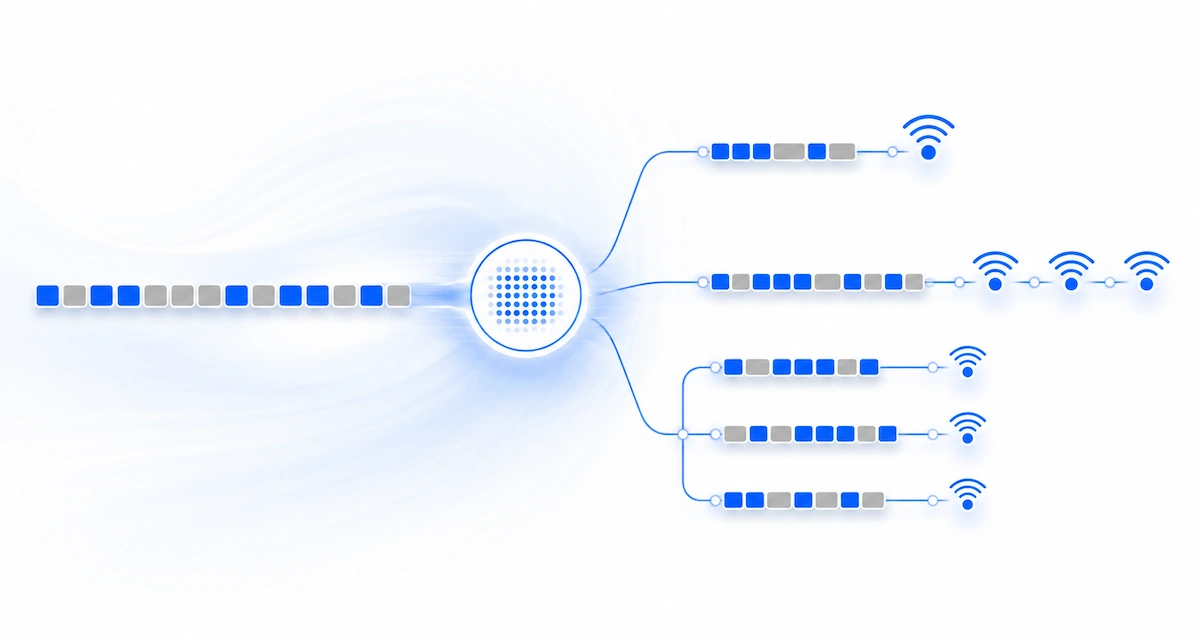
M-Bus parsing strategies for LoRaWAN and NB-IoT

How to best replace walk-by meter reading

Can your existing meters be retrofitted?

Battery life in IoT: beyond the datasheet number

Agile, Waterfall, or NRE? Choosing a development methodology

Developing adaptive IoT communication under the CRA

Focused supplier or large vendor? Depends on the project

Edge computing in IoT metering

Manufacturer as a technology partner

Why a device without an antenna fails

CE certification for IoT: What RED DA changes

Water losses in utility networks: The hidden cost of leaks

Pressure monitoring in water networks: Early fault detection
M-Bus pressure sensor: Leak detection for water utilities

The cost of measurement data errors and how to prevent them

Smart Readiness Indicator (SRI): All you need to know
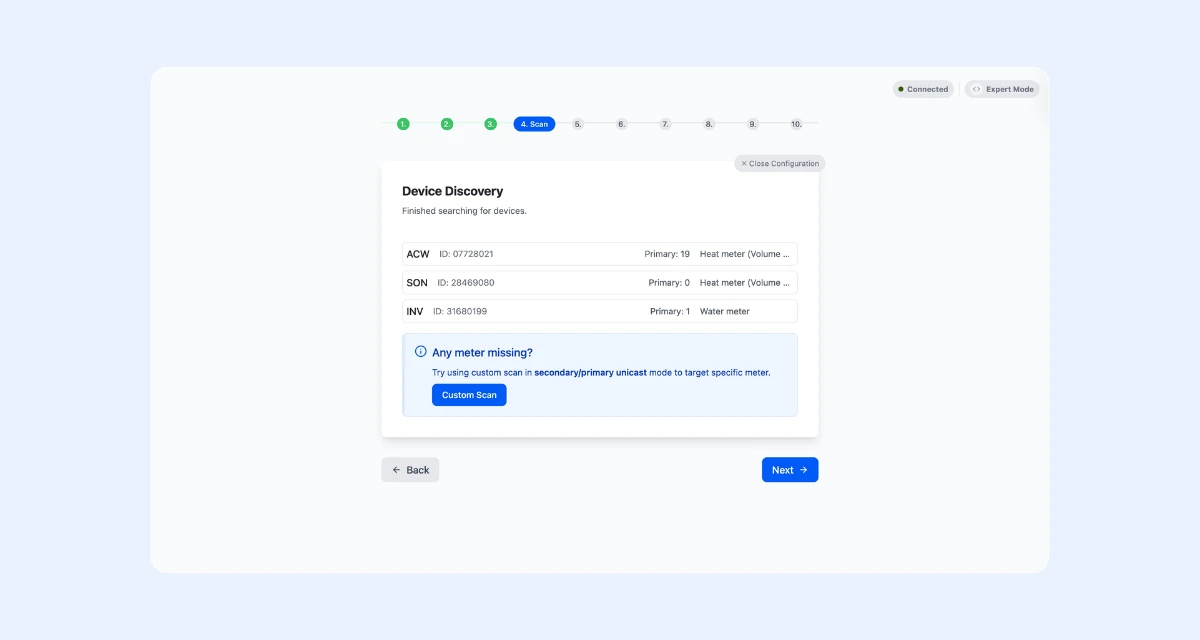
M-Bus installation tool Wizard from ACRIOS

ACR-EX in water utilities: remote reading of pulse water meters

ACRIOS and Quectel announce partnership

External or internal? How custom development works

Proven deployment of 10,000 wM-Bus converters for EED

Choosing a remote reading system for water utilities

Open data interfaces pay off for reporting and integration

15-minute vs daily meter readings frequency explained

Scripting in IoT: Flexibility, sustainability, and protection

Gas meter data to dashboard: ACR-EX meets Datacake
EPBD is coming: what BACS means for your building

When DTLS makes sense. Know before you deploy

Not your keys, not your hardware
868 MHz or 433 MHz? The right choice for your wM-Bus
Everything you need to know, documented. ACRIOS wiki.

End-to-end custom hardware and software development
How to collect energy data to support ISO 50001

Lowering IoT TCO through smart manufacturing

Reading Sensus meters with zero hardware changes

Why 15-minute data matters in district heating

Give me a tool that works. Not a manual.

5 most common myths about remote meter reading

Battery-powered vs wired: What really costs more?

Cyber Resilience Act and IoT hardware

Next-gen meter readings, no replacements needed

Modernising metering infrastructure

M-Bus to IoT integration explained

Understanding TCO: More than just hardware

NB-IoT technology: All you need to know

LoRaWAN: All you need to know

M-Bus, wM-Bus, and RS-485: A technology guide

LoRaWAN vs. NB-IoT: Which technology is right for you?

Smart metering: What it is and why it matters

IoT: Technology that saves time and money