ACR-EX in water utilities: remote reading of pulse water meters
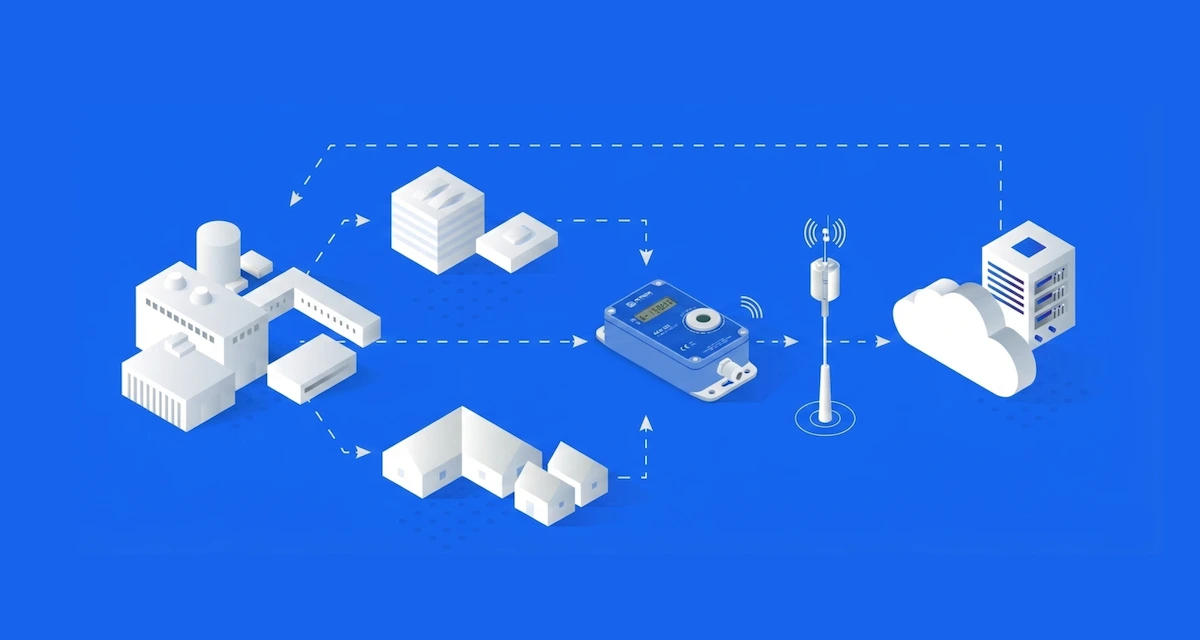
In water utilities today, reality is not black and white. Walk-by readings are still in use, in many locations gradually complemented or replaced by fixed remote reading systems, while at the same time a large number of pulse water meters remain installed across the network. These meters still work reliably and are not outdated; they are simply sometimes overlooked when discussions turn to modernising meter reading. This is where ACR-EX a pulse converter with display for the remote reading of pulse water meters comes into play.
Key takeaways
- Many existing pulse-output water meters remain suitable for continued operation. A converter can connect them to remote reading systems without replacing the meters, provided the pulse interface and configuration are compatible.
- Originally developed for gas metering, ACR-EX can also be used with pulse-output water meters. Each converter connects to one meter and transfers its readings to a remote system.
- The built-in display allows technicians to compare the converter’s recorded value with the mechanical meter register directly on site, without a laptop or service tool.
- ACR-EX stores hourly values for up to 40 days and monitors maximum flow. These records can support investigations into suspected leaks, bursts, abnormal consumption or discrepancies in meter readings.
- A protected pulse input and pulse processing logic help reduce the risk of interference affecting recorded values. Pulse counting is designed to continue during temporary communication outages, with data aligned once communication is restored.
- ACR-EX is designed for more than ten years of battery operation under normal measurement conditions, with actual lifetime depending on the configuration and operating environment. Most parameters can be adjusted remotely, and a non-ATEX variant is available for installations where ATEX certification is not required.
- ACR-EX complements walk-by reading and M-Bus or wireless M-Bus solutions rather than replacing them. It suits individual meters with pulse outputs where replacing the meters is unnecessary, and is less suitable where replacement with smart meters is planned in the near future.
ACR-EX pulse converter with display
ACR-EX pulse converter was originally developed for the gas sector, but it soon became clear that what works for gas utilities works just as well for water sector. Pulse output is a simple, widely used and long-established method of measuring consumption. In most cases, the issue is not the water meter itself, but how to reliably convert the pulse signal and transmit the data onwards, with confidence that the recorded values truly match the physical reading. This is exactly what ACR-EX addresses, acting as an interface between the mechanical water meter and the remote reading system.
One aspect that field technicians value the most is the display on the pulse converter. It may sound like a minor detail, but in practice it is a significant help. A technician arrives at the water meter, checks the mechanical register and immediately sees, next to it, the value used by the converter. There is no need to consult a system or connect a laptop or service tool. This allows a quick check on site, saving time for technicians and providing confidence to operators.
ACR-EX converter does not focus only on the current reading. It stores hourly values for up to 40 days, so when there is a suspicion of a water leak, a burst or abnormal consumption, there is a history available that can be relied upon. The device also monitors maximum flow, which often indicates that something is happening in the network that would not necessarily be apparent during standard walk-by readings.
Reliability in everyday water utility installations
Considerable attention has also been paid to reliability in everyday water utility installations. Pulse cables often run alongside power lines, and interference is a practical reality. Thanks to a protected pulse input and intelligent pulse processing logic, the device is not easily disturbed and does not begin to produce implausible consumption values. Even if there is a temporary network outage or the device restarts, pulse counting continues without interruption. Once communication is restored, the data is automatically aligned, preventing discrepancies between the mechanical register and the digital record.
From an operational perspective, simplicity and long-term maintenance-free operation are important. ACR-EX pulse converter is designed to operate for many years without intervention, with a battery life of more than 10 years. Most parameters can be set and adjusted remotely, without the need for site visits. As water utility installations are typically not located in hazardous environments, a non-ATEX version is also available. Functionally, it is identical, but avoids paying for certification that is not required in this context.
ACR-EX is a practical solution for the remote reading of pulse water meters. It helps bring together walk-by readings, fixed systems and existing pulse-output water meters in a way that reflects how water utilities actually operate. Simply, clearly and with confidence that the data in use corresponds to reality in the field.

Glossary of terms used
- ATEX: the EU framework governing equipment and protective systems intended for use in potentially explosive atmospheres
- Concentrator: a device that collects data from multiple meters or sensors and forwards it to a central system through a communication network
- Converter: a device that converts a signal or data from one interface or format into another, enabling different sensors, meters or communication systems to work together
- Fixed remote reading system: a permanently installed system that collects meter data automatically at regular intervals, without requiring on-site visits for routine readings
- Maximum flow: the highest flow rate recorded within a given period, which can help identify unusual consumption or potential problems in the water network
- M-Bus (Meter-Bus): a wired European standard for reading data from utility meters such as water, heat and gas meters
- Mechanical register: the counter on a water meter that displays the cumulative volume measured
- NB-IoT (Narrowband IoT): a cellular low-power technology running in mobile operators’ licensed networks, suited to devices that send small amounts of data
- Pulse output and S0: a pulse output represents measured consumption as electrical pulses; S0 is a standardised type of pulse interface
- Walk-by reading: a reading method in which a technician collects meter data on site using a mobile receiver
- Wireless M-Bus (wM-Bus): the wireless variant of M-Bus used for radio transmission of meter data
FAQs
Originally developed for the gas sector, ACR-EX Pulse Input S0 to NB‑IoT also works very well with water meters. If a water meter has a pulse output, ACR-EX can easily integrate it into the remote reading of pulse water meters. In practice, it is used wherever replacing the meter itself is unnecessary, but reliable remote data transmission is required.
It does not have to replace walk-by readings; rather, it complements them in a practical way. Walk-by readings continue to work and make sense in many locations. ACR-EX pulse converter is used where utilities are gradually transitioning to fixed remote reading systems, or where data needs to be available more frequently without the need for physical site visits.
Because it allows a quick check directly on site. The technician can see the value on the mechanical water meter and immediately compare it with the value used by the pulse converter, without connecting additional equipment.
ACR-EX pulse converter continues counting pulses even in these situations. Thanks to its internal logic and recovery mechanisms, no data is lost and there is no divergence from the actual water meter reading. Once communication is restored, the data is automatically aligned.
Yes. ACR-EX converter stores hourly values for up to 40 days. This is useful when dealing with consumer complaints, bursts or suspected water leaks.
Yes, indirectly. ACRE-EX converter monitors maximum flow, which can indicate peaks pointing to a burst, a leak or another issue in the network. Combined with historical data, this supports operational assessment.
Installation is straightforward – one pulse converter per pulse-output water meter. There is no complex wiring of multiple meters on a single line. Most parameters can be set locally and later adjusted remotely.
ACR-EX is designed for more than ten years of operation without battery replacement under normal measurement conditions. Battery status is monitored, allowing maintenance to be planned in advance.
In most water utility installations, it is not. For this reason, a non-ATEX version of ACR-EX is available, offering the same functionality at a lower cost.
If the water meter does not have a pulse output, or if a replacement with a fully smart meter with built-in communication is planned in the near future.
Yes. Dedicated solutions for wireless M-Bus are available for fixed reading of larger numbers of meters.
This can also be addressed. Our portfolio includes M-Bus devices that support the connection of multiple meters on a single line and act as concentrators for fixed reading systems. In this context, ACR-EX pulse converters is a complement, not a replacement, and is used where a pulse output is more suitable or the only available option.
If there is a single pulse-output water meter and the goal is simple remote reading, ACR-EX pulse converter makes sense. For collecting data from multiple meters to a single point, M-Bus or wireless M-Bus is more appropriate. In practice, both approaches are often combined.
Yes. We typically start by looking at which meters are already installed in the network, what the project goal is, and which type of reading makes sense in the long term. Based on this, we recommend ACR-EX, M-Bus, wireless M-Bus, or a combination of these technologies.
No. ACR-EX converter is one of the solutions focused on the remote reading of pulse water meters. In addition, other solutions are available for M-Bus, wireless M-Bus and fixed reading systems.
Pulse water meters in your network already generate data. The question is how to access it simply and reliably. Get in touch with us and we will assess together whether a pulse converter with display is the right solution for your water utility network.

Blog
ILI: what the EU leakage threshold measures

Pulsed water meter: All you need to know
LoRaWAN airtime: why radio conditions matter
Converter, bus, bridge, gateway: what's the difference?
What actually drains an IoT device battery
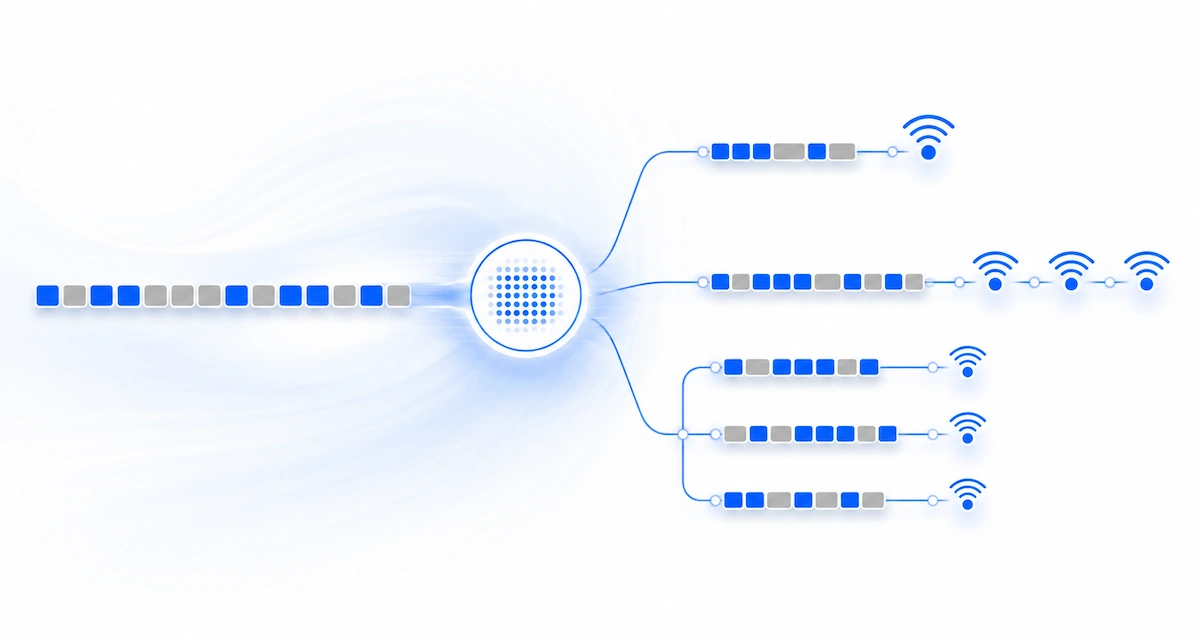
M-Bus parsing strategies for LoRaWAN and NB-IoT
How to best replace walk-by meter reading
Can your existing meters be retrofitted?

Battery life in IoT: beyond the datasheet number
Agile, Waterfall, or NRE? Choosing a development methodology
Developing adaptive IoT communication under the CRA
Focused supplier or large vendor? Depends on the project

Edge computing in IoT metering
Manufacturer as a technology partner

Why a device without an antenna fails

CE certification for IoT: What RED DA changes
Water losses in utility networks: The hidden cost of leaks
Pressure monitoring in water networks: Early fault detection
M-Bus pressure sensor: Leak detection for water utilities
The cost of measurement data errors and how to prevent them

Smart Readiness Indicator (SRI): All you need to know
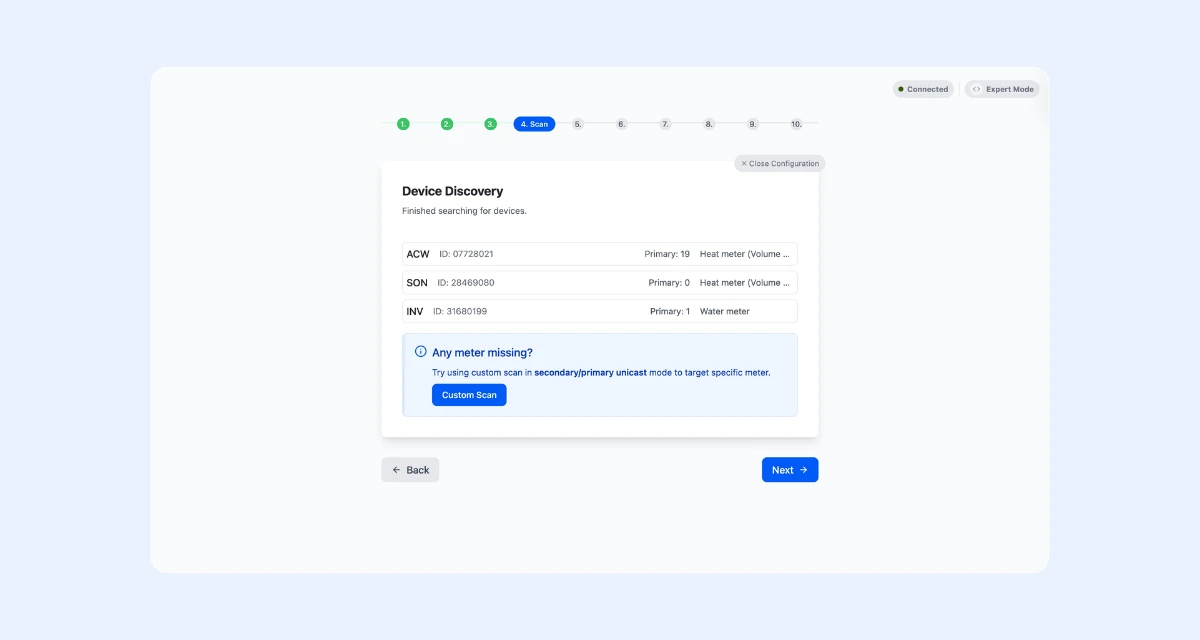
M-Bus installation tool Wizard from ACRIOS
Coulomb meter: Everything you need to know

ACRIOS and Quectel announce partnership

External or internal? How custom development works

Proven deployment of 10,000 wM-Bus converters for EED
Choosing a remote reading system for water utilities
Open data interfaces pay off for reporting and integration
15-minute vs daily meter readings frequency explained
Scripting in IoT: Flexibility, sustainability, and protection

Gas meter data to dashboard: ACR-EX meets Datacake
EPBD is coming: what BACS means for your building
When DTLS makes sense. Know before you deploy

Not your keys, not your hardware
868 MHz or 433 MHz? The right choice for your wM-Bus
Everything you need to know, documented. ACRIOS wiki.
End-to-end custom hardware and software development
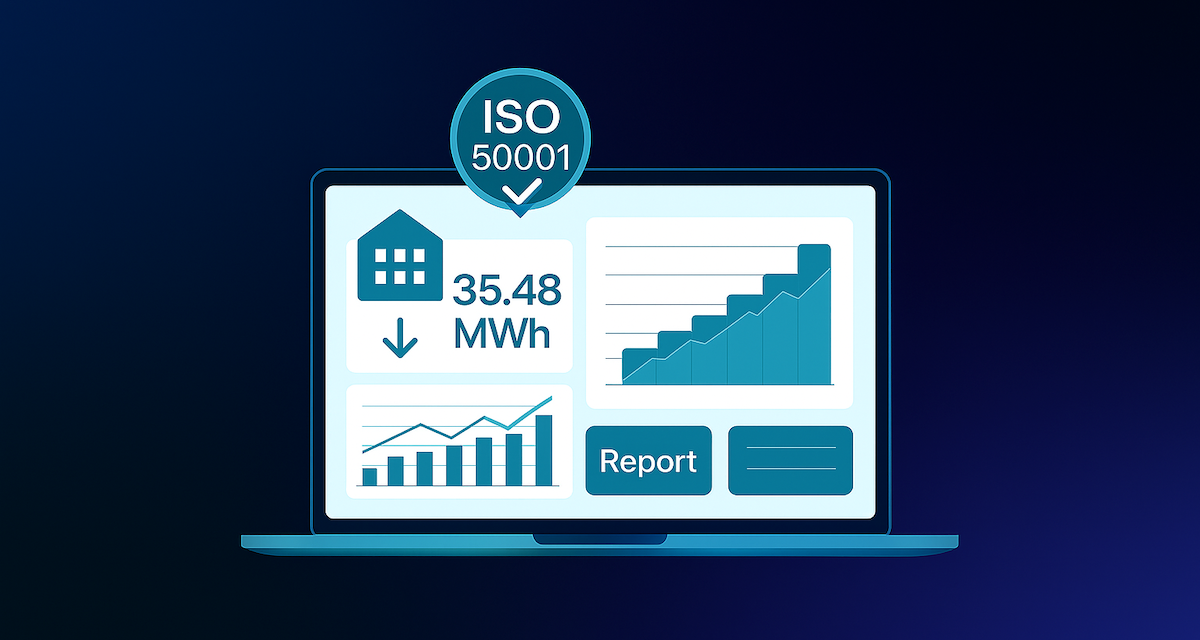
How to collect energy data to support ISO 50001
Lowering IoT TCO through smart manufacturing
Reading Sensus meters with zero hardware changes

Why 15-minute data matters in district heating

Give me a tool that works. Not a manual.

5 most common myths about remote meter reading

Battery-powered vs wired: What really costs more?

Cyber Resilience Act and IoT hardware
Next-gen meter readings, no replacements needed

Modernising metering infrastructure

M-Bus to IoT integration explained

Understanding TCO: More than just hardware

NB-IoT technology: All you need to know

LoRaWAN: All you need to know

M-Bus, wM-Bus, and RS-485: A technology guide

LoRaWAN vs. NB-IoT: Which technology is right for you?
Smart metering: What it is and why it matters

IoT: Technology that saves time and money