Lowering IoT TCO through smart manufacturing
When companies plan to deploy IoT devices, whether for industry, smart buildings, or logistics, they often focus on hardware pricing. That’s understandable; it’s the first number that stands out. But the purchase cost is just a small fraction of the Total Cost of Ownership (TCO). The real expenses lie in deployment, configuration, integration, management, and maintenance.
Think of buying a car. You’re not just paying for the vehicle. You also have to consider insurance, servicing, fuel, and potential repairs. The same goes for IoT. Costs tied to technical staff, software development or troubleshooting can quickly outweigh the device’s purchase price. The good news is that modern IoT manufacturers, such as ACRIOS, are designing solutions that reduce TCO from the ground up. Here’s how.
Preconfigured devices directly from the manufacturer
One of the most effective ways to reduce TCO is through ready-to-use devices delivered directly from the manufacturer. Instead of spending hours configuring each unit on site, the supplier can tailor the device in advance to meet your specific requirements. Key features of ready-to-use devices include:
- Custom firmware installation: Devices come with software tailored to the project, e.g. a temperature sensor pre-set to send data at required intervals.
- Parameter configuration: Communication protocols or data transmission frequency can be preloaded.
- Active SIM cards: The device connects immediately to the network, no manual activation needed.
- Pre-shipment testing: Every unit is verified before delivery to prevent installation issue.
Imagine receiving a sensor that works straight out of the box. No field configuration, no risk of human error. This saves time, reduces the load on your tech team, and accelerates deployment.
Integration tools that save weeks of effort
Another cost-cutting benefit lies in software tools provided by the manufacturer. Instead of building everything from scratch, you can use ready-made solutions:
- Sensor data processing tools: These interpret raw sensor inputs and format them for easy integration into ERP systems, dashboards, or other applications.
- Containerised backend apps: Preconfigured Docker apps can be deployed in minutes – with no need to set up complex servers.
With these tools, onboarding a device can take days instead of weeks. That means fewer external developers, less time spent coding, and faster time-to-value.
Remote management for lower maintenance costs
Modern IoT devices don’t stop at installation. They include features that reduce ongoing maintenance and increase flexibility:
- Over-the-air updates (FUOTA): Devices can receive firmware updates remotely. No need to send a technician on site.
- Remote configuration: Change settings like transmission intervals directly from the web interface.
These features save money on service calls, extend device lifetime, and allow quick adaptation to changing project needs.
Operational efficiency drives long-term savings
Manufacturers also help reduce TCO by building in features that optimise day-to-day operation:
- Minimised data transmission: Devices send only essential data, saving bandwidth and mobile network costs.
- Battery life estimation: Algorithms predict battery replacement timelines, allowing for better planning and fewer disruptions.
- Precise battery health metrics: Using components like coulomb counters, some devices can report actual energy levels – not just voltage – making battery management much more accurate.
A full-stack solution for low-effort deployment
When combined, these elements form a complete solution covering the full lifecycle of IoT devices:
- Preconfigured hardware with SIM: Ready to use from the box.
- Software tools for integration: Simplify onboarding into your systems.
- Backend apps for data analysis and control: Speed up time to value.
- Efficiency features: Lower operating and maintenance costs.
You don’t need to piece everything together – a quality supplier delivers a streamlined solution from start to finish.
Choose a partner who cares about TCO
Focusing only on the price of the hardware may seem cost-effective at first – but true savings come from considering the total cost of ownership. The right IoT supplier provides preconfigured devices, ready-to-use software, and lifecycle support that saves time, money and stress. Whether you need plug-and-play sensors, remote updates, or battery life optimisation, the right partner helps you deploy faster, smarter, and more cost-effectively.
-
-
FAQs
Reputable manufacturers offer custom configuration options during the ordering process. This includes firmware flashing, parameter setup, SIM card activation, and even field-specific calibration. If needed, most vendors can provide a pilot batch for testing in your real environment before large-scale deployment.
Yes. Modern devices support secure over-the-air firmware updates (FUOTA) and remote configuration, reducing the need for physical interventions and cutting maintenance costs.
When implemented correctly, FUOTA is secure and robust. Updates are verified before installation, and manufacturers usually test them under real-world conditions to ensure high reliability. This allows quick rollouts of fixes or improvements across your fleet.
Absolutely. Vendors often provide tools for data compression, threshold filtering, or event-driven transmission, all of which reduce traffic and prolong battery life.
Battery lifespan estimates come from a combination of real-world measurements and detailed usage simulations. Advanced devices use coulomb counters, not just simple voltage-based estimation, which allows for highly accurate tracking of actual energy consumption and remaining battery capacity.
Not necessarily. Quality vendors offer backend applications or APIs that can be integrated easily with your existing systems with no custom development required.
The best manufacturers support open protocols (e.g., MQTT, LoRaWAN, Modbus), allowing devices to integrate smoothly into heterogeneous environments. Even in mixed fleets, unified data ingestion and visualisation are achievable with the right middleware.
Yes. Pilot deployments allow you to validate functionality and integration in real conditions and fine‑tune configuration before scaling up.
IoT devices from TCO-aware manufacturers support remote configuration. You can adjust reporting intervals, sensor thresholds or network parameters over-the-air, without sending technicians into the field.
Want to reduce your IoT project costs? Whether you're planning a new deployment or optimising an existing one, we’re here to help. Let’s talk about how your project could benefit from lower TCO – without compromising on quality or flexibility.

Blog

ILI: what the EU leakage threshold measures

Pulsed water meter: All you need to know
LoRaWAN airtime: why radio conditions matter
Converter, bus, bridge, gateway: what's the difference?
What actually drains an IoT device battery
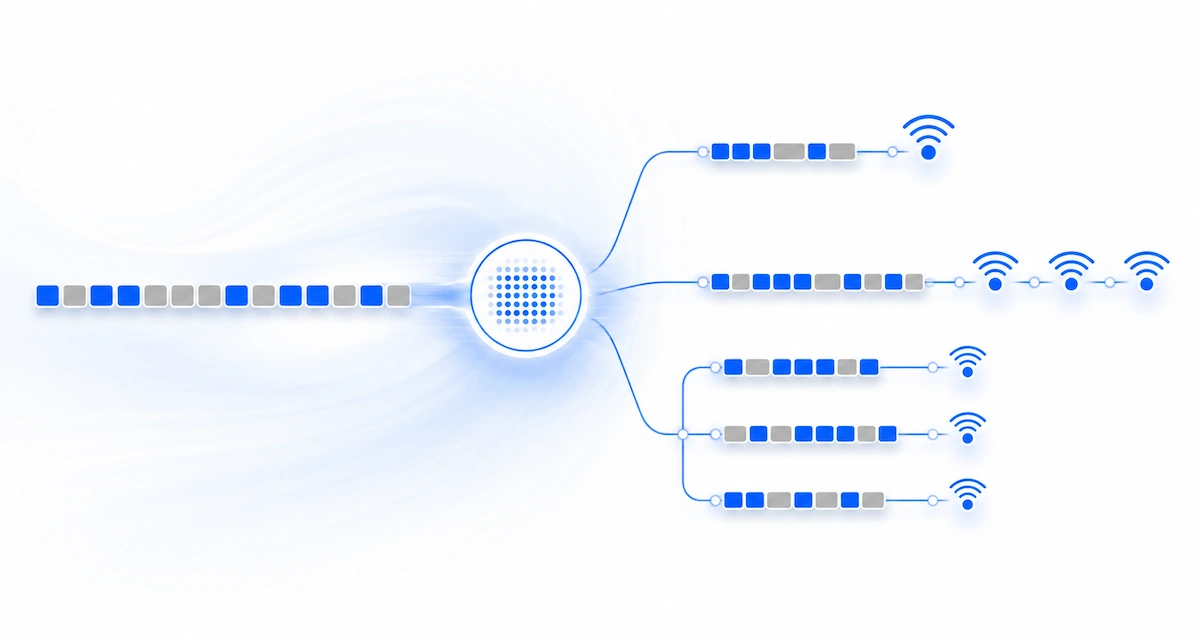
M-Bus parsing strategies for LoRaWAN and NB-IoT

How to best replace walk-by meter reading

Can your existing meters be retrofitted?

Battery life in IoT: beyond the datasheet number
Agile, Waterfall, or NRE? Choosing a development methodology

Developing adaptive IoT communication under the CRA

Focused supplier or large vendor? Depends on the project

Edge computing in IoT metering
Manufacturer as a technology partner

Why a device without an antenna fails

CE certification for IoT: What RED DA changes

Water losses in utility networks: The hidden cost of leaks

Pressure monitoring in water networks: Early fault detection
M-Bus pressure sensor: Leak detection for water utilities
The cost of measurement data errors and how to prevent them

Smart Readiness Indicator (SRI): All you need to know
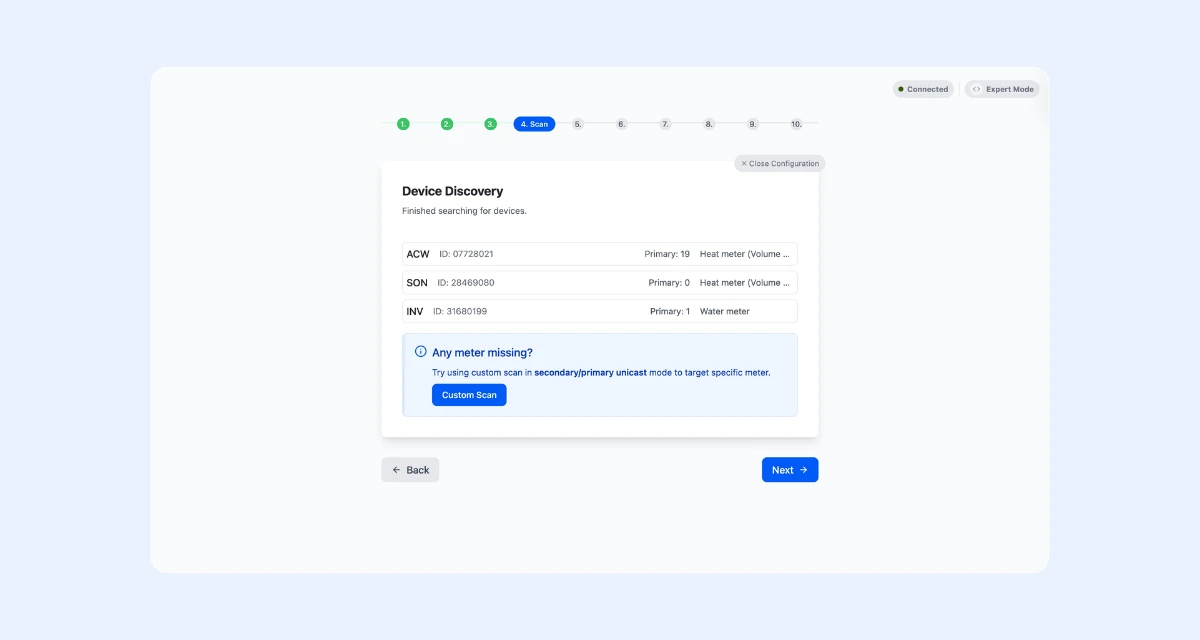
M-Bus installation tool Wizard from ACRIOS

Coulomb meter: Everything you need to know
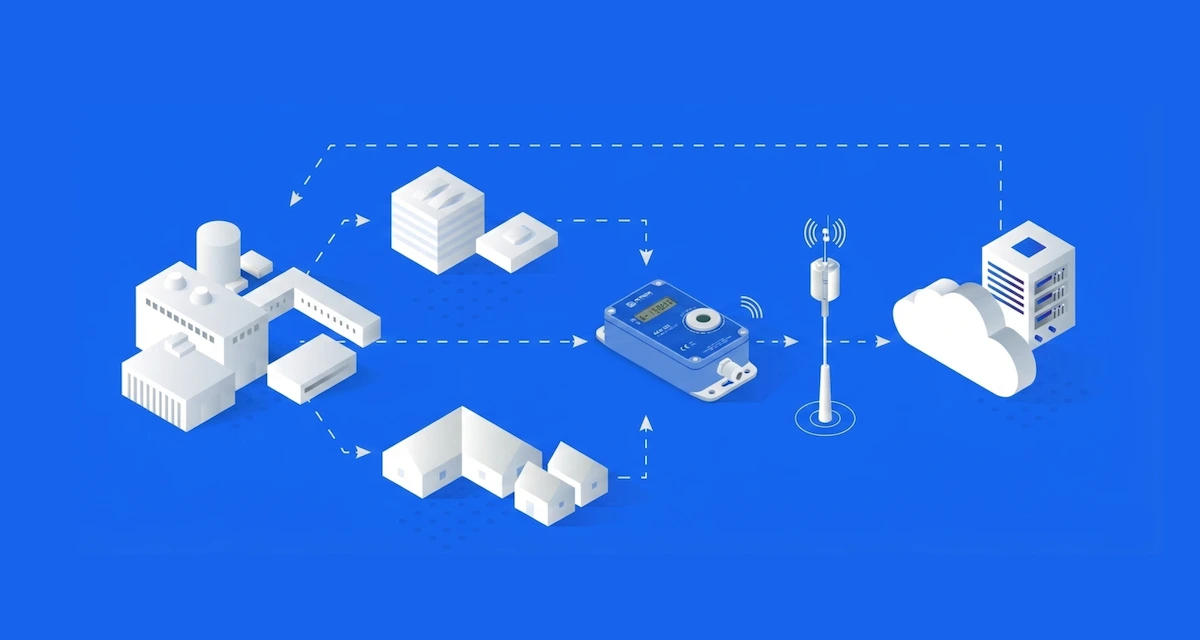
ACR-EX in water utilities: remote reading of pulse water meters

ACRIOS and Quectel announce partnership

External or internal? How custom development works

Proven deployment of 10,000 wM-Bus converters for EED
Choosing a remote reading system for water utilities
Open data interfaces pay off for reporting and integration

15-minute vs daily meter readings frequency explained
Scripting in IoT: Flexibility, sustainability, and protection

Gas meter data to dashboard: ACR-EX meets Datacake
EPBD is coming: what BACS means for your building
When DTLS makes sense. Know before you deploy
Not your keys, not your hardware
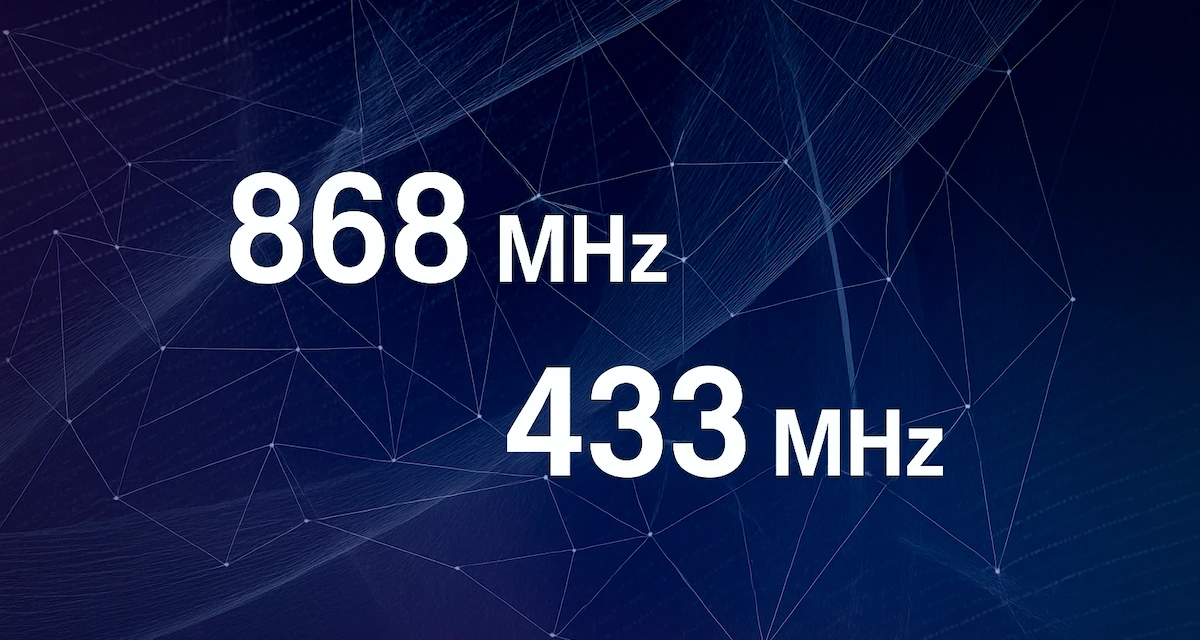
868 MHz or 433 MHz? The right choice for your wM-Bus
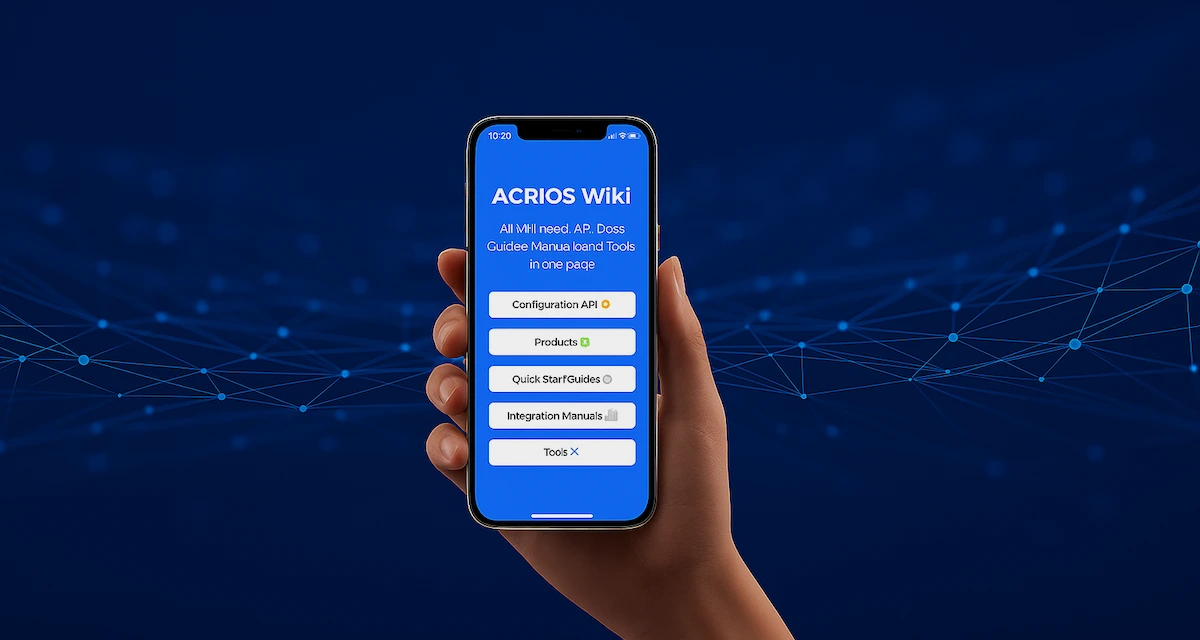
Everything you need to know, documented. ACRIOS wiki.
End-to-end custom hardware and software development
How to collect energy data to support ISO 50001

Reading Sensus meters with zero hardware changes

Why 15-minute data matters in district heating

Give me a tool that works. Not a manual.

5 most common myths about remote meter reading

Battery-powered vs wired: What really costs more?

Cyber Resilience Act and IoT hardware
Next-gen meter readings, no replacements needed

Modernising metering infrastructure

M-Bus to IoT integration explained

Understanding TCO: More than just hardware

NB-IoT technology: All you need to know

LoRaWAN: All you need to know

M-Bus, wM-Bus, and RS-485: A technology guide

LoRaWAN vs. NB-IoT: Which technology is right for you?
Smart metering: What it is and why it matters

IoT: Technology that saves time and money