Remote water meter readings without replacing existing meters
ACRIOS connects M-Bus, wM-Bus or pulse meters to NB-IoT and LoRaWAN. Open hardware, no platform lock-in, deployed in utilities across Europe.






What water utilities face and how we address it
Every conversation with a utility operator comes down to the same set of problems. Here's what we hear most, and our approach.

Walk-by routes cost €20+ per meter every year. It's a labour cost that scales with inflation and never stops. Our converters turn it into a one-time hardware spend.

Underground or locked installations require specialist crews, ladders, and permits. With remote reading, physical access is only needed for maintenance, not for every meter read out.

ACRIOS supports all major protocols, so one solution covers the whole network, whatever mix of vendors and meter generations you have.
Deep pits, dense buildings, and rural areas often fall outside coverage. We offer flexibility: NB-IoT concentrators for most sites, NB-IoT or LoRaWAN bridges for dead spots. No meter left behind.

Some utilities need more than raw data, they need it cleaned, structured, and delivered ready for billing or reporting, for example as CSV. Hardware is our core offering, but when this extra step is needed, our optional cloud service handles the standardization for you.

Our hardware needs no cloud connection, data stays on your own systems, and it's compliant with RED cybersecurity requirements (RED DA).
What changes when you have daily data
Most utilities currently get 4 data points per year per meter. With ACRIOS, you can get 8 760 data point. One for every hour of the year. That's not just a cost saving, it's a different way of running a water distribution network.

A burst pipe or leak shows up in the next daily reading; not 90 days later when a field crew happens to pass by.

No more estimates between quarterly visits. Every bill reflects actual consumption. Fewer disputes, better customer trust.

Unusual consumption patterns often point to a real problem: potential tampering, frozen pipes, a pool filled during summer droughts, or an unexplained spike. Get alerts before it becomes costly.

Water loss and non-revenue water reporting under the EU Drinking Water Directive is met automatically from daily meter data, no manual data collection or reconciliation needed.

What I keep seeing is, that utilities almost never end up with a single network. It's always a mix, some meters connected directly over LoRaWAN or NB-IoT, others simply too hard to reach that way. That's exactly where ACRIOS fits, filling in the blind spots. And if a utility is just starting out, ACRIOS retrofitting is a cheap way to find out what having remote data actually means, without replacing a single meter.
Some of our customers even go further and start selling that daily data to the hotels, factories, and restaurants they supply. But you don't need to start there. Even the basic version of just having remote data for the first time, without replacing a single meter, can change how you think about network operation.

From meter to your system – three deployment models
ACRIOS fits into existing infrastructure without changing what's already there. Choose the approach that matches your situation.


converter


converter


The right device for your infrastructure
Each device supports different meter communication and sends data via LoRaWAN or NB-IoT network. No meter replacement, no digging, no new infrastructure. Your IT team or system integrator handles the setup and you get data in your billing system.
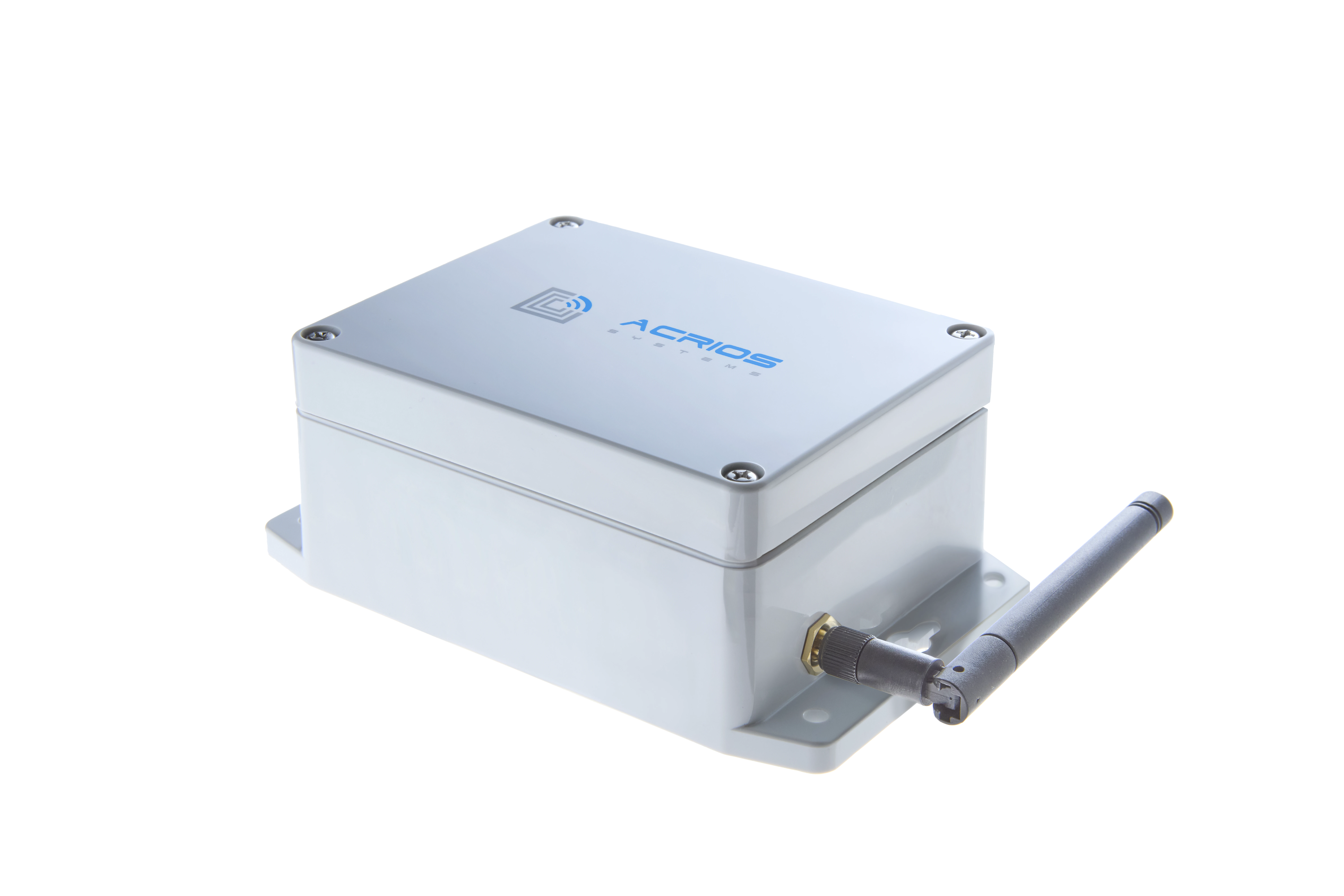
Wireless M-Bus to NB-IoT
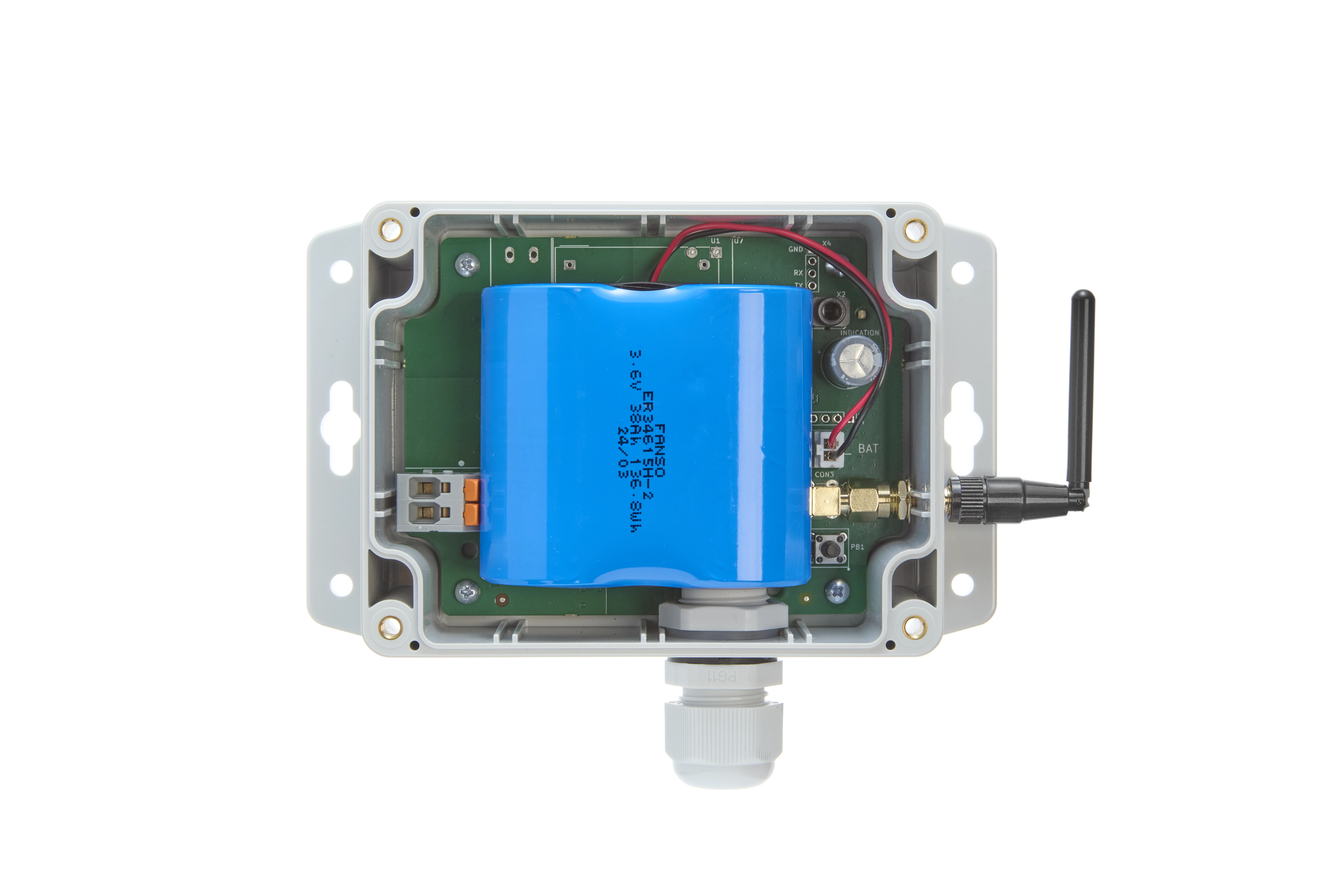
Wired M-Bus to NB-IoT
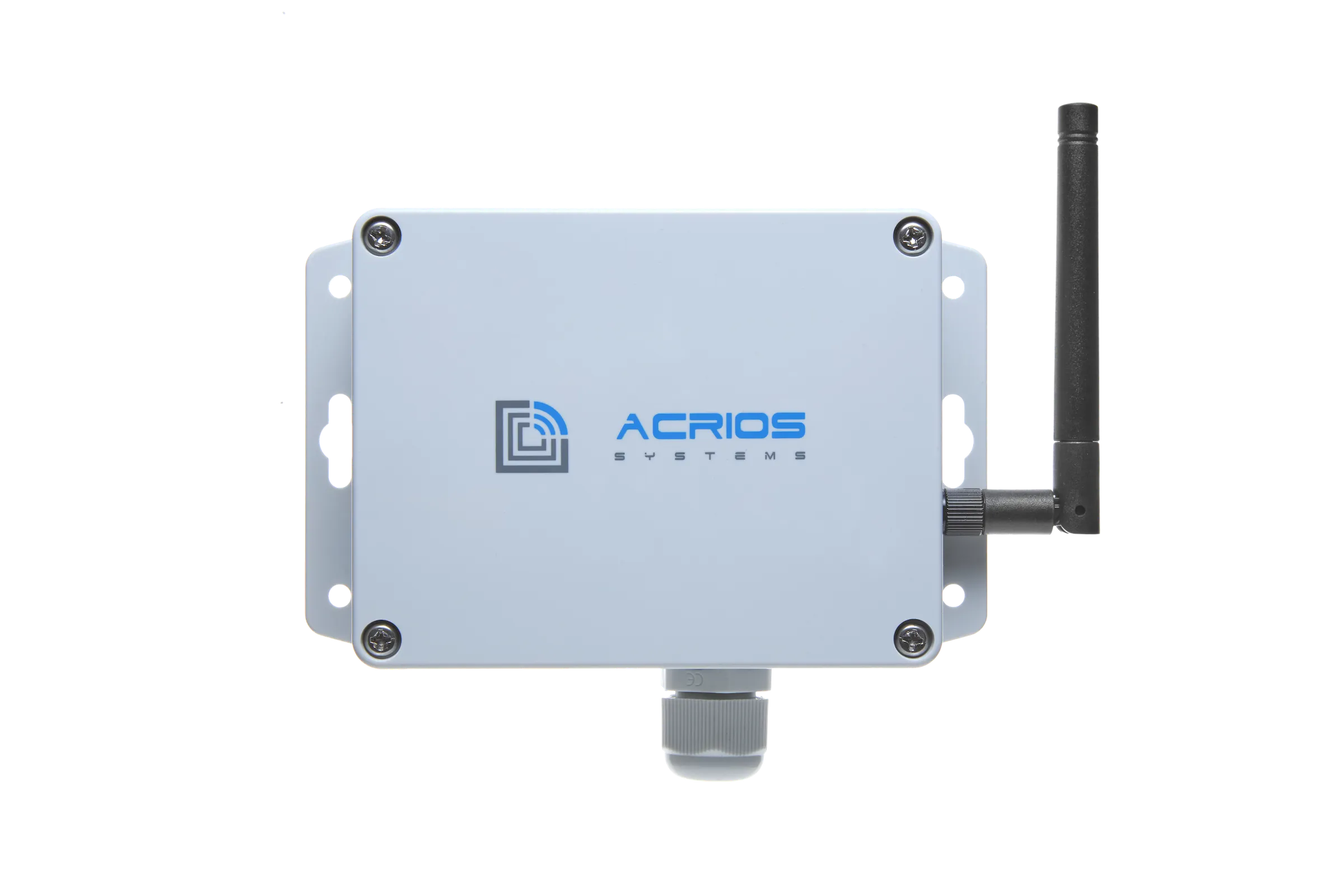
Wired M-Bus to LoRaWAN
or build your own
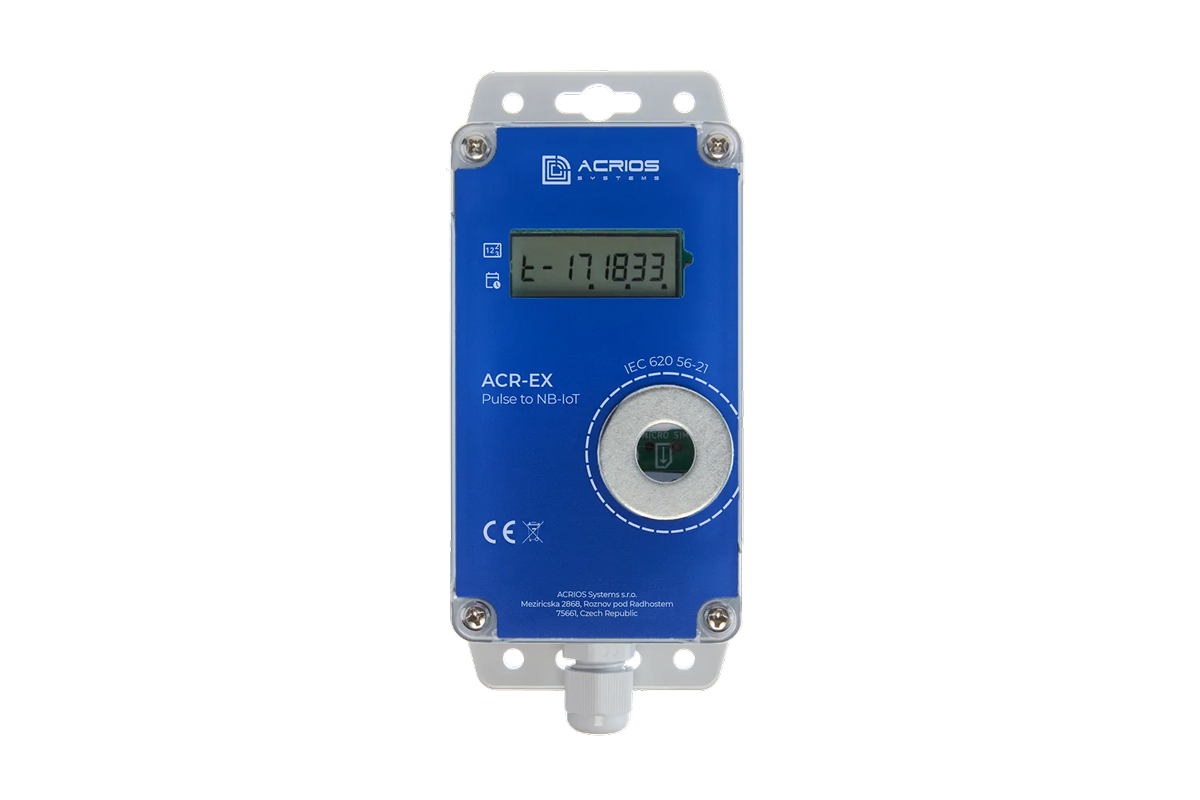
Pulse input (S0) to NB-IoT
consumption value
fits any standard installation
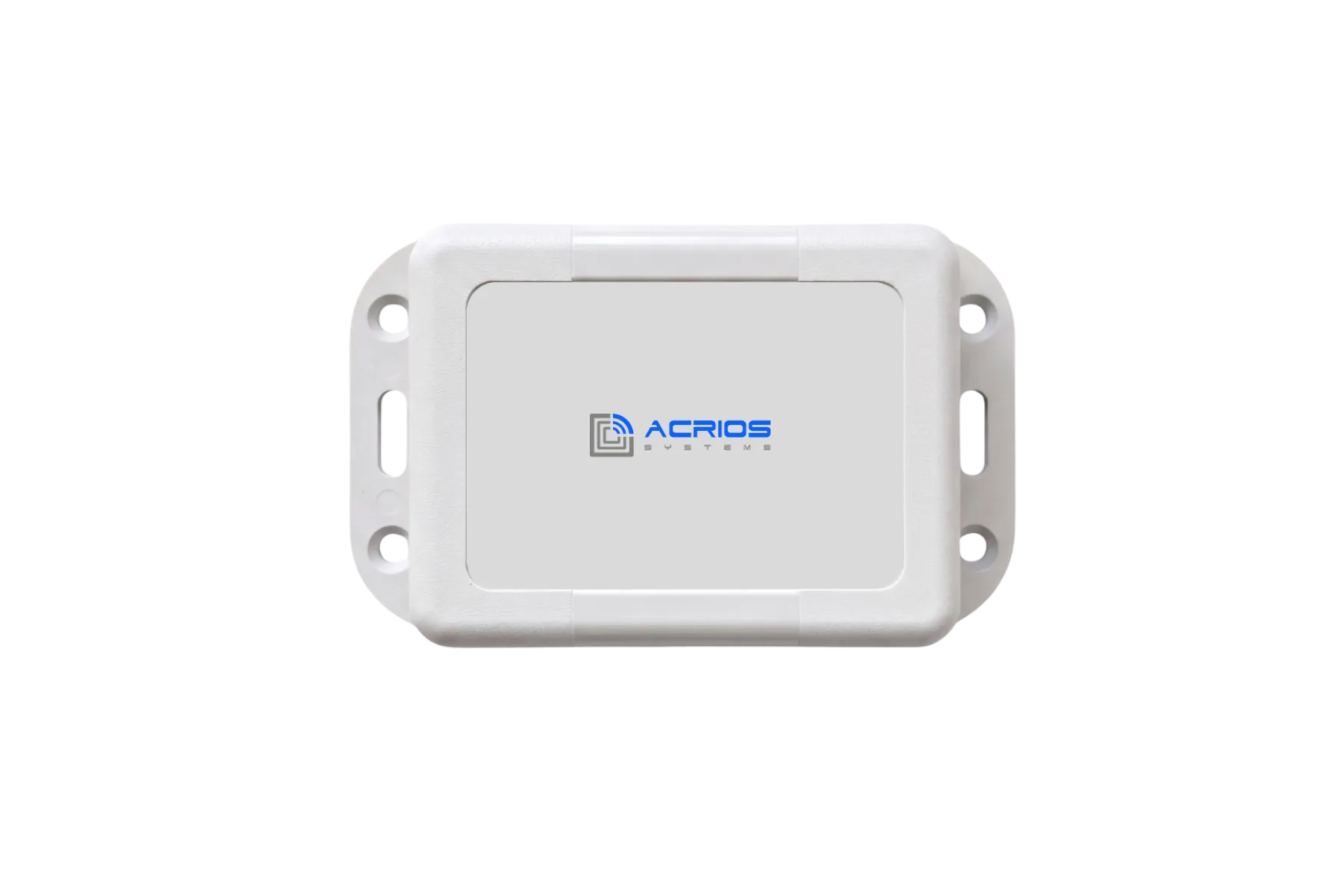
Wireless M-Bus bridge to NB-IoT
meters over the air
access per meter
for maximum protection
in resin to provide
IP68 coverage for
the harshest conditions
intervals
in minutes through our NFC application
over the air
Wireless M-Bus bridge to LoRaWAN
meters over the air
access per meter
for maximum
protection
in resin to provide
IP68 coverage for
the harshest conditions
intervals
in minutes through our NFC application
over the air
NB-IoT or LoRaWAN? And how to cover dead spots?
Every water utility is different. Select your situation and we'll show you the recommended approach and what to do about the hard cases.
Existing wM-Bus meters → wM-Bus to NB-IoT
- One converter reads on average ~12 meters in the field, or up to 800 in dense residential deployments.
- Works with most brands: Sensus, Sontex, Apator and any OMS-compliant meters
- NB-IoT has coverage almost everywhere and SIM cards cost ~€3/year
- Typical payback: ~1 year based on eliminated walk-by reading costs

Wireless M-Bus to NB-IoT
Wired M-Bus to NB-IoT

City LoRaWAN network → M-Bus to LoRaWAN
- Connects existing meters directly to a public or private LoRaWAN network (Actility, TTN, ChirpStack – any standard network)
- No SIM card costs – data travels over the private or public gateway infrastructure
- Adds an ACRIOS bridge where the city's LoRaWAN signal is thin, or falls back to NB-IoT for those zones
Wired M-Bus to LoRaWAN
Wireless M-Bus to LoRaWAN bridge
Dead spots → Layered coverage approach
- 80% of meters use NB-IoT converters – NB-IoT covers most locations, including deep pits
- Remaining ~20% use a small LoRaWAN gateway to aggregate meters in that area, relaying data via NB-IoT or a wired backhaul
- Alternative: wired M-Bus converters for meters in locations with no wireless signal
- All data streams can be unified into a single export to billing or SCADA, regardless of how each meter connects
- This is the most common real-world scenario – and exactly what we're built for
Wireless M-Bus to NB-IoT
Wired M-Bus to NB-IoT
New meter rollout → Specify smart or retrofit?
- Native LoRaWAN meters: clean integration, but a higher meter cost and dependence on LoRaWAN coverage everywhere
- Standard M-Bus meters + ACRIOS retrofit: lower meter cost, flexible network choice, same outcome
- Mixed approaches work well – native LoRaWAN where coverage is reliable, retrofit for the rest
- We help write the technical specification so you're not locked into one vendor's ecosystem
- Key question: do you own your LoRaWAN infrastructure, or depend on a third party?

Get a technical specification review
Detect leaks before they become visible
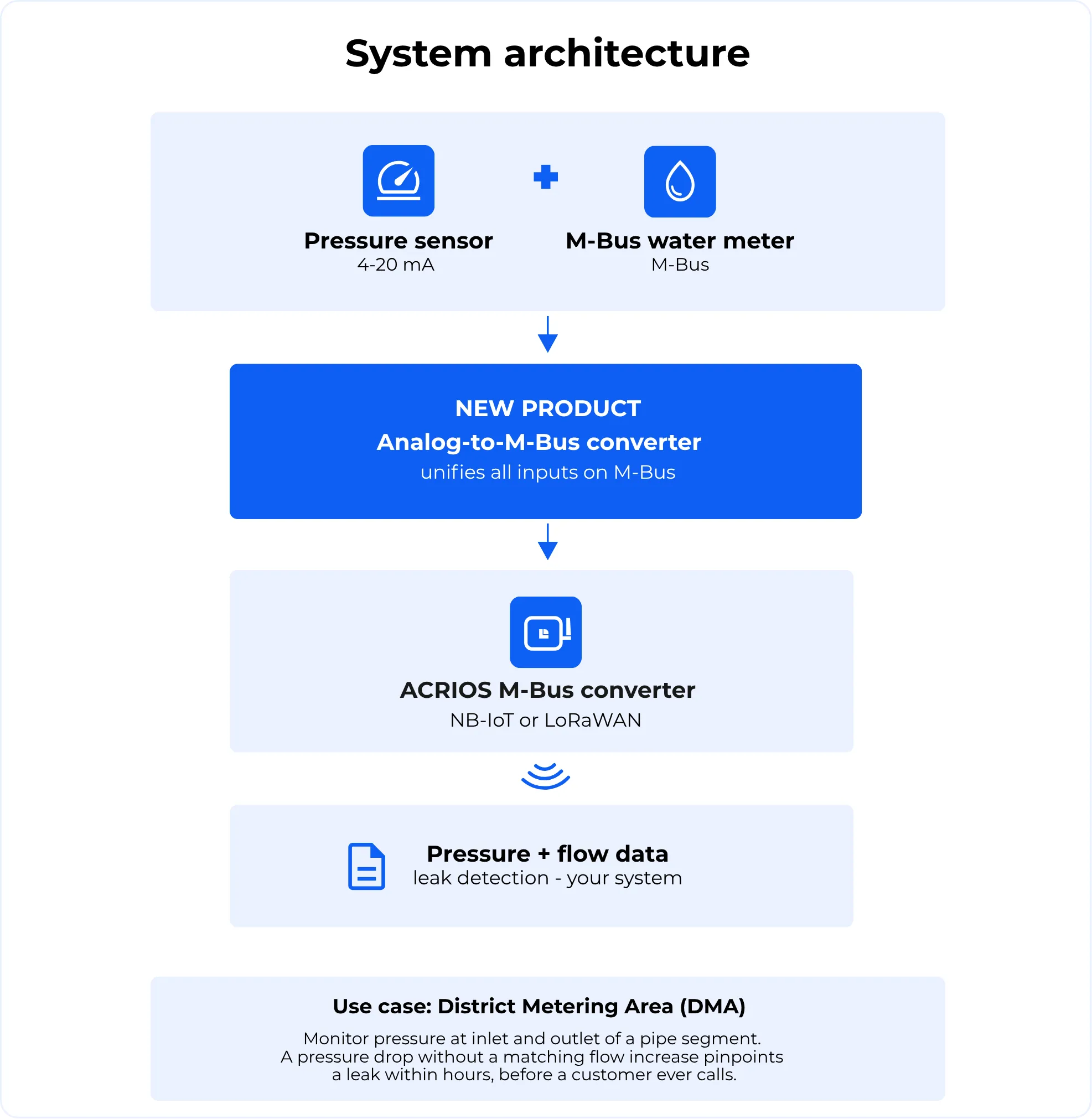
We are developing an Analog-to-M-Bus converter – a bridge device that brings analog pressure sensors onto the M-Bus network.
Combined with a standard M-Bus water meter, both devices connect to a single ACRIOS M-Bus to NB-IoT or LoRaWAN transmitter.
Pressure drops across pipe segments reveal leaks hours before they cause visible damage.
- Analog pressure sensor (4–20 mA / 0–10 V) converted to M-Bus
- M-Bus water meter connects to the same converter = one M-Bus line
- Single ACRIOS M-Bus master sends both readings from meter and pressure sensor via NB-IoT / LoRaWAN
- Designed for District Metering Areas (DMAs) and pipe network monitoring
Typical payback in under 18 months
Manual reading costs ~€30/meter/year and never stops. ACRIOS reads from €16/meter, paid once, with a 10+ year battery. Daily readings instead of 12 a year.
Based on monthly manual readings (12×/year) at €2.50/meter/visit, 70% eliminated after full deployment. Reading cost savings only; operational benefits like leak detection typically improve payback further.
(one-time, ~€20/meter)
eliminated per year
5-year net savings
€17 000
(one-time, ~€20/meter)
eliminated per year
5-year net savings
€85 000
(one-time, ~€20/meter)
eliminated per year
5-year net savings
€425 000
Hardware is a one-time cost, savings continue every year after. Volume pricing available from 25 units; for deployments over 500 meters request a pilot kit.
Pilot test within a week

Tell us your meter types, coverage situation, and expected outcomes. We can then recommend you the right approach.

We send a preconfigured device with the SIM card. You then install it on existing meters and we take care of data processing to quickly evaluate the proof of concept..

Roll out across your full network. Add more converters, cover dead spots, connect to billing; on your timeline.
Proven in real operations
We implemented ACRIOS bridges in standard water utility operations, integrating them with eMR Fusion 2. The readings are reliable, NB-IoT transfer is stable, and the application clearly displays flow, temperature, and battery status. The solution is stable and we plan further rollouts.
Vilnius Water
Large-scale retrofit; no mass meter replacement. Existing meters connected via wM-Bus to NB-IoT converters.
Valamar Riviera
Multiple buildings, multiple meter types. Unified data feed exported to operational system.
Czech & Slovak utilities
City LoRaWAN with NB-IoT for dead spots. Data unified and exported directly to uSYS billing system.
Tasked with finding a solution for a utility?
We work with system integrators, software vendors and engineering firms who deliver complete solutions to utilities and need reliable, open hardware at the core.
- Works with any LoRaWAN network server; Actility, The Things Network, Chirpstack, your custom stack
- If you happen to need a data and device management platform, we have a solution as well
- No required cloud platform; we sell hardware, you own the integration
- OEM and volume pricing available; resell under your brand
- Preconfigured devices ready to deploy; reduces installation time
- Technical documentation and API references available on our Wiki
- We've worked as hardware supplier behind integrators on projects from 200 to 10,000+ converters
Frequently asked questions
Straight answers to what we hear every week from operators and integrators.
It always depends on the meters used and the utility's area of coverage, so there's no single universal answer. In our experience, the most common setup is roughly 80/20: 80% of meters read directly via their own LoRaWAN or NB-IoT radio, with the remaining 20% retrofitted using a solution such as ours. That said, this split isn't necessarily the optimal solution for every case, just the most typical one.
That depends on how you link readings to customer accounts in your own billing system, which is your responsibility as data controller, not ours. Since our hardware sends data straight to infrastructure you control, with no mandatory third-party cloud in between, it fits into whatever GDPR or data residency setup you already have, rather than introducing a new external processor.
We sell hardware, not a data business. Readings travel directly from the converter to your own billing or SCADA system over LoRaWAN or NB-IoT. ACRIOS never sits in that data path, so your data stays yours. The optional ACRIOS Platform (data management, unified export) is a separate layer with its own data handling terms, which we explain clearly before you switch it on.
It's a one-time hardware cost, from €16 to €20 per connected meter depending on site density and meter type. There's no platform fee and no mandatory cloud subscription. The only recurring cost is connectivity: for NB-IoT, that's roughly €1 per SIM per year.
Yes. Our wireless M-Bus bridge is IP68 rated, built specifically for underground pits and shafts. The ACR-EX pulse to NB-IoT unit is IP67. Both are designed to sit in wet, enclosed spaces without requiring housing or an extra enclosure.
The most common causes, in order of likelihood, are: (1) the device is out of gateway range or too deep in a pit or shaft for the signal to escape (LoRaWAN degrades quickly underground); (2) it isn't registered correctly on the network server (a DevEUI, AppEUI or AppKey mismatch, or it was never joined or activated); (3) the frequency plan on the device doesn't match the region or gateway; (4) the battery is depleted or wasn't fully seated at installation; or (5) the antenna is obstructed, coiled, or facing the wrong way. Start by checking whether the device shows as "joined" on your network server. If it never joined, the cause is almost always (2) or (3). If it joined once and then went silent, it's usually (1) or (4), and we have a solution for both.
We read wireless M-Bus (S/T/C mode, OMS compliant), wired M-Bus, pulse output (S0), and RS-485/Modbus. Specifically validated brands include Apator, Sensus, Sontex, Itron, Zenner, Diehl, Kamstrup, and 15+ others. If your meter isn't on that list, send us the datasheet, and we'll confirm compatibility before a pilot.
It's an optional software layer that sits on top of the hardware, not something you're required to use. It adds device management and a unified export format when you're pulling data from a mix of connection types (NB-IoT, LoRaWAN, and several converters) and want a single clean feed instead of several. It's a good fit if you don't have an integrator or IT department in-house and need the data to land cleanly in a SCADA system or another application.
NB-IoT is the simpler default for most utilities. It reaches almost everywhere, including deep pits, needs no gateway infrastructure of your own, and costs about €1 per SIM per year. LoRaWAN makes more sense if your city or utility already operates or has access to a LoRaWAN network, since there's no SIM cost at all and you're using infrastructure you already control. If you're not sure what coverage you have, that's completely normal. We can help map it, and most deployments use NB-IoT as the primary layer, with a LoRaWAN relay for specific dead spots.
Partially. We can integrate LoRaWAN gateways into the ACRIOS Platform and help process data from your meters, but we don't handle network planning itself. We typically get involved when a water utility is setting up its own network or wants to test the LoRaWAN approach first, and in that case we can act as a one-stop shop.
Blog
Focused supplier or large vendor? Depends on the project

Why a device without an antenna fails
Water losses in utility networks: The hidden cost of leaks
Pressure monitoring in water networks: Early fault detection
M-Bus pressure sensor: Leak detection for water utilities
The cost of measurement data errors and how to prevent them
Coulomb meter: Everything you need to know
ACR-EX in water utilities: remote reading of pulse water meters

ACRIOS and Quectel announce partnership
Proven deployment of 10,000 wM-Bus converters for EED
Choosing a remote reading system for water utilities
Open data interfaces pay off for reporting and integration

15-minute vs daily meter readings frequency explained
EPBD is coming: what BACS means for your building
When DTLS makes sense. Know before you deploy
868 MHz or 433 MHz? The right choice for your wM-Bus
How to collect energy data to support ISO 50001
Lowering IoT TCO through smart manufacturing
Reading Sensus meters with zero hardware changes
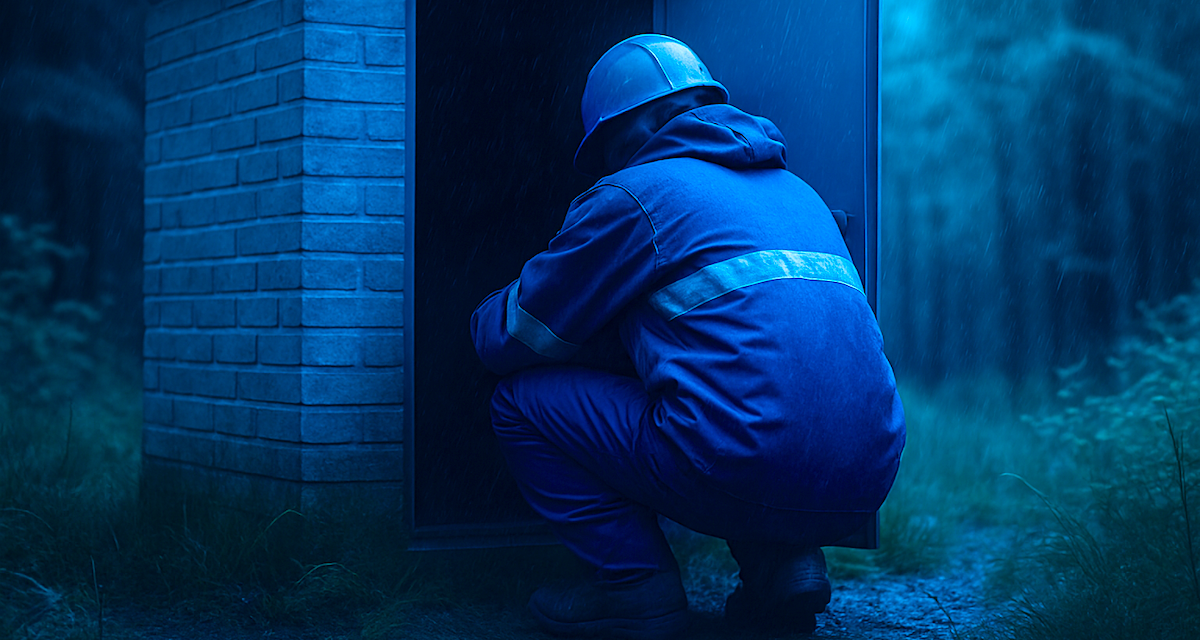
Give me a tool that works. Not a manual.

5 most common myths about remote meter reading

Battery-powered vs wired: What really costs more?

Cyber Resilience Act and IoT hardware
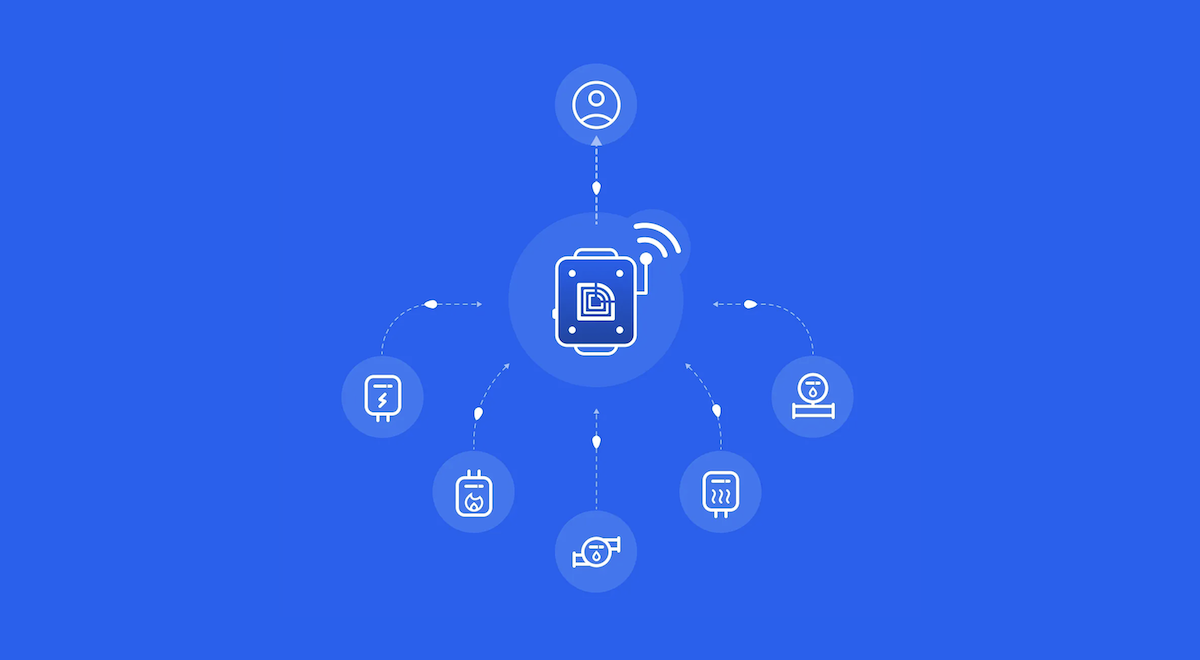
Next-gen meter readings, no replacements needed

Modernising metering infrastructure

M-Bus to IoT integration explained
Understanding TCO: More than just hardware
NB-IoT technology: All you need to know

LoRaWAN: All you need to know

M-Bus, wM-Bus, and RS-485: A technology guide

LoRaWAN vs. NB-IoT: Which technology is right for you?
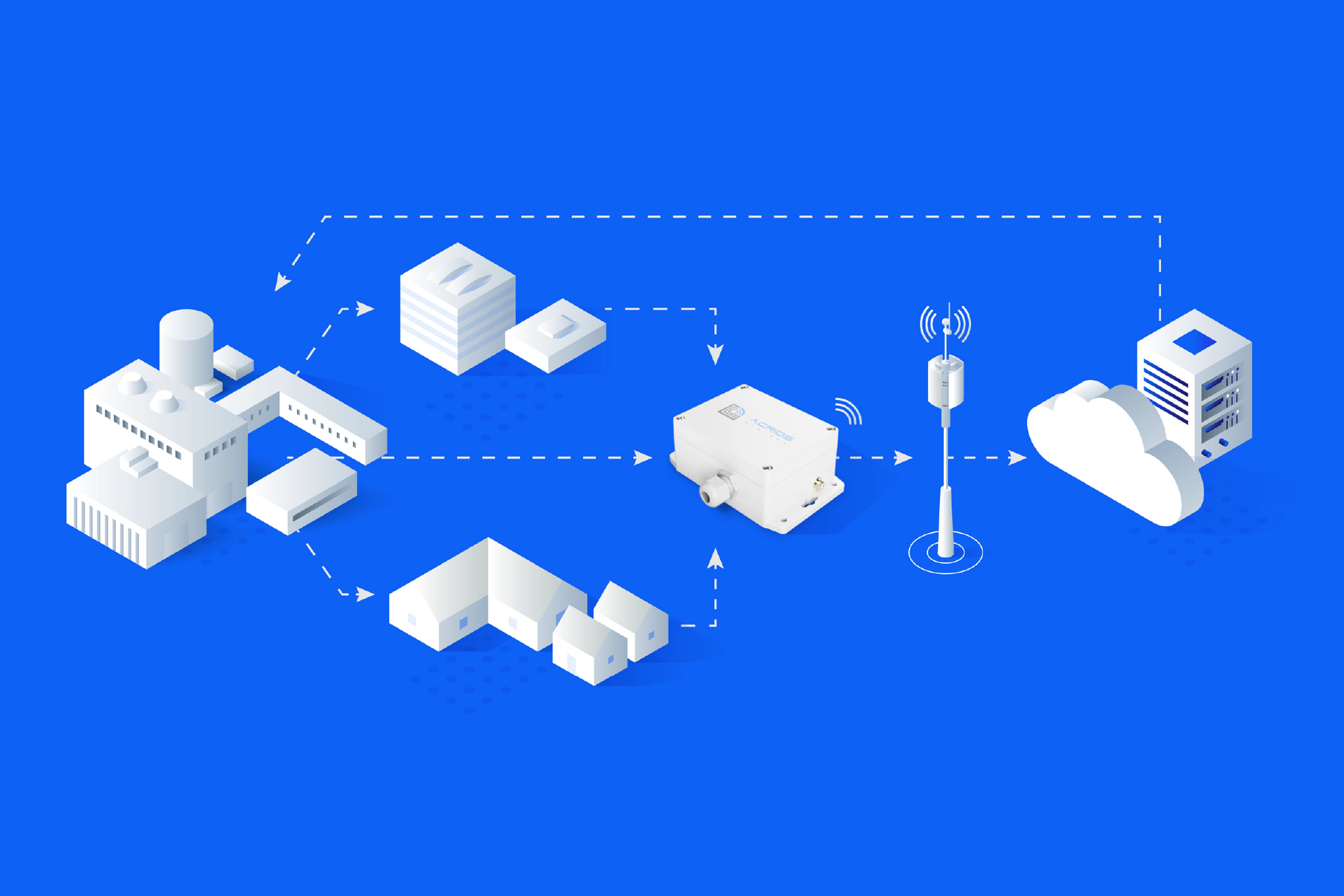
Smart metering: What it is and why it matters
IoT: Technology that saves time and money
Get in touch
Ask a technical question, request more information, or tell us about your project. We'll point you to the right person and the right solution.
In touch across Europe
Based in the Czech Republic, working with customers and partners across Europe. Ask us for the right contact in your region.