Why a device without an antenna fails

The antenna is not an accessory; it is core to a reliable design
What does it mean when a device works without an antenna? At first glance, it might look impressive that it "picks up a signal" without anything attached. In reality, that is more often a design flaw than a feature.
Under laboratory conditions, a section of the printed circuit board, a stray cable, or even a screw can act as an improvised antenna. In the field, the absence of a properly tuned antenna creates a chain of problems: shorter range, frequent connection drops, higher power consumption, and a real risk of overheating in the transmitter output stage. So, when a device communicates without an antenna, it is not proof of quality. It is a sign that the radio design is not optimal.
Key takeaways
- If a device designed exclusively for an external antenna still connects when that antenna is removed, this may indicate that unintended parts of the hardware are radiating instead.
- Operating such a device without its antenna can lead to shorter range, connection drops, higher power consumption and a risk of overheating in the transmitter output stage.
- Radio systems are commonly designed around a 50 Ω impedance. Poor impedance matching causes part of the transmitted power to be reflected rather than radiated efficiently and is indicated by a higher SWR.
- Internal antennas favour compactness, while external antennas typically offer better performance but add a connector and an installation step. A device designed exclusively for an external antenna should not be operated without it.
- A simple field check needs no lab equipment: without its external antenna, a well-designed device should not connect, or only under exceptionally favourable conditions. Comparing RSSI and SNR values in the logs with and without the antenna gives a more thorough picture.
- Antenna placement, tuning and integration directly affect range, connection stability and power consumption, so antenna design needs to be considered from the beginning rather than treated as an accessory.
The antenna decides reliability and lifetime
The antenna is the critical element that converts energy between the radio chip and the surrounding environment. When it is missing or badly tuned, energy is lost inside the device instead of being radiated outward. The technical reason is impedance matching. Radios are typically designed for a 50 Ω load, and any significant deviation from this load results in some of the transmitted power reflecting back. This shows up as a high SWR (standing wave ratio), and the reflected energy heats the output stage instead of leaving the box.
The practical consequences are direct. Connections take longer to establish, packets are retransmitted, and batteries drain faster.
A well-designed antenna brings further benefits. It helps deliver consistent performance across every manufactured unit and makes regulatory and certification compliance easier to meet. In real terms, the device behaves predictably across very different environments, from a flat to a technical riser to an industrial hall. The chosen frequency band also plays its part, influencing signal propagation and the requirements placed on the antenna section.
Antenna types and their differences
Antennas come in several forms, and confusing them is the most common cause of "the device does not work" reports. Internal antennas (PCB trace or chip antennas integrated into the device) trade peak performance for compactness. External antennas, typically a stub or whip with an SMA or U.FL connector, deliver better performance but add a connector and an extra step during installation.
Devices designed exclusively for an external antenna will not, and should not, work without it. Devices with a built-in antenna will work without anything attached, because the antenna is already there. Telling these two categories apart is essential at the selection and installation stage.
What a well-designed antenna means for the end user
A properly designed antenna means fewer headaches. When a manufacturer factors the antenna into the design from the start, the result is longer battery life, more stable connections, and fewer service visits. It is worth asking a few specific questions:
- Does the device have a dedicated space for the antenna?
- Was antenna tuned in the actual enclosure, rather than on a bare board?
- Can antenna be fine-tuned during installation if needed?
The answers usually reveal whether the device will hold up in the field. Mounting is easier, too. Well-executed antenna connectors reduce the risk that performance drops once the cover is closed. Installation is faster, returns go down, and device behaviour stays predictable.
A simple field test for antenna performance
A basic check does not require lab equipment. If the device has a removable antenna, try unscrewing it. A correctly designed device should not connect to the network at all in that state, or should connect only under exceptionally favourable conditions. Once the antenna is screwed back on, the device should connect without trouble, even in tough spots like a basement, a technical riser, or farther from the gateway.
A more thorough check is possible through the device logs. Compare the RSSI (received signal strength) and SNR values before and after the antenna is connected. The difference should be substantial. If the device shows similar values in both states, it is essentially radiating from random metal parts, which is exactly what should not happen.
This simple test reveals whether the radio and antenna design follow good engineering practice.
A real-world scenario
A typical scenario looks like this: a "device does not work" report comes into support. Diagnostics start from the basics. The unit is verified to see meters on the M-Bus line, the NB-IoT parameters (PLMN ID and APN) are confirmed as correctly configured, and the right SIM is in place. Nothing points to the cause until a photo of the installation reveals the missing antenna. Once it is fitted, the device registers immediately and operates as expected.
The reason for the omission tends to be the same. Operators are often used to products with internal antennas (or to devices that "somehow" work without one), so during local testing, they do not consider the external antenna necessary. For a solution that relies exclusively on an external antenna, that omission is fatal for the entire setup.
Summary and recommendation
A device that works without an antenna relies on luck and ideal conditions. In real operation, that translates into avoidable trouble. The placement, tuning, and integration of the antenna make a fundamental difference to range, connection stability, and battery life, often more than the choice of communication module itself. That is why the antenna deserves attention from the first design step, and why we recommend verifying device behaviour with simple tests before rolling out at scale.
This article is intended as general technical guidance. Specific antenna selection, RF performance, and installation outcomes depend on the device, the meter, the enclosure, and local conditions. Operators planning a deployment should verify their setup with the manufacturer or an experienced integrator.

Glossary of terms used
- APN (Access Point Name): a network identifier used by a cellular device to establish a data connection to an external network, such as the internet or a private network
- Chip antenna and PCB antenna: types of internal antenna; a chip antenna is a small component mounted on the circuit board, while a PCB antenna is formed by a conductive trace directly on the board
- Impedance matching: designing the antenna and RF path so that their impedances are matched, typically to 50 Ω, allowing power to be transferred with minimal reflection
- NB-IoT (Narrowband IoT): a cellular low-power technology running in mobile operators' licensed networks, suited to devices that send small amounts of data
- PLMN ID (Public Land Mobile Network Identifier): a code that identifies a mobile network, consisting of a Mobile Country Code (MCC) and a Mobile Network Code (MNC)
- RSSI (Received Signal Strength Indicator): a measure of the strength of the radio signal received by a device
- SMA and U.FL: types of RF connector used to connect antennas or other RF components; SMA is a threaded connector, while U.FL is a miniature snap-on connector
- SNR (Signal-to-Noise Ratio): the ratio between the strength of the useful signal and the background noise
- SWR (Standing Wave Ratio): a measure of impedance matching in an RF system, where higher values indicate a poorer match and more reflected power
- Transmitter output stage: the final amplifier stage of a radio transmitter, which delivers power to the antenna
FAQs
Because it points to a poorly designed antenna section. In real operation, this leads to higher power consumption, dropped connections, and shorter range.
The transmitter can radiate energy into unintended parts of the printed circuit board. This causes the output stage to overheat, potentially shortening its operational life.
Yes. If a device works without an antenna, that is a warning sign. If it refuses to connect without one and operates reliably with the antenna fitted, even in difficult conditions, the design is most likely sound.
Are you planning a wireless meter reading project and want to be sure the radio side of things will hold up in the field? Get in touch, and we will go through your installation conditions, meter mix, and coverage requirements together. We can help confirm whether your chosen converter is built for the job, or recommend a setup that is.

Blog

ILI: what the EU leakage threshold measures

Pulsed water meter: All you need to know

LoRaWAN airtime: why radio conditions matter
Converter, bus, bridge, gateway: what's the difference?
What actually drains an IoT device battery
M-Bus parsing strategies for LoRaWAN and NB-IoT

How to best replace walk-by meter reading

Can your existing meters be retrofitted?

Battery life in IoT: beyond the datasheet number

Agile, Waterfall, or NRE? Choosing a development methodology

Developing adaptive IoT communication under the CRA

Focused supplier or large vendor? Depends on the project

Edge computing in IoT metering

Manufacturer as a technology partner

CE certification for IoT: What RED DA changes

Water losses in utility networks: The hidden cost of leaks

Pressure monitoring in water networks: Early fault detection

M-Bus pressure sensor: Leak detection for water utilities

The cost of measurement data errors and how to prevent them

Smart Readiness Indicator (SRI): All you need to know
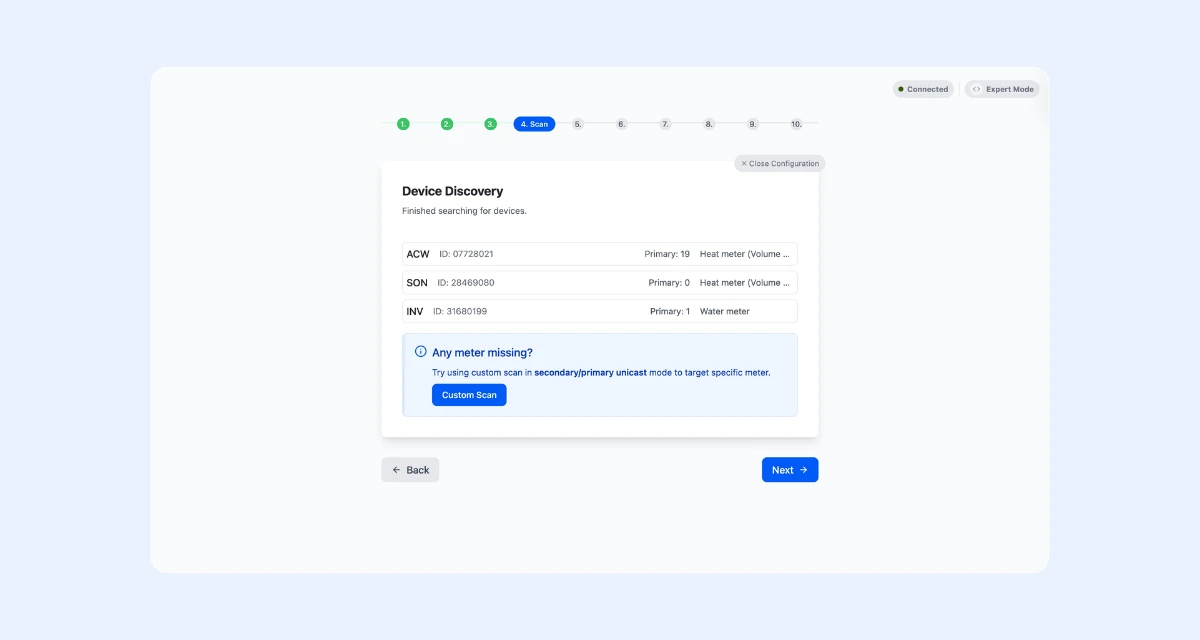
M-Bus installation tool Wizard from ACRIOS

Coulomb meter: Everything you need to know
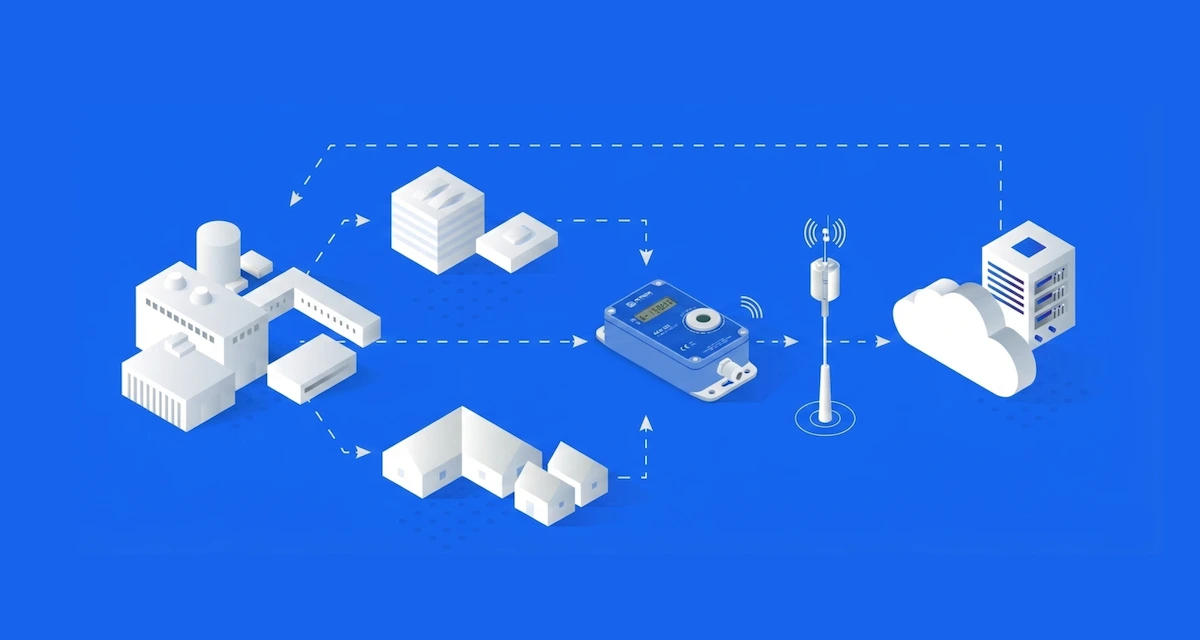
ACR-EX in water utilities: remote reading of pulse water meters

ACRIOS and Quectel announce partnership

External or internal? How custom development works

Proven deployment of 10,000 wM-Bus converters for EED

Choosing a remote reading system for water utilities

Open data interfaces pay off for reporting and integration

15-minute vs daily meter readings frequency explained

Scripting in IoT: Flexibility, sustainability, and protection

Gas meter data to dashboard: ACR-EX meets Datacake
EPBD is coming: what BACS means for your building
When DTLS makes sense. Know before you deploy

Not your keys, not your hardware
868 MHz or 433 MHz? The right choice for your wM-Bus
Everything you need to know, documented. ACRIOS wiki.

End-to-end custom hardware and software development
How to collect energy data to support ISO 50001

Lowering IoT TCO through smart manufacturing

Reading Sensus meters with zero hardware changes

Why 15-minute data matters in district heating

Give me a tool that works. Not a manual.

5 most common myths about remote meter reading

Battery-powered vs wired: What really costs more?

Cyber Resilience Act and IoT hardware

Next-gen meter readings, no replacements needed

Modernising metering infrastructure

M-Bus to IoT integration explained

Understanding TCO: More than just hardware

NB-IoT technology: All you need to know

LoRaWAN: All you need to know

M-Bus, wM-Bus, and RS-485: A technology guide

LoRaWAN vs. NB-IoT: Which technology is right for you?
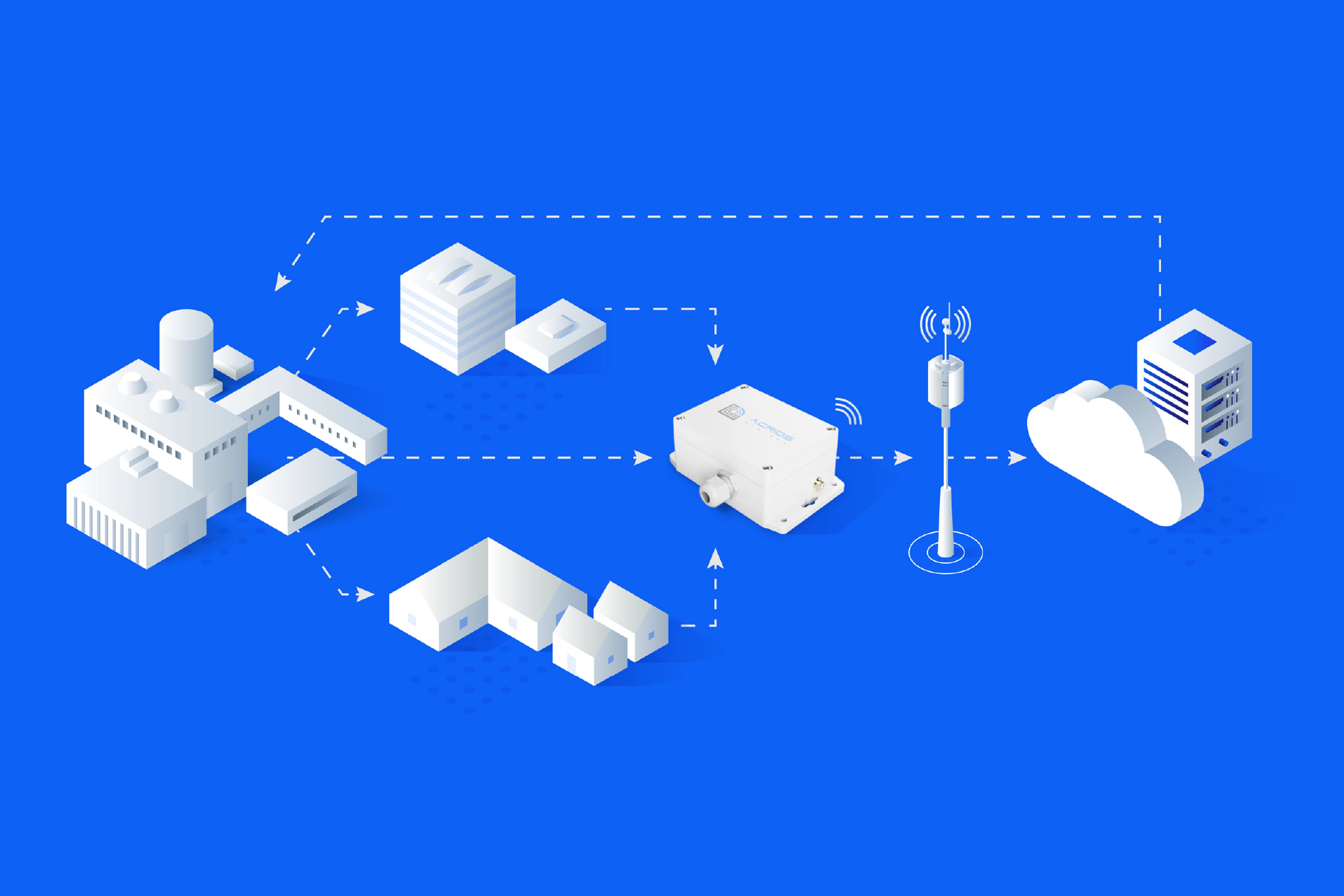
Smart metering: What it is and why it matters

IoT: Technology that saves time and money