868 MHz or 433 MHz? The right choice for your wM-Bus
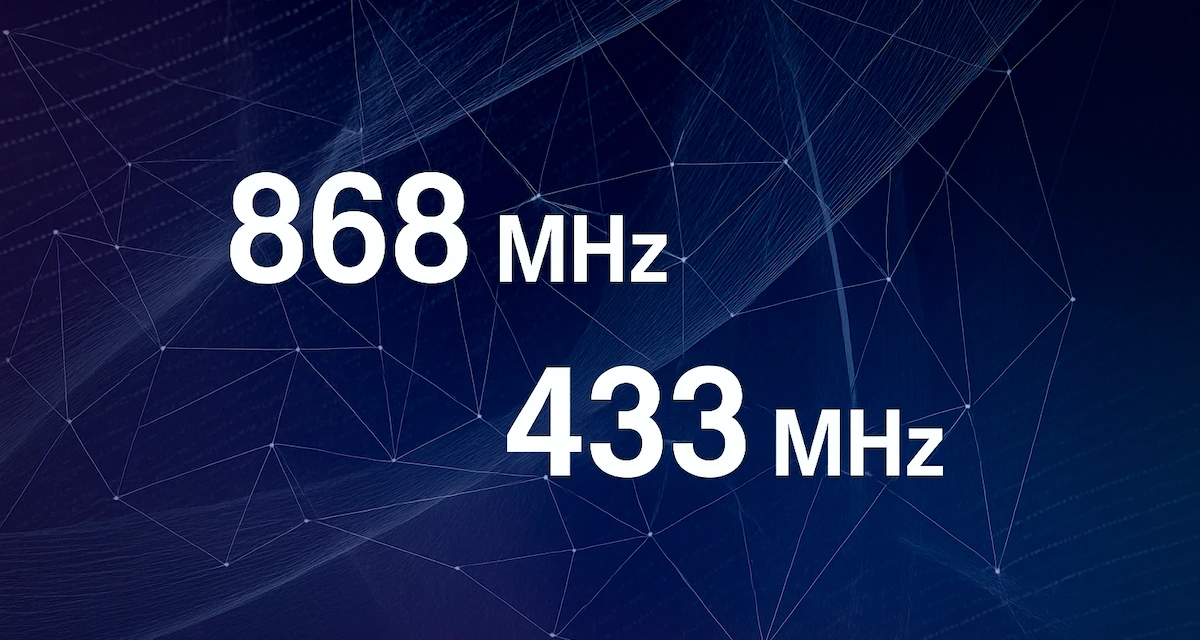
What exactly does “frequency band” mean in the context of wM-Bus? To transmit data wirelessly from meters, such as water meters, heat meters or RTN units. The digital signal must be modulated onto a carrier frequency. In Europe, this is typically done using ISM bands (Industrial, Scientific and Medical), most commonly 868 MHz and 433 MHz.
Wireless M-Bus (wM-Bus), a standard protocol for energy metering, operates within these frequency bands and uses different communication modes:
- T1 and C1 modes at 868.95 MHz
- S1 mode at 868.3 MHz
- T1 mode also exists for the 433 MHz band at 434.475 MHz
- There is also a 169 MHz band, which offers superior penetration through obstacles, but is used in niche applications only.
And what about proprietary protocols?
Not all meters comply strictly with T1/C1/S1 modes. Some manufacturers implement proprietary versions of wM-Bus tailored to their devices. However, these still usually operate within the 868 MHz or 433 MHz bands, since licensing other frequencies would be costly and complex. So how do you choose? ACRIOS converters support both frequency bands. The right version depends mainly on:
- Distance between converter and meter
- Physical obstacles in the environment
- Frequency band used by the meter (which is fixed at the factory and cannot be changed)
Why choose a converter for the 868 MHz band?
- This is the standard band for wM-Bus communication across the EU
- Compatible with T1/C1/S1 modes and OMS-compliant meters
- Ideal for typical residential, commercial or mixed-use installations
- May detect nearby 433 MHz signals, but only at short range
Why choose a converter for the 433 MHz band?
- Better signal penetration in difficult environments – shafts, basements, metal walls
- Suitable for urban areas with signal interference or heritage buildings
- Requires meters manufactured specifically for 433 MHz (non-switchable)
- Sometimes detects 868 MHz signals better than vice versa
What if your meters are available in both versions? In that case, focus on environmental factors. General recommendation:
- 868 MHz → go-to choice for standard installations
- 433 MHz → for hard-to-reach locations or heavy signal attenuation
Summary: frequency band selection by environment

FAQs
Not directly. The EED mandates remote meter reading, but does not specify frequency bands or technical parameters.
The EED does not define the frequency band. 868 MHz is the standard for wM‑Bus and offers broad compatibility; 433 MHz provides better penetration in harsh environments but may be subject to national limits on power or duty cycle.
No. The frequency is defined at the manufacturing stage and cannot be changed later.
Whenever meters are installed in harsh environments (shafts, cellars, metal structures), and are available in 433 MHz versions.
Yes, it is part of the ISM band, though some countries impose restrictions on transmission power or duty cycle.
Not sure which converter version is right for you? Reach out to us and we’ll help you choose the ideal frequency band and hardware setup based on your meters and environment.

Blog
ILI: what the EU leakage threshold measures

Pulsed water meter: All you need to know
LoRaWAN airtime: why radio conditions matter
Converter, bus, bridge, gateway: what's the difference?
What actually drains an IoT device battery
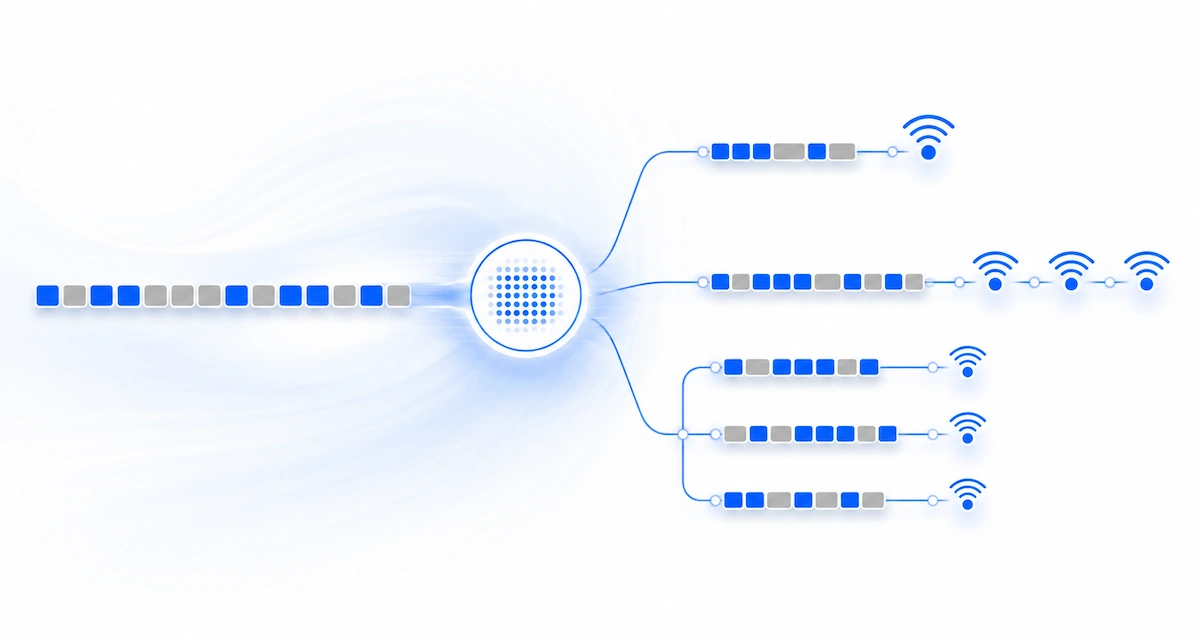
M-Bus parsing strategies for LoRaWAN and NB-IoT
How to best replace walk-by meter reading
Can your existing meters be retrofitted?
Battery life in IoT: beyond the datasheet number
Agile, Waterfall, or NRE? Choosing a development methodology
Developing adaptive IoT communication under the CRA
Focused supplier or large vendor? Depends on the project

Edge computing in IoT metering
Manufacturer as a technology partner

Why a device without an antenna fails

CE certification for IoT: What RED DA changes
Water losses in utility networks: The hidden cost of leaks
Pressure monitoring in water networks: Early fault detection
M-Bus pressure sensor: Leak detection for water utilities
The cost of measurement data errors and how to prevent them

Smart Readiness Indicator (SRI): All you need to know
M-Bus installation tool Wizard from ACRIOS
Coulomb meter: Everything you need to know
ACR-EX in water utilities: remote reading of pulse water meters

ACRIOS and Quectel announce partnership
External or internal? How custom development works
Proven deployment of 10,000 wM-Bus converters for EED
Choosing a remote reading system for water utilities
Open data interfaces pay off for reporting and integration
15-minute vs daily meter readings frequency explained
Scripting in IoT: Flexibility, sustainability, and protection

Gas meter data to dashboard: ACR-EX meets Datacake
EPBD is coming: what BACS means for your building
When DTLS makes sense. Know before you deploy
Not your keys, not your hardware
Everything you need to know, documented. ACRIOS wiki.
End-to-end custom hardware and software development
How to collect energy data to support ISO 50001
Lowering IoT TCO through smart manufacturing
Reading Sensus meters with zero hardware changes

Why 15-minute data matters in district heating

Give me a tool that works. Not a manual.

5 most common myths about remote meter reading

Battery-powered vs wired: What really costs more?

Cyber Resilience Act and IoT hardware
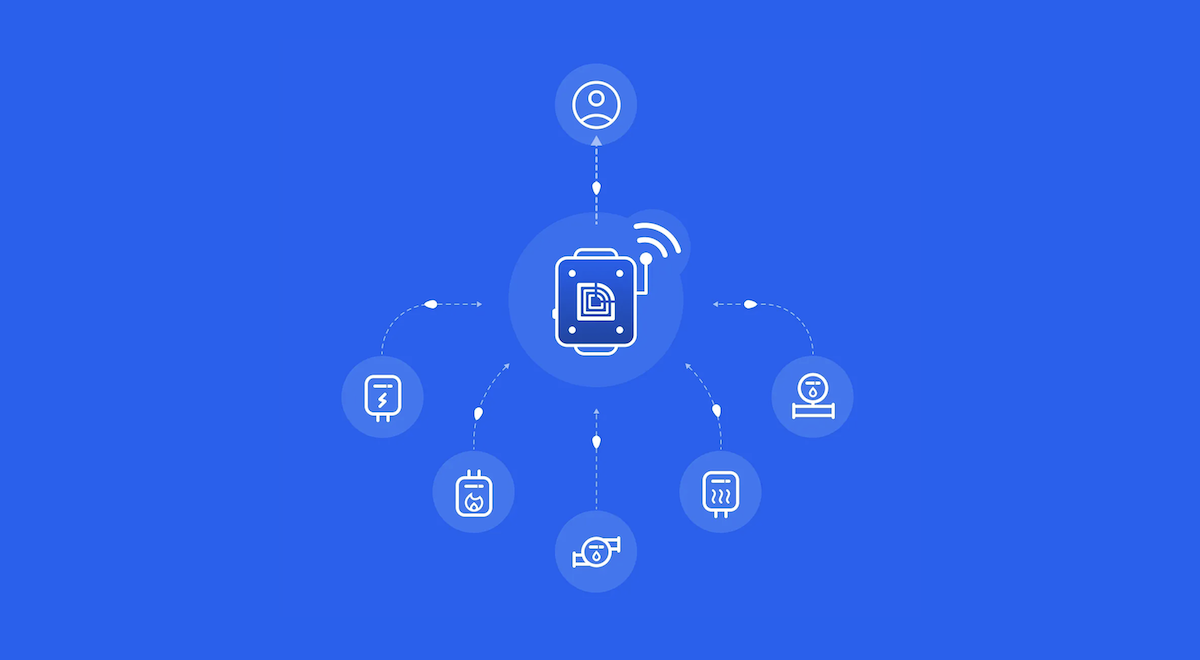
Next-gen meter readings, no replacements needed

Modernising metering infrastructure

M-Bus to IoT integration explained
Understanding TCO: More than just hardware

NB-IoT technology: All you need to know

LoRaWAN: All you need to know

M-Bus, wM-Bus, and RS-485: A technology guide

LoRaWAN vs. NB-IoT: Which technology is right for you?
Smart metering: What it is and why it matters

IoT: Technology that saves time and money