The cost of measurement data errors and how to prevent them
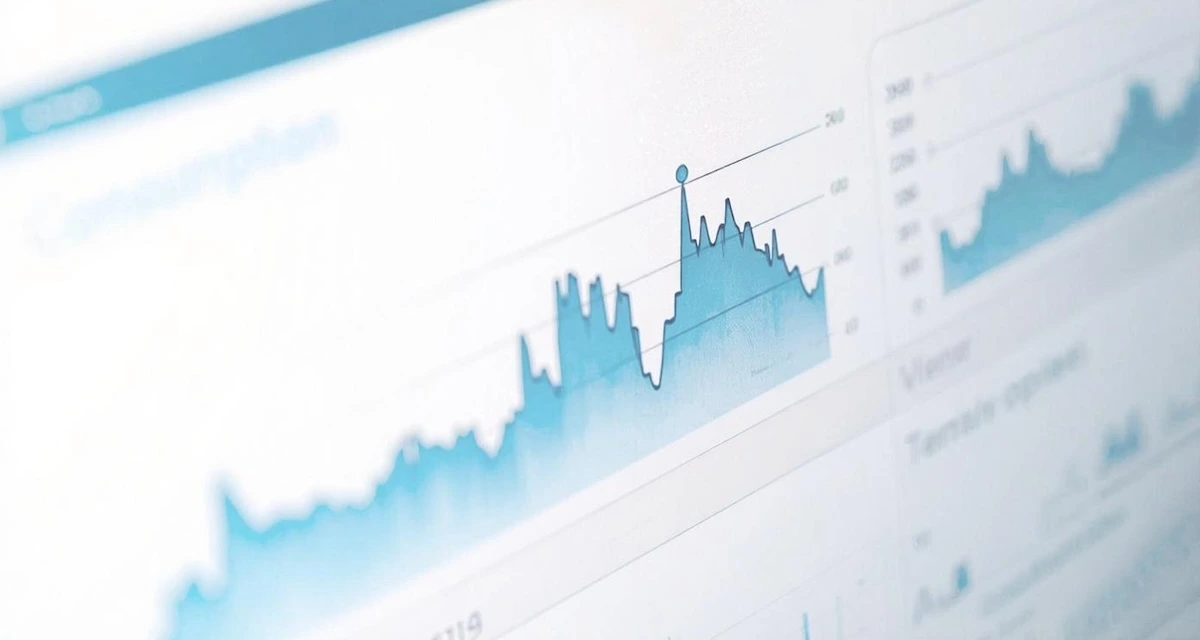
What a data error can actually cause
The impact of a data error depends on where it ends up. The same missing value can mean an incorrect bill, a missed fault, or a failed audit. Here is how these scenarios play out in practice.
Key takeaways
- The consequences of a measurement data error depend on how the data is used. Missing or incorrect readings can affect billing, fault detection, operational decisions and reporting.
- Undetected data gaps can distort consumption trends and lead to poor decisions. Genuine changes in measured values, such as unexpected drops or spikes, may indicate leaks, equipment faults or abnormal operating conditions.
- ESG reporting, ISO 50001 and the EED all rely on verifiable, consistent consumption data. Missing values, gaps in time series and discrepancies between data sources are typical audit findings.
- Measurement data errors can originate from communication interruptions, incorrect configuration, meter or converter faults and errors in data processing. Incorrect configuration is among the most common causes and may go unnoticed for weeks.
- A resilient data collection system combines local data storage, appropriate validation, diagnostic information and alerts for communication failures or unusual readings. Reliable transmission and accessible data formats further support data integrity and integration.
- One practical test of system resilience: if a device stops communicating for three days, can the system report the interruption, preserve measurements locally and recover the missing records once connectivity returns?
Incorrect cost allocation
In a residential building with 40 tenants, a 5% error in heat measurement can mean some tenants overpay, whilst others pay less than they should. The result is complaints, administrative burden, and, in the worst case, legal disputes. In commercial buildings with multiple tenants, the situation is even more complex. Energy cost allocation is part of lease agreements, and any discrepancy can be legally challenged.
Decisions based on data that does not lie but misleads
If some meters stop sending data and the system fails to detect this, consumption may be assessed as lower than it actually is. The operator then incorrectly evaluates an efficiency measure as successful and invests further resources into it. In reality, they are making decisions based on incomplete data. The impact is felt not only in billing but also in long-term strategy. The same principle works in reverse: an unusual drop or spike in consumption can be the first signal of a water leak, a faulty pump, or overheating equipment, long before anyone notices physically. Without automated anomaly detection, these signals are simply missed.
Reporting and audit problems
ESG reporting, ISO 50001, EED. All of these require verifiable, consistent, and auditable consumption data. Missing values, gaps in time series, or discrepancies between data sources are precisely what an auditor will flag first. In practice, this can mean having to supplement data retrospectively or repeat the entire reporting process, which is costly in both time and money.
Hidden costs that are difficult to quantify
These include the time technicians and analysts must spend manually correcting data, tracking down missing values, or explaining inconsistencies to clients. These costs are difficult to measure but significantly affect the system’s total cost of ownership over time.
Where errors originate
Data errors typically have one of the following sources:
- Communication failure: the meter works, but data does not reach the system. This may be a temporary network outage, a weak signal, or a depleted converter battery.
- Incorrect configuration: the device sends data, but in the wrong format, with an incorrect unit, or with the wrong conversion coefficient. This is a very common installation error that may not become apparent for weeks.
- Meter or converter fault: a physical defect that can generate zero values, constant values, or values outside the valid range.
- Data processing error: data arrives correctly, but is processed incorrectly on the server or in the application. For example, a value being overwritten, an incorrect average calculated, or data lost during a system migration.
The costs of unreliable data, from legal disputes to missed leaks, are high, but they are not inevitable. Most data failures are predictable results of a "fragile" system design. To move from reactive firefighting to proactive management, the infrastructure must be built with layers of redundancy and self-awareness. Prevention isn't about human oversight; it’s about a system that validates itself at every step. A truly resilient architecture is defined by these core capabilities:
On-device data archiving
Communication outages are inevitable. Devices that store data locally and send it later ensure no records are lost. ACRIOS converters retain data for up to 40 days, preventing loss even during prolonged outages. Without this, communication failures create data gaps that require estimation or acknowledgement as missing.
Data validation at source
A high-quality IoT converter should perform basic data checks before sending data, such as detecting values outside physical limits, monitoring power usage, and reporting error codes. The earlier anomalies are caught, the less they affect downstream systems.
Diagnostics, not just readings
A good metering system sends both readings and metadata, such as battery status, signal quality, and error codes, to indicate whether devices are working correctly. Devices that report only measured values are nearly useless for troubleshooting.
Notifications on outages and anomalies
The system should alert you when data stops or values fall outside the expected range, via email, SMS, or app notifications. What matters is timely, clear alerts that specify the device and problem. Passive monitoring with monthly reviews is not sufficient.
Anomaly detection
An unusual spike in water consumption overnight, a temperature value that remains constant for 48 hours, or a sudden drop in heat consumption during winter. These are signals that an automated system can capture and flag for manual review. A person simply cannot spot such details across dozens or hundreds of data points.
Data integrity during transmission
ACRIOS converters forward data as a standard M-Bus frame with built-in integrity controls. For NB-IoT, we support DTLS for encrypted, intact data transmission.
Open formats and standardised communication
Data in proprietary or poorly documented formats is a source of errors at every integration point. JSON, CSV, MQTT, HTTP POST: open and well-documented formats that ensure data can be easily processed, audited, and transferred to another system without risk of loss or distortion.
How to design a system that is resilient and auditable
The starting point is hardware with proper diagnostics. A converter that reports battery status, signal quality, error codes, and the timestamp of the last successful transmission gives you immediate visibility when something goes wrong, rather than leaving you to discover the problem during the next manual review.
Once the right hardware is in place, alerts matter more than dashboards. A system that actively notifies you when data stops arriving or when values fall outside the expected range lets you act on problems in hours rather than weeks. Paired with data stored at multiple levels, locally on the device (up to 40 days), on the server, and in a backup, you have a safety net that covers outages at any single point.
The layer that is most often overlooked is configuration documentation. Incorrect configuration is one of the most common causes of data errors and one of the most difficult to trace retrospectively. Keeping clear logs of settings and changes will save significant time during troubleshooting.
Finally, automation should handle the routine. The goal is not to remove people from the process entirely, but to free them from checking numbers so they can focus on the broader context that only a person can spot.
Summary
Data errors in metering systems are not inevitable. They are largely a consequence of the system's design. A device that archives, validates, and reports anomalies in data is the foundation of an infrastructure that operates reliably without daily supervision. If you are designing or reconsidering your metering system, start with a simple question: what happens if one device stops communicating for three days? If the answer is not "the system alerts me automatically and the data is backfilled once the connection is restored", it is time to reconsider the architecture.

Glossary of terms used
- Anomaly detection: the automated identification of values or patterns that deviate from expected behaviour, so they can be flagged for review
- Audit trail: an ordered record of data-related events and changes that helps trace where data came from, how it was processed and whether it was modified
- Diagnostic metadata: additional information about a device or data transmission, such as battery status, signal quality, error codes or the time of the last successful communication
- DTLS (Datagram Transport Layer Security): a protocol that secures data sent over datagram-based connections, providing encryption and integrity protection
- EED (Energy Efficiency Directive): the EU directive on energy efficiency, which among other things sets requirements for remotely readable meters and regular access to consumption information
- ESG (Environmental, Social, Governance): environmental, social and governance factors used to assess and report on an organisation’s performance and sustainability-related impacts
- ISO 50001: an international standard for energy management systems that helps organisations monitor and improve their energy performance
- JSON and CSV: widely supported text-based data formats: JSON represents structured data, while CSV organises data into rows and columns
- M-Bus frame: a structured data message transmitted using the M-Bus protocol, containing meter data and related information
- MQTT: a lightweight messaging protocol commonly used to send data from IoT devices to servers
- On-device data archiving: storing readings locally on a device so they can be sent later if communication is interrupted
- Time series: a sequence of measured values recorded at successive points in time
FAQs
The most reliable approach is to have automated controls in place: notifications on communication failures, detection of values outside the expected range, and comparison against historical data. Without these tools, errors typically surface only when a complaint arrives, an audit fails, or a bill does not match. Persistently unchanged values are also a common signal of a stuck or malfunctioning meter.
An audit trail is the system's ability to prove the origin and integrity of data. In practice, this means demonstrating that the data originated from a specific meter, was encrypted, and was not modified in transit. For ESG reporting, ISO 50001, or billing disputes, this is a critical requirement. Without an audit trail, data is difficult to defend.
Yes. ESG reporting and ISO 50001 both require consistent and verifiable data. Gaps in the time series or missing values are precisely what an auditor will flag first. In practice, this may mean supplementing data retrospectively or repeating the entire reporting process.
Are you addressing data reliability in your metering system, or are you in the process of designing the infrastructure? We are happy to review your situation and recommend converters that include diagnostics, up to 40 days of on-device archiving, and an open interface as standard.

Blog
ILI: what the EU leakage threshold measures

Pulsed water meter: All you need to know
LoRaWAN airtime: why radio conditions matter
Converter, bus, bridge, gateway: what's the difference?
What actually drains an IoT device battery
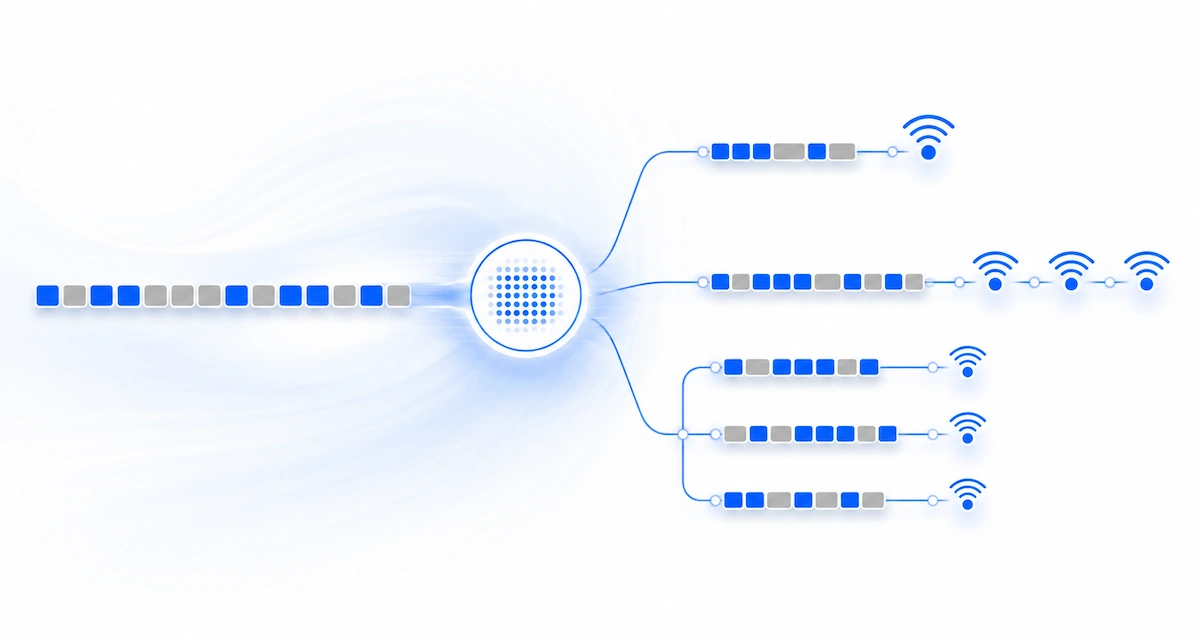
M-Bus parsing strategies for LoRaWAN and NB-IoT

How to best replace walk-by meter reading
Can your existing meters be retrofitted?

Battery life in IoT: beyond the datasheet number
Agile, Waterfall, or NRE? Choosing a development methodology
Developing adaptive IoT communication under the CRA
Focused supplier or large vendor? Depends on the project

Edge computing in IoT metering
Manufacturer as a technology partner

Why a device without an antenna fails

CE certification for IoT: What RED DA changes

Water losses in utility networks: The hidden cost of leaks

Pressure monitoring in water networks: Early fault detection
M-Bus pressure sensor: Leak detection for water utilities

Smart Readiness Indicator (SRI): All you need to know
M-Bus installation tool Wizard from ACRIOS
Coulomb meter: Everything you need to know
ACR-EX in water utilities: remote reading of pulse water meters

ACRIOS and Quectel announce partnership

External or internal? How custom development works

Proven deployment of 10,000 wM-Bus converters for EED
Choosing a remote reading system for water utilities
Open data interfaces pay off for reporting and integration
15-minute vs daily meter readings frequency explained
Scripting in IoT: Flexibility, sustainability, and protection

Gas meter data to dashboard: ACR-EX meets Datacake
EPBD is coming: what BACS means for your building
When DTLS makes sense. Know before you deploy
Not your keys, not your hardware
868 MHz or 433 MHz? The right choice for your wM-Bus
Everything you need to know, documented. ACRIOS wiki.

End-to-end custom hardware and software development
How to collect energy data to support ISO 50001
Lowering IoT TCO through smart manufacturing
Reading Sensus meters with zero hardware changes

Why 15-minute data matters in district heating

Give me a tool that works. Not a manual.

5 most common myths about remote meter reading

Battery-powered vs wired: What really costs more?

Cyber Resilience Act and IoT hardware
Next-gen meter readings, no replacements needed

Modernising metering infrastructure

M-Bus to IoT integration explained

Understanding TCO: More than just hardware

NB-IoT technology: All you need to know

LoRaWAN: All you need to know

M-Bus, wM-Bus, and RS-485: A technology guide

LoRaWAN vs. NB-IoT: Which technology is right for you?
Smart metering: What it is and why it matters

IoT: Technology that saves time and money