Water losses in utility networks: The hidden cost of leaks
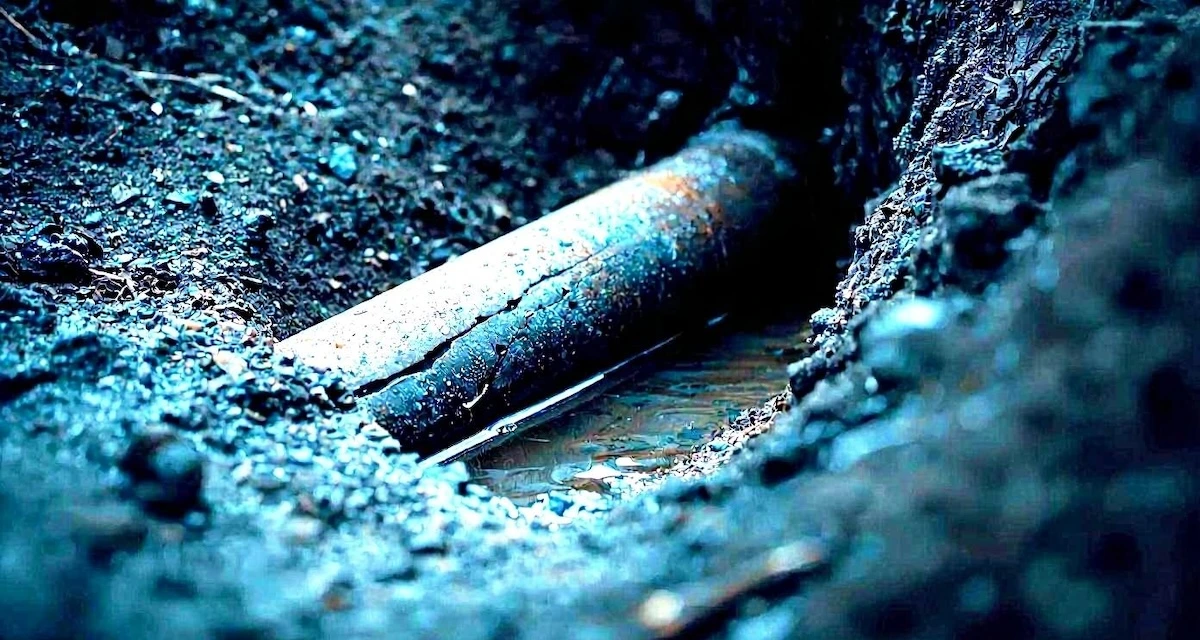
1/3 | Why pipe leaks are the silent enemy of water infrastructure. The first in a three-part series on water losses in distribution networks and how to reduce them, produced in cooperation between ACRIOS Systems and Lorenz GmbH & Co. KG.
Key takeaways
- Non-revenue water (NRW) is the difference between the volume of water entering a distribution system and billed authorised consumption. It comprises real losses, apparent losses and unbilled authorised consumption.
- Real losses are physical water losses caused by leaks and bursts in pipes, joints, fittings and storage facilities. They are a major component of NRW and can remain undetected for long periods.
- According to EurEau data, water losses vary widely across Europe, from roughly 5% in the Netherlands and 6% in Germany to an estimated 60% in Bulgaria.
- Ageing infrastructure, corrosion, pressure fluctuations, water hammer, temperature changes and ground movement all contribute to leakage. Insufficient maintenance and pipe renewal can allow these problems to persist.
- Water losses represent more than lost revenue: they also waste resources used for abstraction, treatment and pumping, including energy and chemicals. Leaks can reduce network pressure, disrupt service and, under certain conditions, increase water quality risks.
- In networks relying mainly on reactive maintenance and manual inspection, leaks may continue for days, weeks or months before they are detected, increasing the total volume of water lost.
The leak you never see coming
It starts quietly. No alarm sounds, no red light flashes on a dashboard. Somewhere beneath a city street, a hairline crack in an aging water main widens, millimetre by millimetre, day by day. By the time a sinkhole appears or a customer reports low pressure, thousands of cubic metres of treated, pumped and chemically balanced drinking water have already been silently lost.
This is not a rare event. It is happening right now in virtually every water network in Europe and beyond. And for the utilities responsible for those networks, the cost, financial, environmental and reputational, is staggering.
What is non-revenue water and why it's more than a statistic
Non-revenue water (NRW) is the difference between the water a utility puts into its distribution network and the water it actually bills to customers. It is not a single phenomenon but a combination of three categories:
- Real losses: physical leaks and bursts from pipes, joints, fittings and storage tanks.
- Apparent losses: water that reaches customers but is not properly accounted for due to meter inaccuracies, data errors or theft.
- Unbilled authorised consumption: water used legitimately by the utility itself, for example flushing mains or firefighting, but not invoiced.
Real losses, physical leakage, consistently make up the largest share in most networks. And the numbers are hard to ignore.
According to a landmark 2006 World Bank study by Kingdom, Liemberger and Marin, non-revenue water is estimated to cost water utilities approximately EUR 119.8 billion per year. Across the world, an average of 30% of all treated water never generates revenue. In Europe alone, the figure sits at around 25%, according to recent analyses published in Water Practice & Technology, citing data from the European federation of water utilities, EurEau.
But averages can obscure just how wide the variance is. Data compiled by EurEau shows that the Netherlands loses roughly 5% of its distributed water, Germany around 6%, and Denmark approximately 8%. Meanwhile, Bulgaria loses an estimated 60%, and countries such as Italy and Greece regularly report losses in the range of 35 to 50%. The European Union estimates that about one in four litres of water entering its pipe networks never reaches a paying customer.
For a utility's finance director or asset manager, NRW is not an abstraction. It is a direct drain on operating budgets and capital programmes. For regulators and municipalities, it is a question of public resource stewardship. For the planet, it is an issue of energy, carbon and water security.
Why pipes fail: The causes of leakage
Understanding leakage starts with understanding why distribution infrastructure deteriorates. The causes are well documented but rarely straightforward.
Ageing and corrosion
Much of Europe's water infrastructure was built in the post-war decades or even earlier. Cast iron and asbestos cement pipes laid in the 1950s and 1960s were designed for a 50 to 70 year service life, a deadline many networks have already passed.
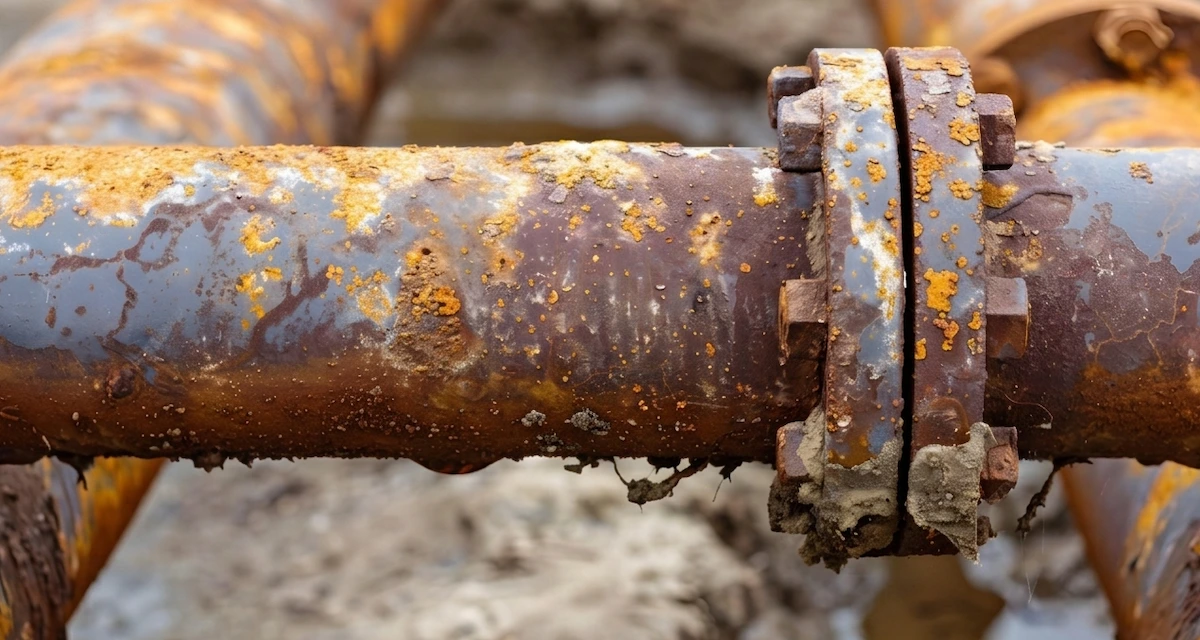
As research published in the Canadian Journal of Civil Engineering confirms, corrosion, both internal from water chemistry and external from soil conditions, gradually weakens pipe walls until even normal operating pressure becomes too much.
Pressure transients and water hammer
Sudden changes in flow, for example a pump switching on or a valve closing too quickly, create pressure waves that travel through the network at high speed. Industry sources such as Control Engineering Europe note that these transients, sometimes called water hammer, can create pressure spikes more than twice the normal system pressure, imposing stress on pipe walls, joints and fittings far beyond their steady-state design loads.
Studies on viscoelastic pipes published in the Journal of Hydraulic Engineering show that over time, repeated transients fatigue materials and open microfractures that become full leaks.
Temperature cycles and ground movement
Freeze-thaw cycles cause pipes to expand and contract, stressing joints. Seasonal ground movement, particularly in clay soils, imposes differential loads on buried infrastructure. Construction activity, including excavation, vibration from heavy machinery and accidental third-party damage, is responsible for a significant share of sudden pipe failures in urban areas.
Under-investment and deferred maintenance
Perhaps the most pervasive cause is structural. Many utilities operate under regulatory frameworks or budget constraints that make it difficult to fund adequate pipe renewal. When renewal rates fall below the rate of natural deterioration, the condition of the network declines year on year and leakage rises with it.
The true cost: finance, energy and carbon
The financial impact of NRW is direct and measurable. Every cubic metre that leaks from the network represents money spent on water abstraction, treatment, pumping and chemical dosing. Money that will never be recovered through billing.
The energy dimension is equally striking. Drinking water and wastewater systems account for a significant share of municipal energy budgets across Europe. Pumping water through a leaking network, effectively pressurising holes, is one of the least efficient uses of energy imaginable. Every cubic metre that leaks is a cubic metre of wasted energy, wasted chemicals and wasted operational effort. And it generates avoidable carbon emissions at every step of the treatment and distribution chain.
There is also a service quality dimension. Persistent low pressure, often a symptom of undetected leakage, frustrates customers. In worst cases, it can compromise water safety by allowing contaminants to enter the network through damaged pipe walls or joints.
From problem to solution: the detection gap
The scale of NRW is well understood. What is less well addressed at many utilities is the gap between when a leak starts and when it is detected.
In networks that rely on reactive maintenance and manual inspection, the average leak can run for days, weeks or even months before it becomes visible or generates enough of a pressure signal to trigger investigation.
Closing the gap between the moment a leak starts and the moment it is detected is where modern network management technology delivers the highest value.

Glossary of terms used
- Abstraction: the withdrawal of water from a natural source, such as a river, lake or groundwater, for use in a water supply system
- Apparent losses: water consumption that is not correctly measured or accounted for because of meter inaccuracies, data handling errors or unauthorised use
- EurEau: the European federation of national associations of water services operators
- Non-revenue water (NRW): the difference between the volume of water entering a distribution system and billed authorised consumption
- Pressure transient: a temporary change in pressure within a pipe network caused by changes in flow or operating conditions
- Reactive maintenance: an approach in which faults are repaired after they are detected or reported rather than prevented through planned maintenance
- Real losses: physical water losses caused by leaks and bursts in pipes, joints, fittings and storage tanks
- Unbilled authorised consumption: water used legitimately, for example for flushing mains or firefighting, that is not billed
- Water hammer: a sudden pressure change and resulting pressure wave in a pipe caused by a rapid change in water flow, for example when a valve closes or a pump stops abruptly
- Water main: a pipe forming part of the main water supply or distribution network, as distinct from an individual customer service connection
FAQs
Ready to compare detection methods?
Which leak-detection methods are available today, and why is continuous pressure monitoring becoming one of the most effective tools in a utility's toolkit? Learn more in the second article of the series.

Blog
ILI: what the EU leakage threshold measures

Pulsed water meter: All you need to know
LoRaWAN airtime: why radio conditions matter
Converter, bus, bridge, gateway: what's the difference?
What actually drains an IoT device battery
M-Bus parsing strategies for LoRaWAN and NB-IoT
How to best replace walk-by meter reading
Can your existing meters be retrofitted?
Battery life in IoT: beyond the datasheet number
Agile, Waterfall, or NRE? Choosing a development methodology
Developing adaptive IoT communication under the CRA
Focused supplier or large vendor? Depends on the project

Edge computing in IoT metering
Manufacturer as a technology partner

Why a device without an antenna fails

CE certification for IoT: What RED DA changes
Pressure monitoring in water networks: Early fault detection
M-Bus pressure sensor: Leak detection for water utilities
The cost of measurement data errors and how to prevent them

Smart Readiness Indicator (SRI): All you need to know
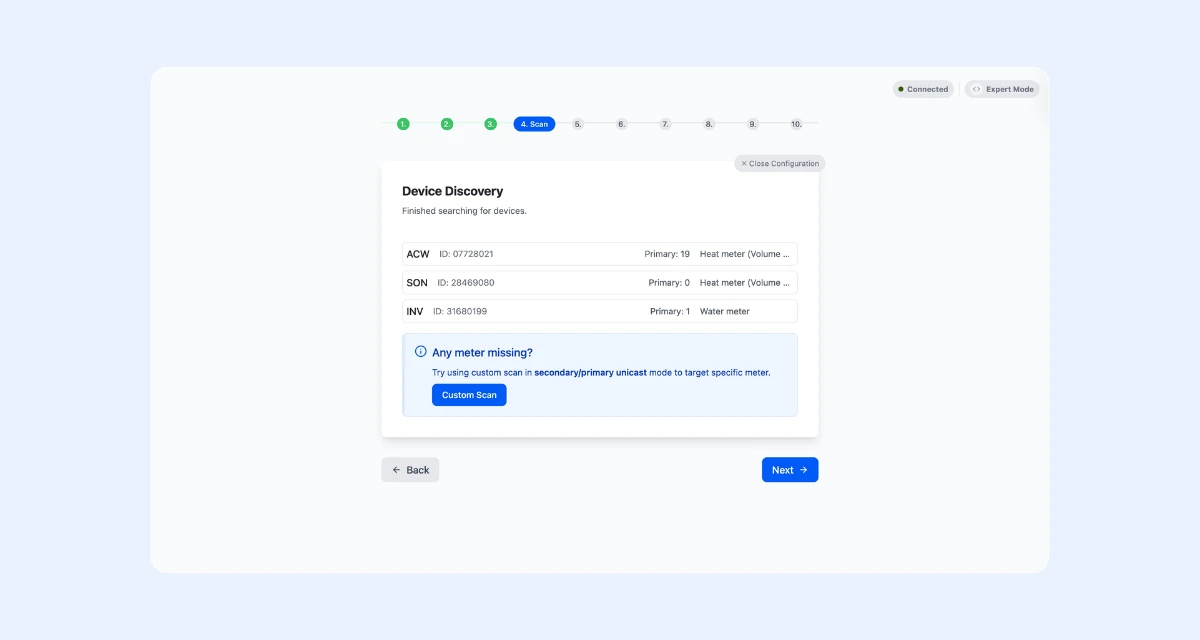
M-Bus installation tool Wizard from ACRIOS
Coulomb meter: Everything you need to know
ACR-EX in water utilities: remote reading of pulse water meters

ACRIOS and Quectel announce partnership

External or internal? How custom development works
Proven deployment of 10,000 wM-Bus converters for EED
Choosing a remote reading system for water utilities
Open data interfaces pay off for reporting and integration
15-minute vs daily meter readings frequency explained

Scripting in IoT: Flexibility, sustainability, and protection

Gas meter data to dashboard: ACR-EX meets Datacake
EPBD is coming: what BACS means for your building
When DTLS makes sense. Know before you deploy

Not your keys, not your hardware
868 MHz or 433 MHz? The right choice for your wM-Bus
Everything you need to know, documented. ACRIOS wiki.
End-to-end custom hardware and software development
How to collect energy data to support ISO 50001

Lowering IoT TCO through smart manufacturing
Reading Sensus meters with zero hardware changes

Why 15-minute data matters in district heating
Give me a tool that works. Not a manual.

5 most common myths about remote meter reading

Battery-powered vs wired: What really costs more?

Cyber Resilience Act and IoT hardware
Next-gen meter readings, no replacements needed

Modernising metering infrastructure
M-Bus to IoT integration explained
Understanding TCO: More than just hardware
NB-IoT technology: All you need to know
LoRaWAN: All you need to know

M-Bus, wM-Bus, and RS-485: A technology guide
LoRaWAN vs. NB-IoT: Which technology is right for you?
Smart metering: What it is and why it matters

IoT: Technology that saves time and money