Proven deployment of 10,000 wM-Bus converters for EED
Proven approach from practice: from EED to water utility projects
Key takeaways
- At a water industry conference, Lukáš Smetana presented lessons from a project involving the commissioning of 10,000 wM-Bus concentrators and the connection of 850,000 meters within ten months.
- Although the project was driven by Energy Efficiency Directive (EED) requirements, its rollout methodology offers lessons for water utilities, including projects involving bulk or boundary meters. Thorough preparation, planning and coordination are relevant across different utility sectors.
- A large-scale rollout begins with an inventory of existing meters, protocol versions, communication modes, transmission intervals, encryption key management and battery condition. Validation tests using real device samples help establish a reliable basis for network design.
- The communication strategy should reflect the existing meter infrastructure and network conditions. Where wM-Bus or OMS meters are already installed, local concentrators can collect their data and forward it over NB-IoT, reducing the need for meter replacement. LoRaWAN can be effective where meter replacement is planned or good network infrastructure already exists.
- Data-driven densification allows concentrators to be added where monitoring reveals insufficient coverage or reading performance. Using read success rates, signal quality and building layout to guide installation decisions can help optimise infrastructure investment and avoid unnecessary site visits.
- Open standards, documented APIs and customer-managed encryption keys can improve interoperability and give utilities greater control over their metering infrastructure. Achieving these benefits still requires careful system integration and clearly defined responsibilities.
- Successful large-scale deployment depends on coordination between manufacturers, network operators, integrators and installation teams. Clear responsibilities, common acceptance criteria, monitoring of reading performance and appropriately pre-configured devices help make rollout and subsequent operation more predictable.
Digital metering has become one of the key priorities for utilities, and water utilities are no exception. Increasing demands for data availability, communication security, and operational efficiency lead towards open and scalable systems capable of handling thousands of devices in real environments.
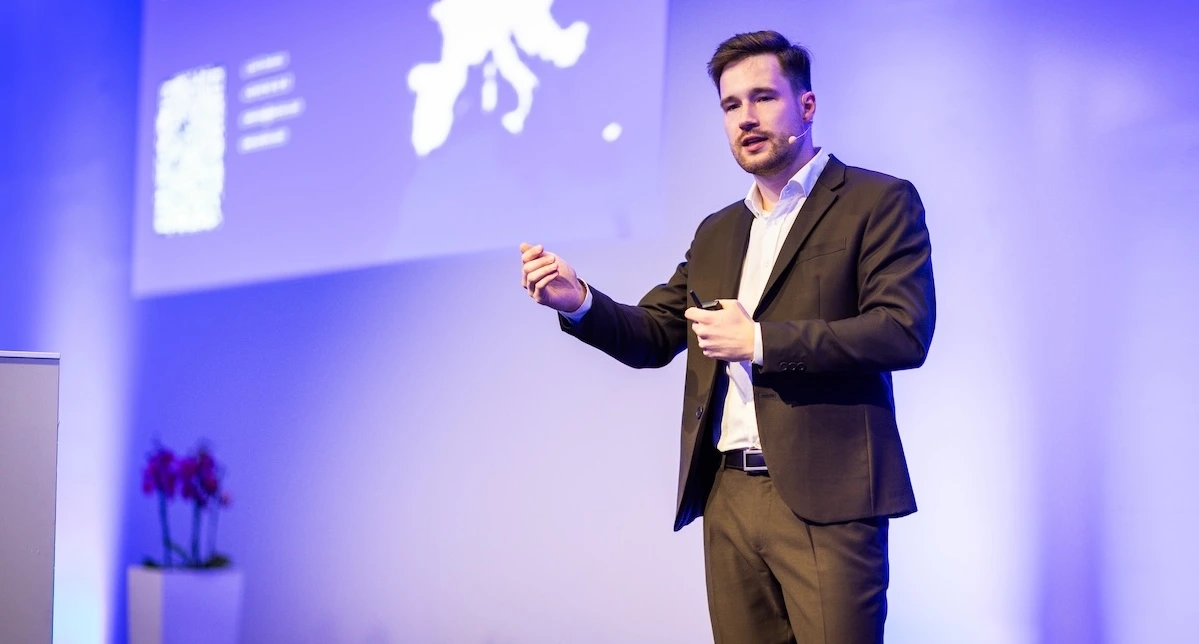
At a conference focused on the water industry, Lukáš Smetana presented lessons learned from a project in which 10,000 wM-Bus concentrators were commissioned and 850,000 meters connected within ten months. This scope illustrates the real demands of large-scale deployment in urban environments, including heterogeneous meters, varying building structures, and multiple suppliers involved.
Although the project was driven by EED directive requirements, it was chosen as a case study precisely for the water sector. The methodology that enables a large-scale rollout is equally transferable to water metering scenarios, for example, in digitalising bulk or boundary meters. The principles of preparation, planning, and coordination are the same regardless of the utility type. What matters is the quality of the process, not the label of the technology.
This idea defines the whole project: success does not lie in a one-off technical solution but in systematic change management capable of handling the diversity of devices and environments.

Technical foundation: open standards and long-term sustainability
At ACRIOS Systems, we have long focused on developing converters for LoRaWAN, NB-IoT, and wM-Bus, with an emphasis on durability, energy efficiency, and low total cost of ownership (TCO).
In practice, our devices are involved in reading approximately 1.5 million meters across Europe, which provides valuable benchmarking across markets and technologies. It also confirms that the focus on open standards and customer-managed encryption keys is the right choice in terms of both security and independence.
This experience naturally translates into project management: a well-designed technical foundation is essential, but the outcome depends on the integration of preparation, deployment, and operations.
Inventory and validation tests as the starting phase
Every rollout begins with a thorough inventory. In the field, it is common to encounter meters from different manufacturers, with varying protocol versions and communication modes (C/T/S), different transmission intervals, inconsistent key management, and occasionally depleted batteries.
Without an accurate overview of meter types, parameters, available documentation, and their long-term behaviour, it is impossible to plan network density or installation schedules reliably. Therefore, the inventory process naturally continues into validation tests using real device samples, ensuring that network design is based on data, not assumptions.
Selecting the right communication strategy
The next step is defining the communication strategy. LoRaWAN proves effective in environments where meter replacement is planned or where quality network infrastructure already exists. However, in areas with extensive wM-Bus/OMS installations, a bus-based architecture delivers higher value: local concentrators collect building telegrams and forward them to the backend via NB-IoT.
This approach leverages the existing meter base without large-scale replacements and allows quick coverage of “blind spots” by placing concentrators strategically, thus shortening the time to achieve operational benefits. The technical choice therefore becomes part of the rollout logistics, the project advances in layers and densifies the infrastructure based on real performance data.
Data-driven densification and cost optimisation
Deciding on the rollout speed and density is critical. In some areas, it is sensible to install a higher number of units immediately to ensure stable readings from day one. Elsewhere, it is more effective to start with lower density and, after a short monitoring phase, add concentrators where data shows the need.
This data-driven approach reduces the number of site revisits and optimises capital expenditure, as every additional installation is based on measurable parameters – read success rate, signal quality, and building layout – rather than estimates.
Open architecture as a foundation for long-term control
Another key link between technology and management is the system architecture as a whole. “All-in-one” solutions may start quickly but often come with closed interfaces, proprietary layers over standards, and limited control over keys or data. In the long term, this leads to higher costs and dependency on a single supplier.
An open architecture, built on standards, transparent APIs, customer-managed encryption keys, and the flexibility to combine devices and platforms, requires careful integration and discipline in SLA management, but in return provides sustainability, negotiation power, and freedom of choice.
This system-level decision then manifests in daily operations: easier component replacement, faster innovation, and a lower risk of technological dead ends.
Team coordination and real-time supervision
A large-scale rollout is a team discipline. The process involves meter and concentrator manufacturers, mobile network operators, backend integrators, application providers, and installation companies. If a clear responsibility matrix, unified acceptance criteria, and a defined role of a project coordinator (or orchestrator) are not established from the outset, delays and inefficient back-and-forth between teams are likely to occur.
In the described project, active supervision followed immediately after preparation: daily reports on read success rates and latencies, monitoring of “silent” meters, and a clear escalation path. The same principles should be applied to water metering projects to ensure predictable quality management over time.
Device readiness and efficient logistics
Device readiness before dispatch plays a key role. When manufacturers supply units with preloaded configuration (wM-Bus mode, intervals, profiles, keys), active SIM cards, and tested NB-IoT connectivity, along with exported production metadata (SN–ICCID/IMEI–profile–configuration), field installation becomes significantly faster and less error-prone. Subsequent operation is then stabilised by secure firmware updates (FUOTA) and battery telemetry, enabling proactive maintenance planning and reducing operational costs.
Methodology applicable to water utilities
Bringing all these steps together, from inventory and strategy selection to data-driven densification, open architecture, and continuous supervision, forms a methodology that enabled the deployment of 10,000 concentrators and 850,000 meters within ten months.
This same methodology is fully applicable to projects in the water utility sector, particularly those focused on digitalising bulk meters and integrating data collection without vendor lock-in. The key is continuity: thorough inventory enables a sound strategy, a sound strategy accelerates deployment, open architecture simplifies integration, and ongoing supervision stabilises operations.
If you are planning a digital metering rollout in the coming months, we offer professional consultation to assess your current state and design an appropriate strategy or next steps. The goal is predictable deployment with strong data quality, security, and long-term sustainability.

Glossary of terms used
- Bulk meter and boundary meter: a bulk meter measures large volumes of water in a distribution system, while a boundary meter measures flow at the boundary of a defined supply area or network zone
- Communication modes (C, T, S): transmission modes defined in the wireless M-Bus standard (EN 13757-4), including S (stationary), T (frequent transmit) and C (compact), which differ in parameters such as data rate and transmission timing
- Concentrator: a device that collects data from multiple meters or sensors and forwards it to a central system through a communication network
- Data-driven densification: adding network devices such as concentrators step by step where measured performance data shows insufficient coverage
- EED (Energy Efficiency Directive): the EU directive on energy efficiency, which among other things sets requirements for remotely readable meters and regular access to consumption information
- FUOTA (Firmware Update Over the Air): a firmware update delivered to a device remotely over its communication network
- ICCID and IMEI: unique identifiers of a SIM card (ICCID) and of a cellular device or modem (IMEI)
- OMS (Open Metering System): a metering communication specification based on European metering standards, including wireless M-Bus, that supports interoperability between meters and data collection systems from different manufacturers
- Read success rate: the share of expected meter readings that are successfully received within a given period
- Responsibility matrix: a document defining who is responsible for each task or decision in a project
- SLA (Service Level Agreement): a contractual agreement defining expected service levels, such as availability, response times or maintenance commitments
- Wireless M-Bus (wM-Bus): the wireless variant of M-Bus used for radio transmission of meter data
FAQs
Planning a water metering rollout or looking to digitalise meter readings? Book a consultation with Lukáš Smetana to review your current setup and define an effective rollout strategy. Get in touch to get started.

Blog
ILI: what the EU leakage threshold measures

Pulsed water meter: All you need to know
LoRaWAN airtime: why radio conditions matter
Converter, bus, bridge, gateway: what's the difference?
What actually drains an IoT device battery
M-Bus parsing strategies for LoRaWAN and NB-IoT
How to best replace walk-by meter reading
Can your existing meters be retrofitted?

Battery life in IoT: beyond the datasheet number
Agile, Waterfall, or NRE? Choosing a development methodology
Developing adaptive IoT communication under the CRA
Focused supplier or large vendor? Depends on the project

Edge computing in IoT metering
Manufacturer as a technology partner

Why a device without an antenna fails

CE certification for IoT: What RED DA changes
Water losses in utility networks: The hidden cost of leaks
Pressure monitoring in water networks: Early fault detection
M-Bus pressure sensor: Leak detection for water utilities
The cost of measurement data errors and how to prevent them

Smart Readiness Indicator (SRI): All you need to know
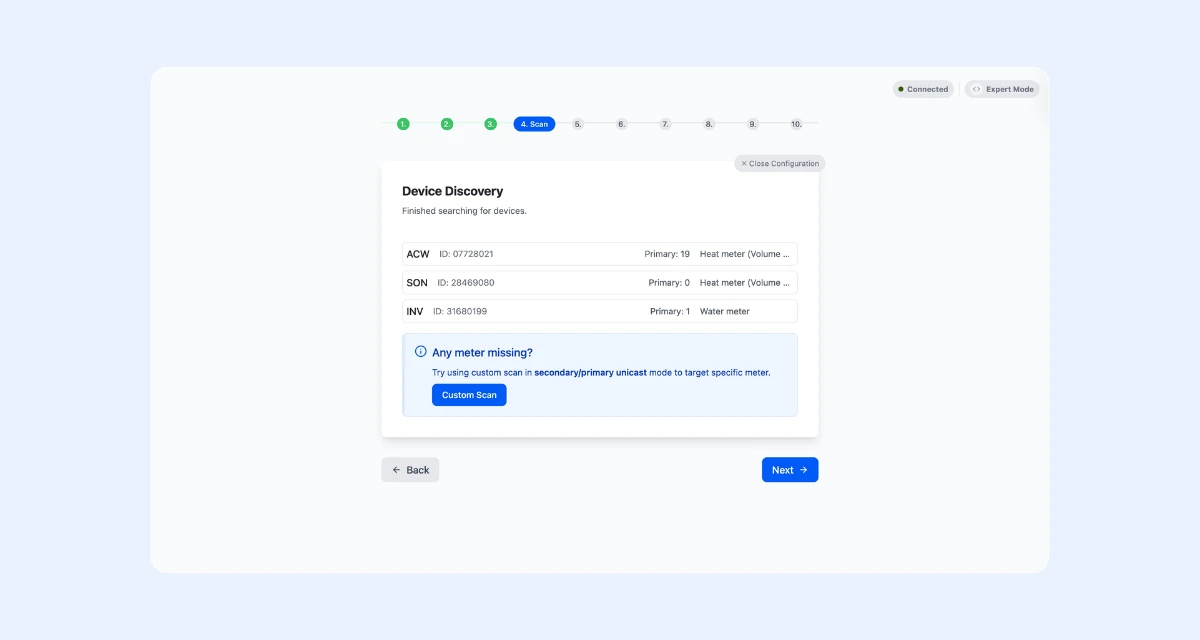
M-Bus installation tool Wizard from ACRIOS
Coulomb meter: Everything you need to know
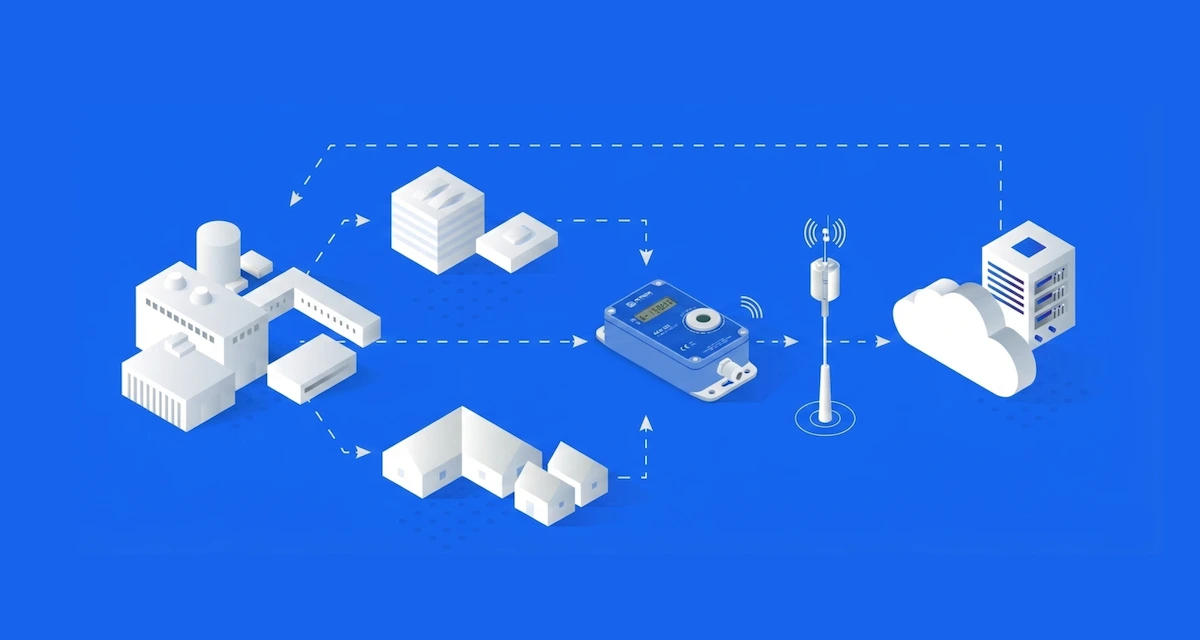
ACR-EX in water utilities: remote reading of pulse water meters

ACRIOS and Quectel announce partnership

External or internal? How custom development works
Choosing a remote reading system for water utilities
Open data interfaces pay off for reporting and integration
15-minute vs daily meter readings frequency explained
Scripting in IoT: Flexibility, sustainability, and protection

Gas meter data to dashboard: ACR-EX meets Datacake
EPBD is coming: what BACS means for your building
When DTLS makes sense. Know before you deploy
Not your keys, not your hardware
868 MHz or 433 MHz? The right choice for your wM-Bus
Everything you need to know, documented. ACRIOS wiki.
End-to-end custom hardware and software development
How to collect energy data to support ISO 50001
Lowering IoT TCO through smart manufacturing
Reading Sensus meters with zero hardware changes

Why 15-minute data matters in district heating

Give me a tool that works. Not a manual.

5 most common myths about remote meter reading

Battery-powered vs wired: What really costs more?

Cyber Resilience Act and IoT hardware
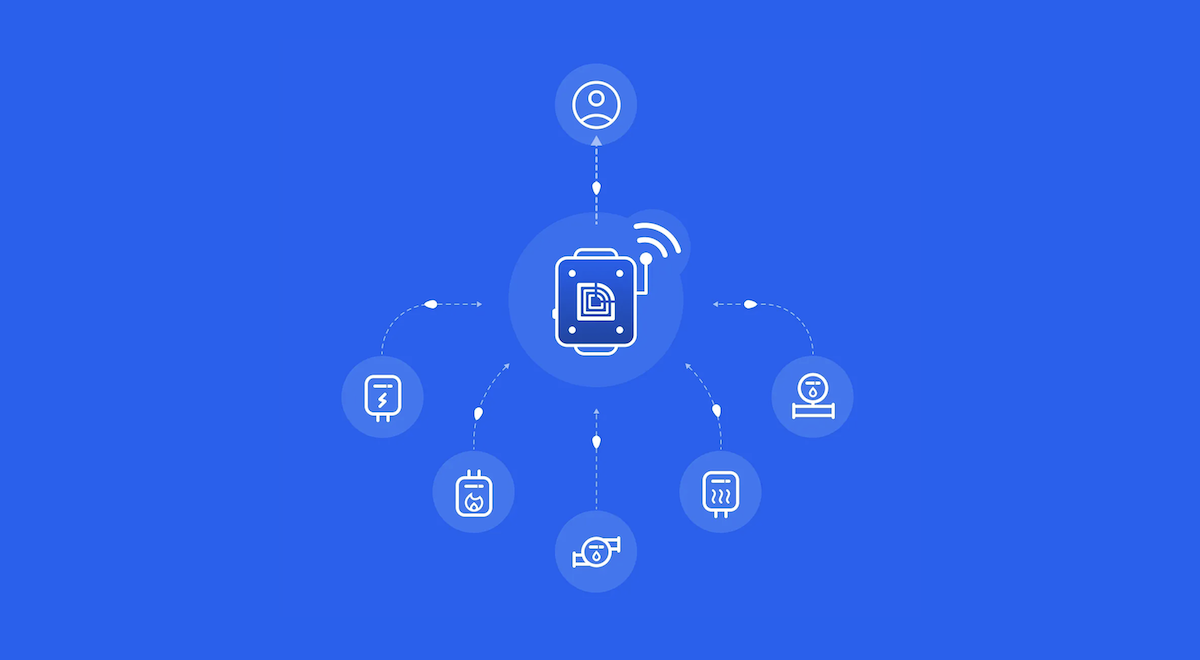
Next-gen meter readings, no replacements needed

Modernising metering infrastructure

M-Bus to IoT integration explained

Understanding TCO: More than just hardware

NB-IoT technology: All you need to know

LoRaWAN: All you need to know

M-Bus, wM-Bus, and RS-485: A technology guide

LoRaWAN vs. NB-IoT: Which technology is right for you?
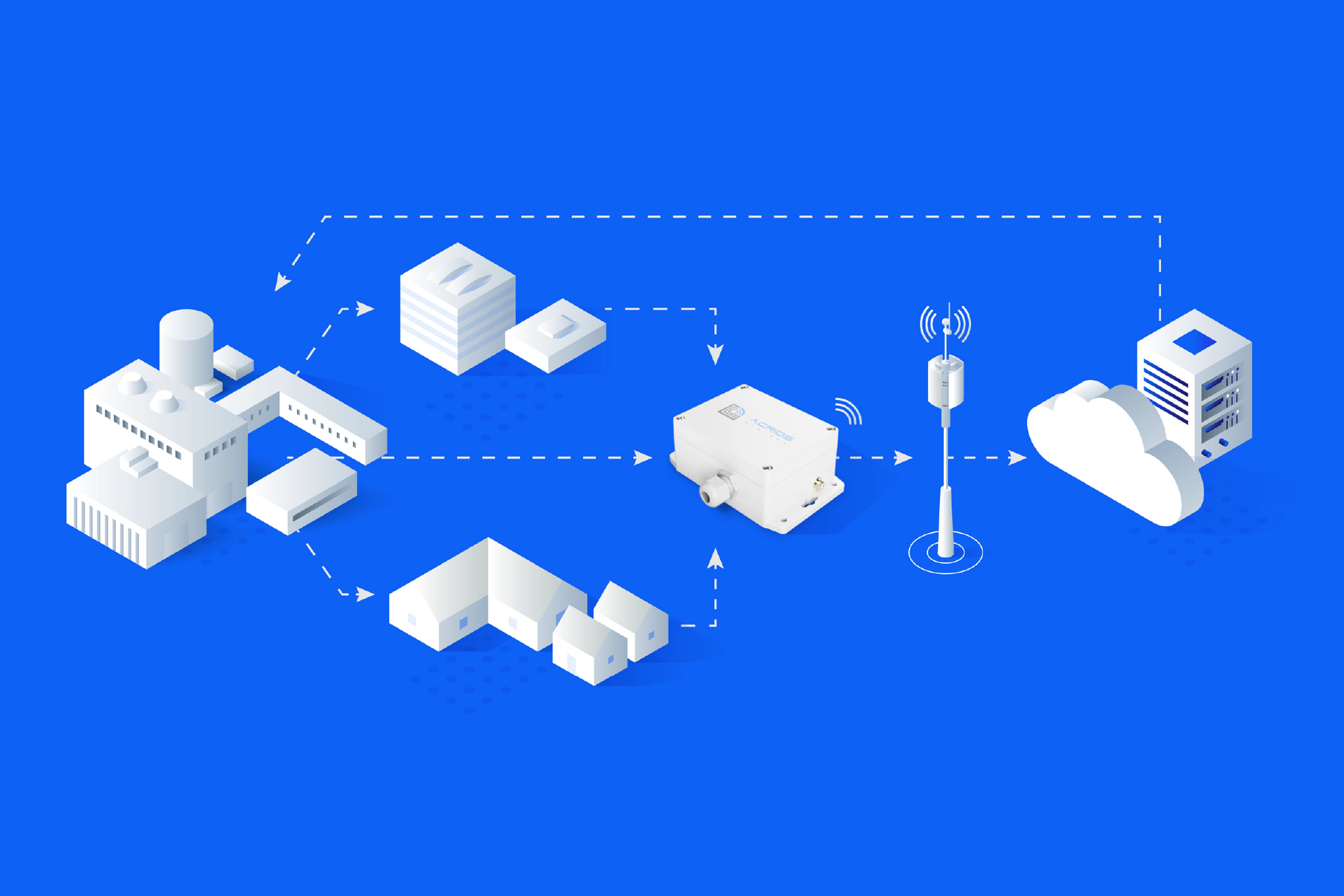
Smart metering: What it is and why it matters

IoT: Technology that saves time and money