Focused supplier or large vendor? Depends on the project
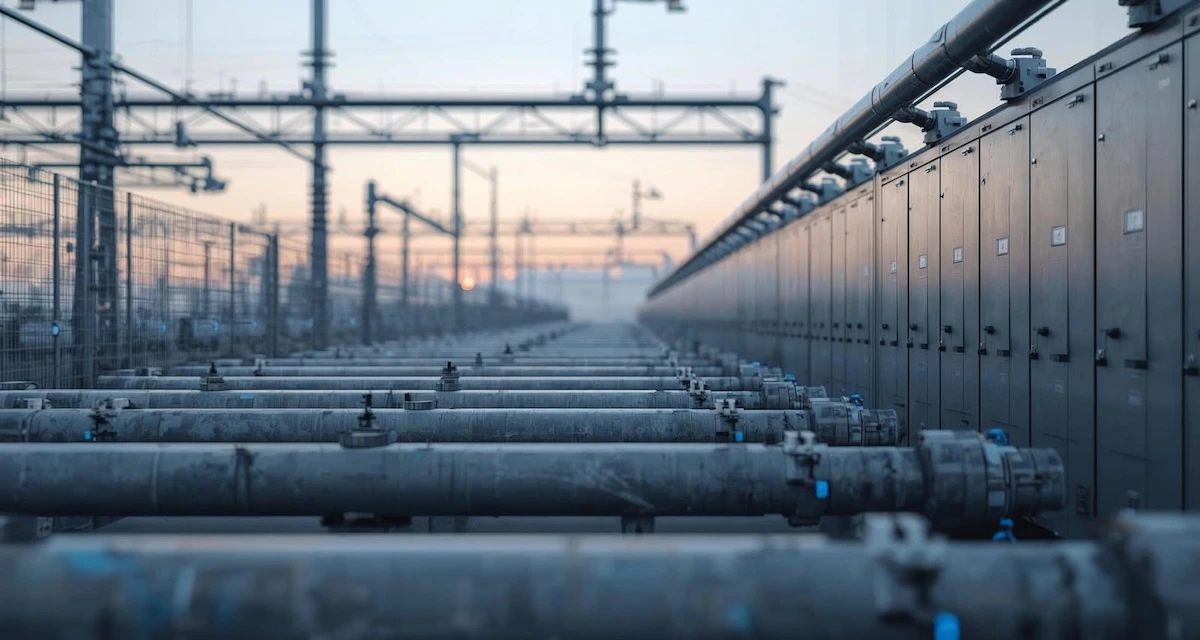
In retrofit connectivity, the biggest vendors win the largest rollouts. Utilities and operators that need working meters connected, not replaced, often fit better with a focused supplier
In smart metering, a handful of names define the market: Kamstrup, Diehl Metering, Itron, Landis+Gyr. They have the catalogues, reference projects, and sales coverage. A small engineering company does not compete with them on the same terms. It competes where the large vendors choose not to focus.
Key takeaways
- Large meter vendors typically build their offering around a complete system: the meter, communication, network and software. This model is well suited to new, large-scale rollouts.
- Where installed meters are still working and already provide M-Bus, wM-Bus, pulse or Modbus, a converter can connect them to NB-IoT or LoRaWAN without replacing the meter.
- The same retrofit logic applies in water utilities, district heating, gas and building or industrial sub-metering, including ATEX-certified converters for hazardous environments where most generic IoT hardware cannot be used.
- A focused supplier can offer more room for project-specific configuration, labelling, mounting or firmware changes while keeping production controlled and repeatable.
- Large vendors are well suited to high-volume new meter rollouts, large public tenders and projects where one supplier is expected to cover the complete system and deployment.
- The right supplier depends on the project: full fleet replacement and end-to-end delivery favour the large-vendor model, while connecting existing working meters is where a focused retrofit supplier can be the better fit.
Two different business models
A large meter vendor sells a system. The meter, the radio inside it, the network, and usually the software on top. This is a deliberate strategy. Kamstrup, Diehl, Itron, and Landis+Gyr build the full stack because that is where their margins and long-term positions lie. When a utility needs connectivity, the usual answer is to replace the existing meter with one that already communicates, then add the platform.
That works well for large new rollouts. It is expensive and slow for everything else. And it leaves a clear gap.
That gap is retrofit connectivity. Most meters in the field already work. They already have M-Bus, wireless M-Bus, or a simple pulse output. They do not need replacing. They need connectivity. ACRIOS builds exactly that. Narrow, well-made converters that take an existing meter and put it on NB-IoT or LoRaWAN. The customer integrates the data wherever they want.
The difference is one of fit. Operatores and utilities wanting a completely new system should choose a large vendor. Those looking to connect meters already installed should choose a focused supplier like ACRIOS.
Where the specialist fits better, by utility
Water utilities
For a new district rollout, Kamstrup, Diehl, and Sensus make strong ultrasonic water meters with built-in radio. But for networks already running working meters with M-Bus or pulse outputs, replacing all of them is a capital project few utilities want. ACRIOS connects those meters as they are. A wired M-Bus or pulse converter to NB-IoT turns an existing fleet into a reporting network without replacing a single meter.
District heating
Heat metering is Kamstrup and Diehl territory, and in apartment buildings, the metering service companies dominate. Their model assumes a meter and a reading infrastructure. But for a building owner who already has compliant heat meters with M-Bus, that is a poor fit. ACRIOS provides wireless M-Bus concentrators and converters that read the meters in place and forward the data. The building meets its reporting obligation without a full replacement.
Gas utilities
For retrofitting connectivity onto an installed gas meter, a large vendor's effort is rarely worth it. The volumes per project are smaller, and the integration is more involved. Smart gas meters exist, and Itron, Honeywell, Elster, and Diehl sell them. The commercial logic points to selling a new meter instead. ACRIOS fills this gap, including ATEX-certified converters for hazardous environments where most generic IoT hardware cannot be used. It is a narrow and demanding niche. That is the kind of work a focused company is built for, and a large vendor tends to pass over.
Electricity and sub-metering
For a national Advanced Metering Infrastructure (AMI) tender, a small company has no reason to bid against Landis+Gyr and Itron. But for energy reporting within a building, on a campus, or at an industrial site, the operator needs a different solution. Pulse outputs and Modbus are common there. ACRIOS converts an S0 pulse or a Modbus register into a LoRaWAN or NB-IoT feed, so an energy or ESG team can measure what is already installed. The grid platform was never aimed at this.
The OEM advantage
There is a second advantage that does not depend on the vertical. Response time.
When an OEM or integrator needs a specific configuration, a different label, added mounting material, or a small firmware change, a large vendor routes it through an internal approval process. The answer is often no, or not this year. ACRIOS can usually say yes. Production follows controlled, documented processes to ensure repeatability. But an order does not have to match a fixed catalogue. Custom configuration and project-specific adaptation are routine, not exceptions.
This is what flexibility means in practice. A controlled process that still adapts to the project.
Where the giants win
This does not mean a focused supplier wins everywhere. It does not.
Large vendors have a clear advantage in high meter volumes. A project that needs hundreds of thousands of new meters under a single warranty, with one supplier to hold accountable, is their strength. They win large public tenders because they have the certifications, the references, and the balance sheet. And when a customer wants one supplier for everything, including installation across a region, a focused hardware company cannot match that. ACRIOS does not try to.
So who should you choose?
The choice comes down to the project and the operator's needs.
If the project is a full fleet replacement with a single vendor for hardware, software, networking, and installation, choose a large vendor. Kamstrup, Diehl, Itron, and Landis+Gyr are built for that.
If the operator needs working meters to gain connectivity, choose a specialist. For M-Bus, wireless M-Bus, pulse, or Modbus retrofit to NB-IoT or LoRaWAN, a focused converter is the right tool. That is what ACRIOS does, and it is all it does.
Large vendors supply the complete system. ACRIOS connects the meters already in place. In a market where most meters still work, that focus is worth more than the catalogue's size suggests.

Glossary of terms used
- AMI (Advanced Metering Infrastructure): an infrastructure for collecting meter data that adds two-way communication and device management
- ATEX: the EU framework governing equipment and protective systems intended for use in potentially explosive atmospheres
- Converter: a device that connects an existing meter interface to another communication interface or network, allowing meter data to be collected without replacing the meter
- LoRaWAN: a low-power wide-area network protocol in which devices send data through gateways to a network server, operated on public or private networks
- M-Bus (Meter-Bus): a wired European standard for reading data from utility meters such as water, heat and gas meters
- Modbus: a communication protocol widely used in industrial and energy devices
- NB-IoT (Narrowband IoT): a cellular low-power technology running in mobile operators' licensed networks, suited to devices that send small amounts of data
- OEM (Original Equipment Manufacturer): a manufacturer that integrates components or solutions from suppliers into products sold as part of its own offering
- Pulse output and S0: a pulse output represents measured consumption as electrical pulses; S0 is a standardised type of pulse interface
- Retrofit: connecting existing, working meters to modern communication networks and data systems without replacing them
- Sub-metering: measuring consumption separately for individual parts of a building or site, such as tenants, floors or machines
- Wireless M-Bus (wM-Bus): the wireless variant of M-Bus used for radio transmission of meter data
FAQs
When the meters in the field already work and only need connectivity. If a network runs M-Bus, wireless M-Bus, pulse, or Modbus meters that do their job, a focused converter puts them on NB-IoT or LoRaWAN without replacing anything. A large vendor is the better choice when the project is a full fleet replacement with one supplier for hardware, software, networking, and installation.
Large meter volumes, hundreds of thousands of new meters under a single warranty, are where large vendors hold a clear advantage. A focused supplier competes on retrofit connectivity rather than full-system tenders. For connecting an existing fleet across water, heat, gas, or electricity, that focus is the strength, not the volume of a catalogue.
Replacing a working fleet is a capital project few utilities want. Most installed meters do not need replacing, they need connectivity. A converter reads an existing meter and forwards the data, so the network meets its reporting obligation without a full replacement. New smart meters make sense for greenfield rollouts, not for meters that already do their job.
Not sure whether your meters need replacing or just connecting? ACRIOS connects working M-Bus, wireless M-Bus, pulse, and Modbus meters to NB-IoT or LoRaWAN, no full fleet replacement required. Tell us what you already have installed and we will find the fit.

Blog
LoRaWAN airtime: why radio conditions matter
Converter, bus, bridge, gateway: what's the difference?
What actually drains an IoT device battery
M-Bus parsing strategies for LoRaWAN and NB-IoT

How to best replace walk-by meter reading
Can your existing meters be retrofitted?

Battery life in IoT: beyond the datasheet number
Agile, Waterfall, or NRE? Choosing a development methodology

Developing adaptive IoT communication under the CRA

Edge computing in IoT metering
Manufacturer as a technology partner

Why a device without an antenna fails

CE certification for IoT: What RED DA changes
Water losses in utility networks: The hidden cost of leaks
Pressure monitoring in water networks: Early fault detection
M-Bus pressure sensor: Leak detection for water utilities
The cost of measurement data errors and how to prevent them

Smart Readiness Indicator (SRI): All you need to know
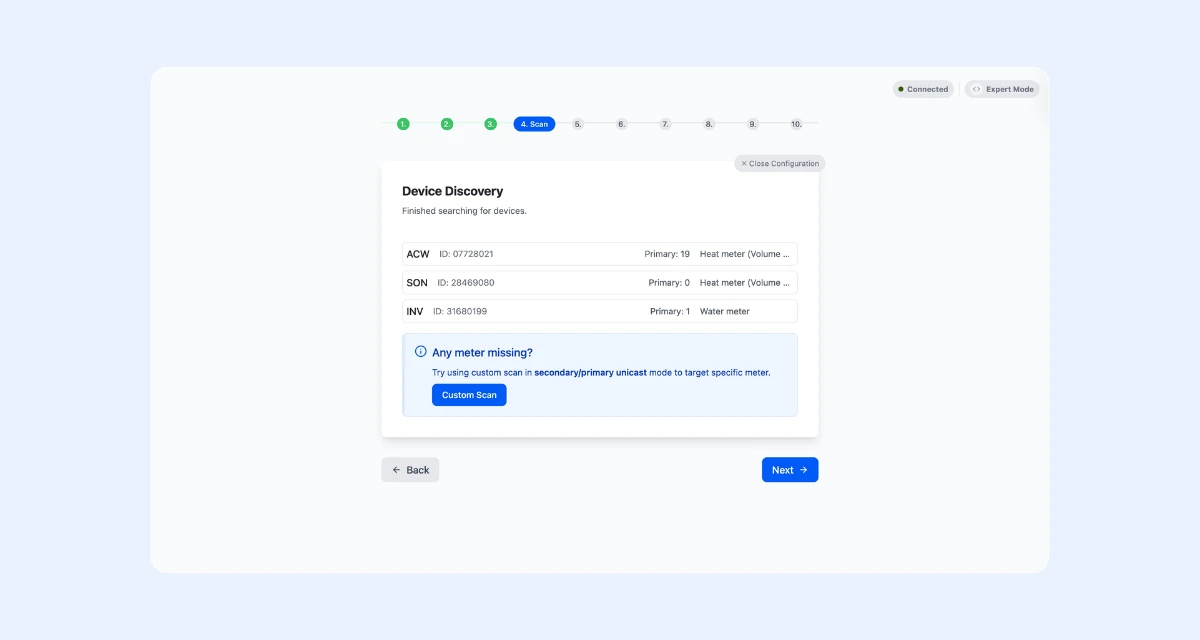
M-Bus installation tool Wizard from ACRIOS
Coulomb meter: Everything you need to know
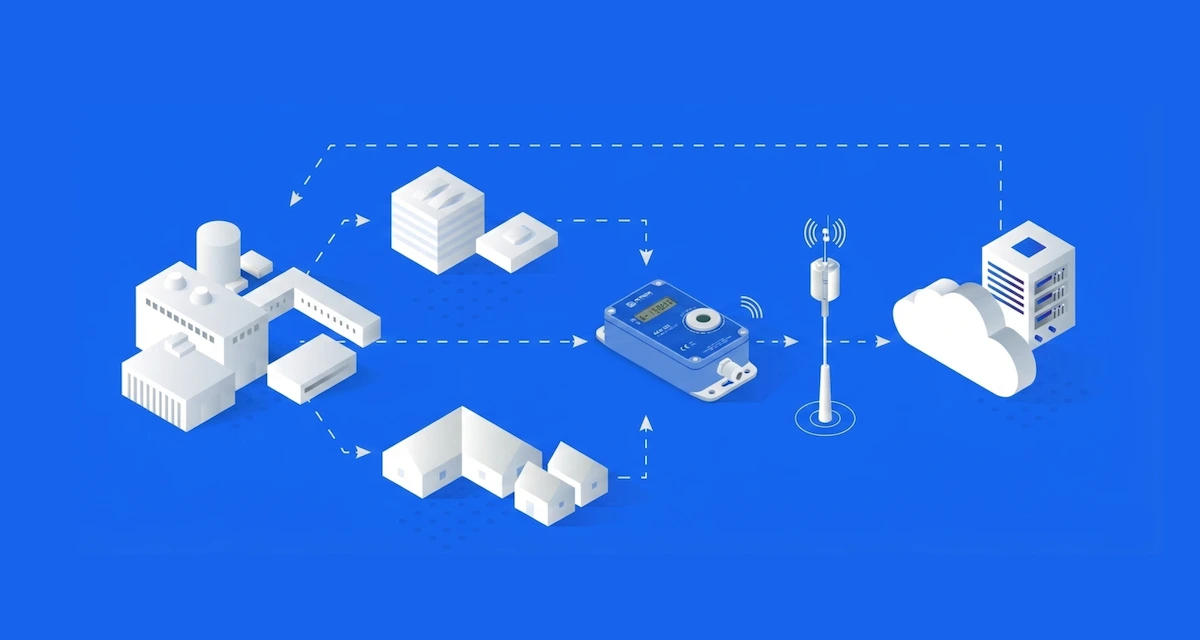
ACR-EX in water utilities: remote reading of pulse water meters

ACRIOS and Quectel announce partnership

External or internal? How custom development works
Proven deployment of 10,000 wM-Bus converters for EED
Choosing a remote reading system for water utilities
Open data interfaces pay off for reporting and integration

15-minute vs daily meter readings frequency explained
Scripting in IoT: Flexibility, sustainability, and protection

Gas meter data to dashboard: ACR-EX meets Datacake
EPBD is coming: what BACS means for your building
When DTLS makes sense. Know before you deploy

Not your keys, not your hardware
868 MHz or 433 MHz? The right choice for your wM-Bus
Everything you need to know, documented. ACRIOS wiki.
End-to-end custom hardware and software development
How to collect energy data to support ISO 50001
Lowering IoT TCO through smart manufacturing

Reading Sensus meters with zero hardware changes

Why 15-minute data matters in district heating

Give me a tool that works. Not a manual.

5 most common myths about remote meter reading

Battery-powered vs wired: What really costs more?

Cyber Resilience Act and IoT hardware
Next-gen meter readings, no replacements needed

Modernising metering infrastructure

M-Bus to IoT integration explained

Understanding TCO: More than just hardware

NB-IoT technology: All you need to know

LoRaWAN: All you need to know

M-Bus, wM-Bus, and RS-485: A technology guide

LoRaWAN vs. NB-IoT: Which technology is right for you?
Smart metering: What it is and why it matters

IoT: Technology that saves time and money