September 28, 2026
Kamila Hrdličková

LoRaWAN airtime: why radio conditions matter
How spreading factor and duty cycle shape real smart metering installations

Key takeaways

  • ‍A LoRaWAN connection is not simply good or bad. In the European EU868 band, meters on the same network can operate at spreading factors from SF7 to SF12.
  • Each step up in spreading factor roughly doubles airtime. For a 10-byte payload, a message at SF12 spends about 24 times longer on air than at SF7.
  • The default LoRaWAN uplink channels in EU868, like most additional channels, fall into sub-bands with a 1% duty-cycle limit, so longer airtime reduces how often a device may transmit.
  • Maximum payload shrinks to 51 bytes at SF10 to SF12, which is often less than a full M-Bus telegram.
  • Gateways are also subject to duty-cycle limits, which makes downlinks and confirmed messages a scarce resource in large installations.

‍

A 10-byte meter reading takes about 62 milliseconds to transmit at spreading factor 7. The same reading at spreading factor 12 takes almost 1.5 seconds, roughly 24 times longer. Both meters sit on the same LoRaWAN network, both deliver their data, and both count as covered. In terms of battery, channel capacity and how often they are allowed to transmit, they are in very different situations.

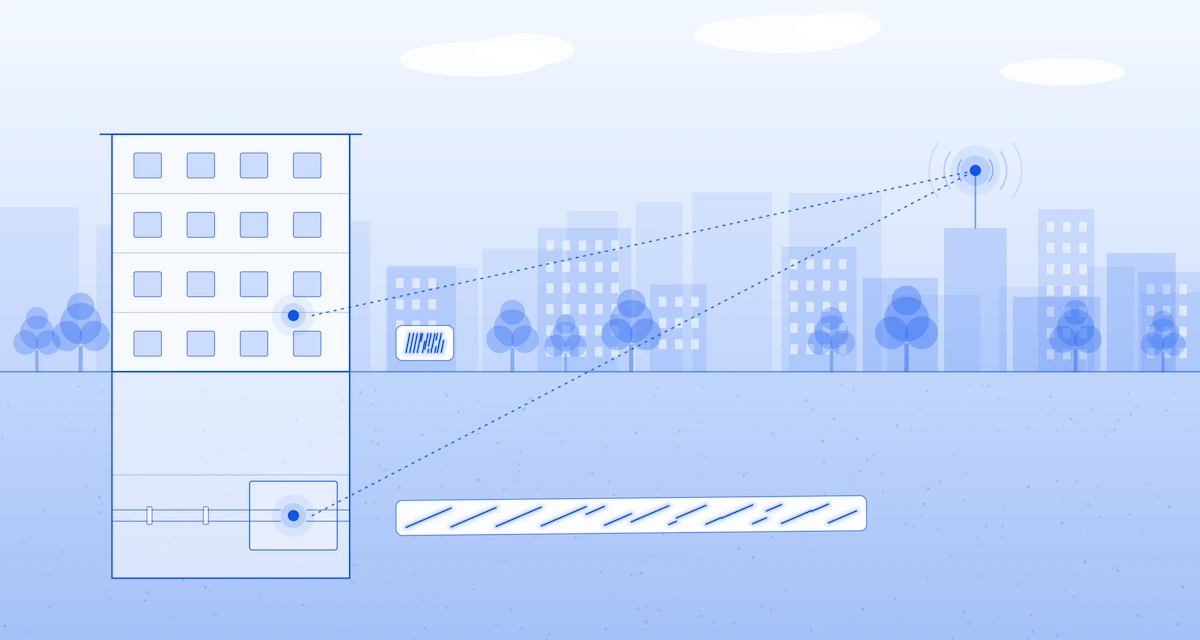
The idea works like a conversation in a forest. Two people standing close can talk quickly. Across a wide clearing, the same sentence has to be spoken slowly and clearly to be understood, and it takes longer. In radio terms, distance is not only metres: a concrete wall or a meter shaft two floors underground can put a meter further away from the gateway than hundreds of metres of open air. LoRaWAN adds one more rule: whoever talks for a long time must then stay silent for a long time.

Coverage is not binary

A typical scenario looks like this: one water meter is installed in a ground-floor utility room with a clear path to the gateway. Another sits two floors underground in a concrete meter shaft. Both are online. The first transmits at a high data rate. The second needs the slowest, most robust data rate to reach the gateway.

For remote meter reading, that difference decides how much data each device can send, how often, and at what energy cost. Coverage alone says little about whether a LoRaWAN installation will work well at scale.

What spreading factor does

LoRa modulation trades speed for robustness. In the European EU868 band, LoRaWAN uses spreading factors SF7 to SF12 on 125 kHz channels, mapped to data rates DR5 (SF7) down to DR0 (SF12). A higher spreading factor spreads each bit over a longer signal.

A higher spreading factor improves receiver sensitivity, allowing weaker signals to be decoded at the cost of a lower data rate and longer airtime. That is why SF12 reaches meters that SF7 cannot.

Spreading factor is not transmission power. A higher spreading factor does not mean the device shouts louder; it means it speaks more slowly. Transmission power is a separate parameter.

Airtime in numbers

Time on air (airtime) is how long one transmission occupies the radio channel. The values below are calculated for EU868 with 125 kHz bandwidth, coding rate 4/5 and the standard 13-byte LoRaWAN frame overhead.
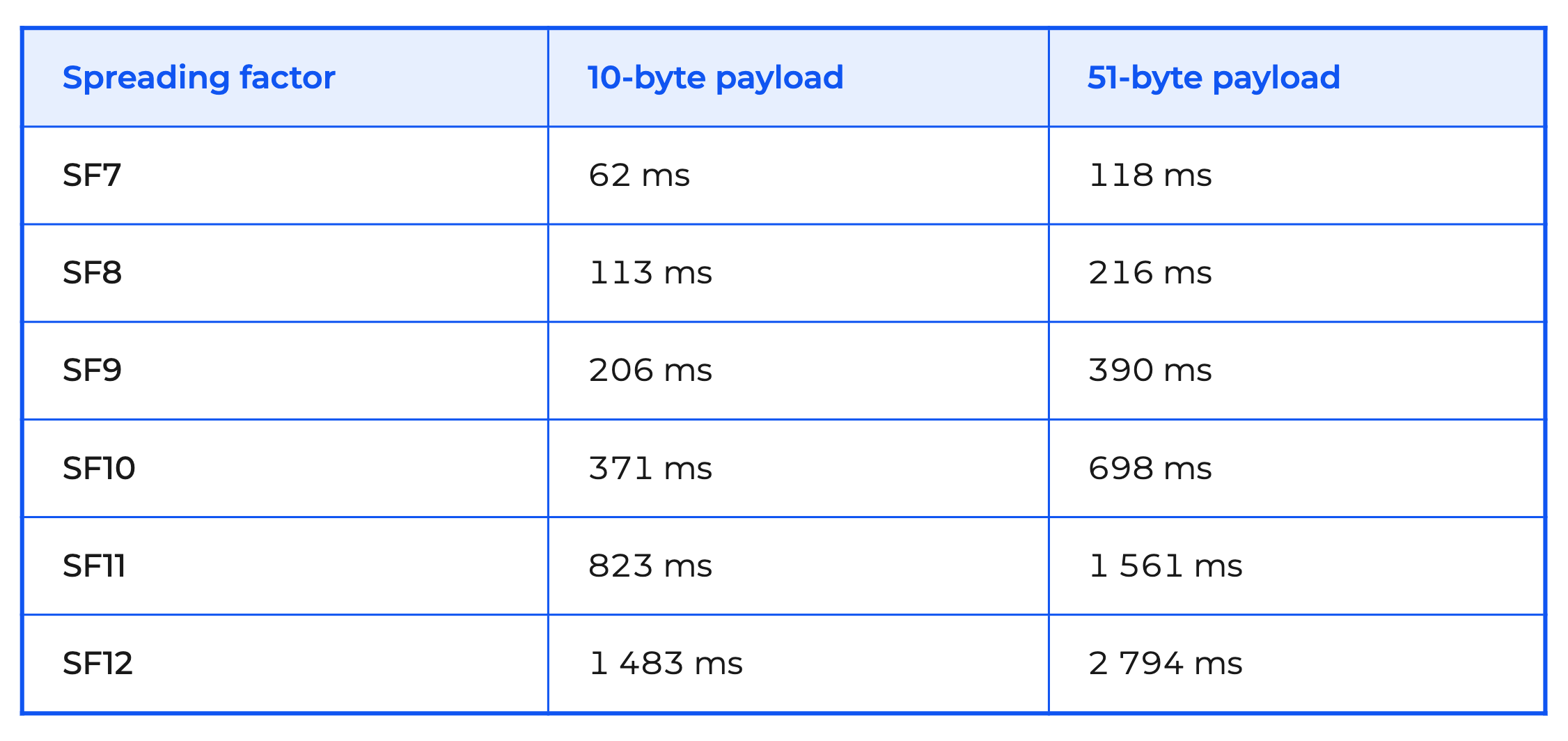
Longer airtime has three consequences. The radio stays active longer, and radio transmission is one of the largest contributors to battery drain in a battery-powered meter. The channel is occupied longer, which raises the risk of collisions as the number of devices grows. And airtime is exactly what regulatory limits are measured in.

Duty cycle: transmission time is rationed

LoRaWAN operates in licence-exempt spectrum, governed in Europe by ETSI EN 300 220-2 and national implementations of ERC Recommendation 70-03. The 863 to 870 MHz band is divided into six sub-bands with different limits:

  • 863 to 865 MHz: 0.1% duty cycle
  • 865 to 868 MHz: 1% duty cycle, where networks commonly place additional uplink channels (867.1 to 867.9 MHz)
  • 868.0 to 868.6 MHz: 1% duty cycle, containing the three default LoRaWAN uplink channels
  • 868.7 to 869.2 MHz: 0.1% duty cycle
  • 869.4 to 869.65 MHz: 10% duty cycle, commonly used for downlinks
  • 869.7 to 870 MHz: 1% duty cycle

‍

A 1% duty cycle allows a transmitter 36 seconds of airtime per hour in that sub-band. Devices using listen-before-talk with adaptive frequency agility (LBT+AFA) can follow different rules, so "1% duty cycle" is not a universal LoRaWAN rule.

The limit is counted separately for each sub-band. After a transmission, the device must wait roughly 99 times its airtime before transmitting again on the same sub-band, but it may use another sub-band in the meantime.

  • A 10-byte message at SF7 means about 6 seconds of silence on that sub-band.
  • The same message at SF12 means almost 2.5 minutes.
  • A 51-byte message at SF12 means more than 4.5 minutes.
  • A device with channels in two 1% sub-bands, typical for networks using the additional 867 MHz channels, can therefore transmit roughly twice as often.

‍

For daily, hourly or even 15-minute readings, a single uplink stays within this limit. A 51-byte message at SF12 every 15 minutes uses about 11 seconds of airtime per hour, less than a third of a single sub-band's allowance. The limit becomes a real constraint at intervals of around 5 minutes at SF12 within one sub-band, or earlier when retransmissions and additional messages add up. At 15-minute intervals, the more significant cost of a high spreading factor is battery consumption and channel occupancy.

Payload limits and M-Bus telegrams

The maximum application payload also depends on the data rate. In EU868, DR0 to DR2 (SF12 to SF10) carry at most 51 bytes, DR3 (SF9) carries 115 bytes and DR4 to DR5 (SF8 and SF7) carry 222 bytes.

This matters for anyone connecting existing meters through an M-Bus converter. A full M-Bus telegram often exceeds 51 bytes, and the meters most likely to fall back to SF12 are exactly those in basements and shafts. Processing data in the converter before transmission addresses this at the source. VIF/DIF filtering sends only the values the receiving system needs, and the fragmentation strategies Truncate, Split and Multiframe cover cases where the full telegram has to arrive.

Downlinks and the gateway's own limits

Duty-cycle limits also apply to gateways. Every downlink, whether a configuration change, an ADR command or an acknowledgement of a confirmed uplink, consumes gateway airtime. One gateway serves all devices in its range, so hundreds or thousands of meters share its downlink capacity.

In a large installation, requesting confirmation for every reading quickly consumes this shared capacity. Confirmed uplinks are therefore best reserved for messages where guaranteed delivery matters, with routine readings sent unconfirmed.

Adaptive Data Rate

Adaptive Data Rate (ADR) lets the network server adjust a device's data rate and transmission power based on the link quality of recent uplinks. For stationary meters, the typical case in smart metering, ADR keeps devices with a good signal on fast data rates and short airtime instead of defaulting to conservative settings.

ADR does not fix poor network design. A meter in a shaft with consistently weak signal will stay at a high spreading factor. Gateway placement, antenna design and installation conditions remain part of the system design.

What to check before deployment

  • Installation conditions: how many meters are likely to operate at SF10 to SF12 because of basements, shafts or thick walls
  • Reading interval: a daily reading and a 15-minute interval create very different airtime budgets
  • Payload size: whether the full M-Bus telegram is needed or whether filtered values are enough, especially below 51 bytes
  • Downlink needs: how often devices need configuration changes or confirmed messages
  • Network type: private network or public operator, since operators can apply their own policies on top of regulatory limits
  • Scale: whether a configuration that works for ten test devices still fits the airtime budget for thousands

‍

Long range and low energy consumption are the reasons LoRaWAN is widely used for wireless meter reading and LoRaWAN energy monitoring. Neither comes automatically with the technology. A meter that is covered is not necessarily a meter that communicates efficiently. The difference comes from matching spreading factor, payload and reading interval to the conditions in which each meter actually operates.

The values in this article (airtime, duty-cycle limits and payload sizes) are indicative for the EU868 band and standard LoRaWAN parameters. Actual limits depend on national spectrum regulation, the LoRaWAN regional parameters version, the network operator and device configuration.

Glossary of terms used

  • ADR (Adaptive Data Rate): a LoRaWAN mechanism that lets the network server adjust a device's data rate and transmission power to the radio conditions
  • Airtime (time on air): the time one radio transmission occupies the channel
  • Data rate (DR): a LoRaWAN index combining spreading factor and bandwidth, from DR0 (SF12) to DR5 (SF7) in EU868
  • Downlink: a message sent from the network through a gateway to an end device
  • Duty cycle: the maximum share of time a transmitter may transmit in a given sub-band within an observation period
  • Gateway: a network element that receives LoRa transmissions from end devices and forwards them to the network server
  • Payload: the application data carried in a message
  • Spreading factor (SF): a LoRa modulation parameter that sets the trade-off between data rate, receiver sensitivity and airtime
  • Uplink: a message sent from an end device to the network

FAQs

No items found.

Planning a LoRaWAN smart metering rollout? Tell us about the meters, installation conditions and required reading intervals. We'll find the right communication setup together.

Blog

Technology

Converter, bus, bridge, gateway: what's the difference?
Converter, bridge, gateway, repeater, concentrator, data logger: metering and IoT datasheets rarely agree on these terms in practice. Following the data path instead of the product label shows exactly where the real functional boundaries between devices sit.
Read more
Technology

What actually drains an IoT device battery
Long battery life is achievable, but only with the right configuration. Reading and transmission frequency, sleep design, NB-IoT and LoRaWAN settings, and error handling all shape real-world results. This guide walks through the full power profile, with a deployment checklist.
Read more
How to?

M-Bus parsing strategies for LoRaWAN and NB-IoT
M-Bus telegrams often exceed a single LoRaWAN or NB-IoT uplink. VIF/DIF filtering and three ACRIOS fragmentation strategies, Truncate, Split, and Multiframe, plus an MQTT-over-JSON option on NB-IoT, cover the practical choices for matching data transport to the network in use.
Read more
How to?

How to best replace walk-by meter reading
Walk-by meter reading no longer keeps up, the EED is pushing for frequent consumption data. This article compares three ways to automate readings, cabling, switching to LoRaWAN meters, and a wM-Bus concentrator, and explains when keeping existing meters makes the most sense.
Read more
Technology

Can your existing meters be retrofitted?
Many remote reading projects start with existing metering infrastructure rather than new meters. This practical checklist explains what to assess before choosing a converter, communication network or platform for a successful retrofit project.
Read more
Technology

Battery life in IoT: beyond the datasheet number
Battery life in an IoT device depends on more than capacity. Temperature, communication method, signal quality and the cell's own properties all play a part. A datasheet figure is only a reference value, and real-world performance can look very different depending on the application.
Read more
Opinions and analysis

Agile, Waterfall, or NRE? Choosing a development methodology
Choosing the right collaboration model can determine whether a development project stays on budget, adapts to change, or delivers on time. When Agile, Waterfall, or NRE is the right fit? Why the best approach depends on project's goals, readiness, and technical complexity?
Read more
Technology

Developing adaptive IoT communication under the CRA
ACRIOS is developing a communication module that switches between LoRaWAN and NB-IoT on its own. Backed by the Technology Agency of the Czech Republic, the project aims for more reliable data transmission, lower costs, and security beyond the Cyber Resilience Act.
Read more
Opinions and analysis

Focused supplier or large vendor? Depends on the project

In retrofit connectivity, the biggest vendors win the largest rollouts. But for working meters that only need connecting, not replacing, a focused converter to NB-IoT or LoRaWAN often fits better. A look at where specialists and giants each have the edge.
Read more
Opinions and analysis

Edge computing in IoT metering

M-Bus payloads often exceed LoRaWAN and NB-IoT single-message limits. Edge computing solves this at the source through VIF/DIF filtering, adaptive sampling, local validation, and source encryption. When does it make sense, and when not? A practical decision guide for IoT metering deployments.
Read more
Technology

Manufacturer as a technology partner

The role of IoT device manufacturers is shifting from hardware supplier to technology partner. Parsers, open APIs, containerised backend, remote firmware management and CRA-ready security shorten implementation, reduce internal development load and lower TCO across AMR and AMI projects.
Read more
Technology

Why a device without an antenna fails

If your IoT device manages to connect even without its antenna, that is not a sign of clever engineering. It is a warning sign of poor radio design. Why a properly tuned antenna is essential for reliable wireless meter reading, what really happens inside the device, and how to test it sensibly before full deployment in the field.
Read more
Compliance

CE certification for IoT: What RED DA changes
Development went well, the device works. Then CE certification arrives and the supplier's cybersecurity documentation is missing. Since August 2025, RED DA is in force and part of every CE. How to tell if your supplier is ready, and what to do if not.
Read more
Opinions and analysis

Water losses in utility networks: The hidden cost of leaks
An estimated one in four litres of treated water is lost in European distribution networks. Average losses hover around 25%, exceeding 60% in some countries. A closer look at why pipes fail, what it really costs utilities, and why a slow leak is often worse than a visible burst.
Read more
Opinions and analysis

Pressure monitoring in water networks: Early fault detection
Every utility faces the same question: how to know something is wrong in the network as fast as possible. Acoustic methods, district metered areas and continuous pressure monitoring each bring strengths and limits. A comparison of approaches to leak detection, with real examples.
Read more
Opinions and analysis

M-Bus pressure sensor: Leak detection for water utilities
No parallel infrastructure, no new data platform, no separate operational processes. The joint ACRIOS and Lorenz solution brings continuous pressure monitoring into the same communication layer water utilities already use for smart metering – over LoRaWAN or NB-IoT.
Read more
How to?

The cost of measurement data errors and how to prevent them

Unreliable data is more costly than no data at all, especially in smart metering and energy management. A missing value or small deviation can escalate into incorrect bills, failed audits, or undetected faults. Here is what that looks like in practice and how to prevent it.
Read more
Compliance

Smart Readiness Indicator (SRI): All you need to know
Smart Readiness Indicator (SRI) is the EU's metric for a building's digital intelligence. It rates how well a building manages energy, responds to occupants, and interacts with the grid. Learn what SRI means, what the legislation requires, and what role remote meter reading plays.
Read more
Technology

M-Bus installation tool Wizard from ACRIOS
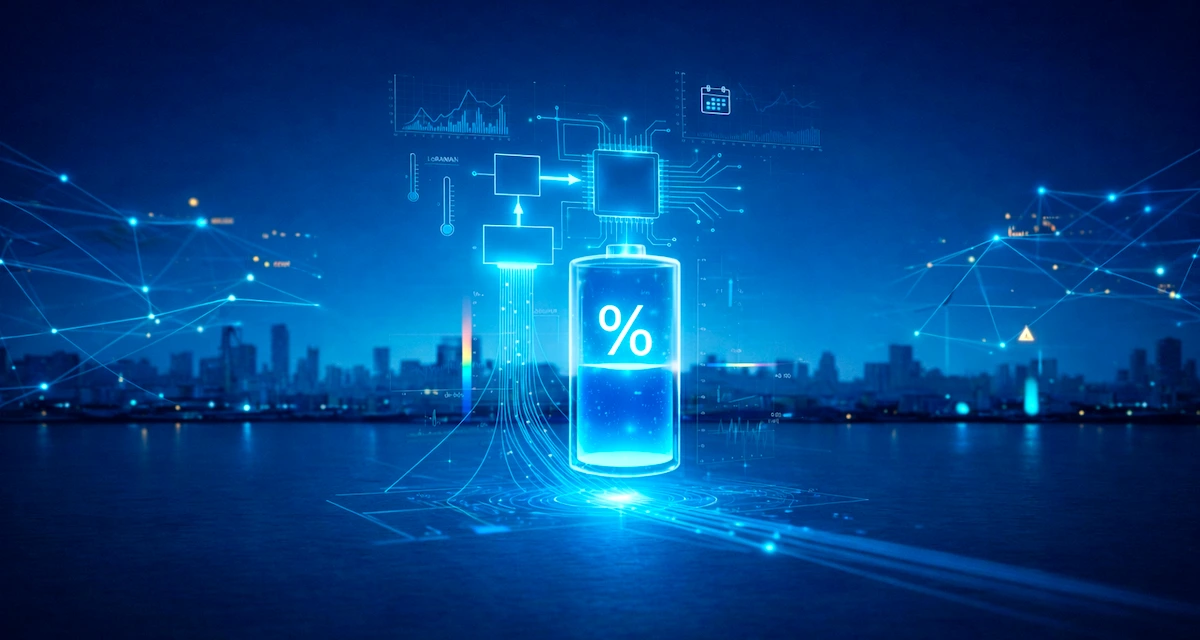
Configuration errors and troubleshooting often take more time than wiring M-Bus devices. The ACRIOS Wizard simplifies this by guiding technicians through meter detection, data selection, and network setup; reducing installation time and the need for specialised knowledge.
Read more
Technology

Coulomb meter: Everything you need to know
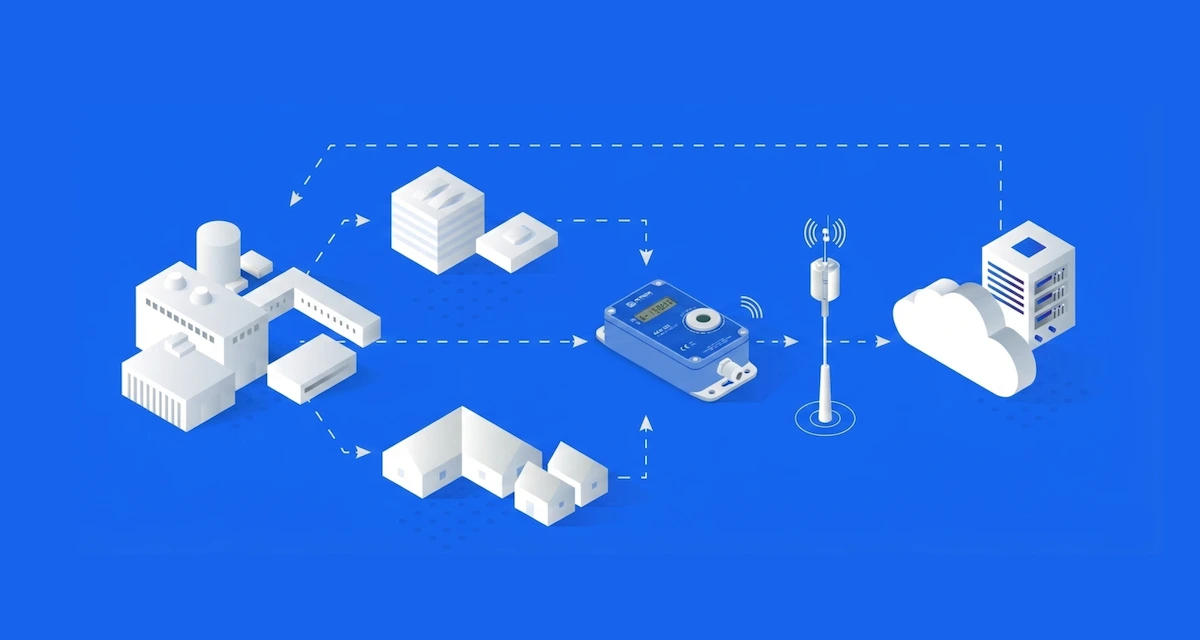
A Coulomb meter measures actual battery charge consumption rather than relying on estimates. This enables realistic end-of-life prediction for IoT metering devices, optimised service intervals, and reduced TCO. How does this technology work in practice, and where does it make the most sense?
Read more
Technology

ACR-EX in water utilities: remote reading of pulse water meters

Pulse water meters are common in water utility networks, but their data often remains on the mechanical register. Learn how existing pulse water meters can be connected to remote reading systems using a pulse converter with display, without replacing the meters.
Read more
Company news

ACRIOS and Quectel announce partnership

ACRIOS Systems and Quectel Wireless Solutions have formed a strategic partnership to support SME manufacturers in adopting modern Linux/Android smart modules. The joint communication outlines the scope and technical goals of the cooperation.
Read more
Opinions and analysis

External or internal? How custom development works
External development helps organisations accelerate project delivery and reduce fixed costs. This article explores when outsourcing truly makes sense, what to consider when selecting a partner, and how to structure collaboration that delivers lasting internal peace.
Read more
How to?

Proven deployment of 10,000 wM-Bus converters for EED
Digitalisation of metering is becoming a strategic priority for utilities. Experience from a project with 10,000 wM-Bus concentrators and 850,000 meters shows that success depends less on technology itself and more on change management, coordination, and structured planning.
Read more
Technology

Choosing a remote reading system for water utilities
Digitalisation brings many ways to read water meters remotely, from bus networks to direct LoRaWAN and NB-IoT communication. Learn how to choose the right approach for your utility based on existing meters, coverage conditions, and investment strategy.
Read more
Opinions and analysis

Open data interfaces pay off for reporting and integration
An open data interface means freedom and independence when working with data. Beyond storing and visualising, it enables export, reporting, automation and smooth integration with other systems. The result is greater flexibility, lower vendor lock-in and sustainable data management.
Read more
Opinions and analysis

15-minute vs daily meter readings frequency explained
How often should you measure energy and water consumption? Fifteen-minute meter reading frequency supports detailed analysis and real-time optimisation, while daily data extend battery life and simplify reporting. Learn about the benefits, trade-offs, and use cases from practice.
Read more
Technology

Scripting in IoT: Flexibility, sustainability, and protection

Many IoT deployments fail when each new customer request requires a firmware change. Scripting solves that by separating customer logic from core functions, it enables faster updates, long-term maintenance, and secure control over unique features.
Read more
Technology

Gas meter data to dashboard: ACR-EX meets Datacake
Get your gas meter data online in minutes with the ACR-EX datalogger and its direct Datacake integration. This reliable NB-IoT solution provides live readings, alerts, and a ready-to-use dashboard. All without the need to develop or maintain your own backend infrastructure.
Read more
Compliance

EPBD is coming: what BACS means for your building
Let’s break down what the BACS mandate, part of EU’s broader initiative EPDB directive, means in practice. Who must comply, which systems and protocols to use, and how to modernise your building with minimal effort using your existing infrastructure.
Read more
Opinions and analysis

When DTLS makes sense. Know before you deploy
Let’s explore when DTLS (Datagram Transport Layer Security) brings real security value to NB-IoT deployments and when it’s smarter to choose a simpler or more energy-efficient alternative. Get clarity before committing to your next smart metering rollout.
Read more
Opinions and analysis

Not your keys, not your hardware

AES encryption protects your data. But without the keys, you don’t really own the device. This article explains why requesting encryption keys matters when purchasing IoT meters, and how it gives you full control over data, integration, and long-term independence.
Read more
Technology

868 MHz or 433 MHz? The right choice for your wM-Bus
Looking for a wireless M-Bus converter but unsure which frequency band to choose? This article compares 868 MHz and 433 MHz, explains key technical differences, and offers practical guidance based on meter compatibility, signal conditions, and installation environments.
Read more
How to?

Everything you need to know, documented. ACRIOS wiki.
One place to find answers to all your technical questions. The ACRIOS wiki simplifies technical communication by bringing together everything needed for configuration, installation, and integration. Online, accessible, and continuously updated.
Read more
Technology

End-to-end custom hardware and software development
Ready-made products can work. Until they don’t. When specific requirements emerge, a custom development approach offers the flexibility to design both hardware and software precisely for the task. Whether it’s a new solution or an upgrade to existing systems.
Read more
How to?

How to collect energy data to support ISO 50001
Energy efficiency is no longer just a buzzword. With rising energy costs and increasing regulatory pressure, frameworks like ISO 50001 are becoming essential. But to optimise energy use, organisations first need one thing: structured, reliable consumption data.
Read more
How to?

Lowering IoT TCO through smart manufacturing
The price tag is just the beginning. Real savings come from what happens after deployment – device setup, integration, maintenance and optimisation. Manufacturers can make all of this easier and cheaper, without compromising on performance.
Read more
How to?

Reading Sensus meters with zero hardware changes

Unifying meter readings across different protocols doesn’t have to mean replacing hardware or relying on a single vendor. Our solution connects even legacy Sensus meters (now part of the Xylem group) into a unified system – without the need to replace your existing devices.
Read more
Opinions and analysis

Why 15-minute data matters in district heating
15-minute interval readings help clarify heat pricing, detect anomalies and reduce billing complaints. They also support transparent cost allocation, a must as dynamic tariffs and EU rules raise the bar. With our converters, you can enable them without replacing your meters.
Read more
How to?

Give me a tool that works. Not a manual.

In the field, there’s no time for unnecessary clicks or second guesses. When every minute costs money, configuration needs to be fast, reliable, and dead simple. Let's have a look at what really works – and why complexity doesn’t belong at the installation site.
Read more
Compliance

5 most common myths about remote meter reading

From 2027, remote meter reading will be mandatory under the European Efficiency Directive. Yet despite growing availability of the technology, many myths and half-truths still surround its implementation. Let's break down five of the most common misconceptions.
Read more
Opinions and analysis

Battery-powered vs wired: What really costs more?

An externally powered data bus may look cheaper on paper. But once you factor in cabling, electrician work, inspections, and long-term upkeep, the story changes. Let's compare and reveal why battery-powered solutions often save more than just money – time, effort, and peace of mind.
Read more
Compliance

Cyber Resilience Act and IoT hardware
The European Union's Cyber Resilience Act significantly reshapes hardware requirements for IoT devices – promoting secure design, manufacturer transparency, and interoperability that is essential for resilience against cybersecurity threats. Learn more about CRA.
Read more
How to?

Next-gen meter readings, no replacements needed

Discover how to modernise your metering system without the high cost of replacing existing meters. With a smart converter, you can enable seamless remote readings using your current infrastructure. Quick to deploy, easy to manage, and fully compliant with EED requirements.
Read more
How to?

Modernising metering infrastructure

Connecting different types of meters into one efficient system can be a major challenge, when dealing with various manufacturers, generations and technologies. Discover how converters offer a smart, cost-effective way to unify even the most diverse metering infrastructures.
Read more
How to?

M-Bus to IoT integration explained

Connecting M-Bus meters to IoT networks like LoRaWAN or NB-IoT is now a critical step in modern utility infrastructure. Discover four practical methods that enable reliable, scalable, and future-ready integration – without complex custom development or delays.
Read more
Opinions and analysis

Understanding TCO: More than just hardware
When investing in new technology, looking beyond the initial hardware cost is more important than crucial. Discover how understanding and managing the total cost of ownership (TCO) can lead to smarter, more sustainable, and financially efficient technology investments.
Read more
Technology

NB-IoT technology: All you need to know

NB-IoT is a low-power, cost-effective IoT technology that ensures reliable connectivity with excellent coverage and security. Ideal for smart cities, industry, energy, and agriculture, it enables efficient communication for a wide range of devices. Let's discover its key features and benefits.
Read more
Technology

LoRaWAN: All you need to know

LoRaWAN is transforming the IoT with its long-range, low-power wireless communication. Ideal for smart cities, agriculture, and industrial automation, it enables efficient, cost-effective, and secure data transmission. Discover how LoRaWAN works and its key benefits.
Read more
Technology

M-Bus, wM-Bus, and RS-485: A technology guide

As cities and industries embrace digital transformation, reliable data collection and communication are essential. M-Bus, Wireless M-Bus (wM-Bus), and RS-485 technologies play a crucial role in smart metering, industrial automation, and infrastructure monitoring.
Read more
Technology

LoRaWAN vs. NB-IoT: Which technology is right for you?
As industries embrace digital transformation, many are upgrading legacy equipment to keep pace with evolving technology. The integration of smart metering and remote monitoring is turning traditional devices into key players in the rapidly expanding IoT ecosystem.
Read more
Technology

Smart metering: What it is and why it matters

Smart metering transforms energy monitoring by real-time insights into electricity, gas, and water use. By upgrading traditional meters with converters, it enables accurate billing, early issue detection, and improved grid efficiency for both consumers and providers.
Read more
Technology

IoT: Technology that saves time and money

If you have been hearing about IoT lately, you are not alone. IoT, short for the Internet of Things, is transforming the way we live and work – saving time, effort, and sometimes hundreds of euros each year and that is why we are leveraging it here at ACRIOS Systems.
Read more
Company news

ACRIOS Systems unveils its brand-new website.

We are excited to introduce new website. With a fresh design and enhanced features, we have created a more intuitive and enjoyable experience. Seamless navigation, improved functionality, and a modern look that makes finding what you need easier. Welcome to our new digital home.
Read more